South Africa has secured a World Bank loan worth approximately R27 billion, providing fresh momentum for the country’s ambitious programme to overhaul its electricity, freight transport and water sectors.
- Funding aimed at unlocking long-term economic growth
- Why these sectors matter
- Job creation expected to accelerate
- Early reforms showing measurable progress
- Water sector added to reform programme
- Government says reforms remain a priority
- Private investment expected to play a larger role
- Growing international confidence in South Africa
The financing represents one of the most significant international endorsements of South Africa’s ongoing structural reform agenda and is expected to help remove long-standing infrastructure bottlenecks that have constrained economic growth, discouraged investment and weakened export competitiveness.
According to the World Bank, the reform programme could support nearly 600,000 jobs over the coming years, highlighting the potential economic impact of improving critical infrastructure that underpins Africa’s most industrialised economy.
Funding aimed at unlocking long-term economic growth
The financing has been approved through the International Bank for Reconstruction and Development (IBRD), the World Bank’s lending institution for middle-income economies.
Unlike conventional infrastructure loans that finance the construction of specific projects, this funding is structured as a Development Policy Loan, supporting government reforms designed to improve the performance of strategic sectors while encouraging greater private-sector participation.
The latest programme focuses on reforms in:
- Electricity generation and transmission.
- Rail freight operations.
- Port efficiency and logistics.
- Water and sanitation services.
It is the fourth standalone Development Policy Loan approved by the World Bank for South Africa since 2022, demonstrating sustained international confidence in the country’s reform programme.
Why these sectors matter
South Africa’s economic performance has been heavily affected by infrastructure challenges over the past decade.
Persistent electricity shortages, declining rail performance, congestion at commercial ports and ageing municipal water infrastructure have all increased business costs and reduced investor confidence.
These constraints have affected major sectors including:
- Mining.
- Manufacturing.
- Agriculture.
- Export logistics.
- Industrial production.
Improving these systems is widely regarded as essential for increasing economic growth, attracting new investment and creating sustainable employment opportunities.
Job creation expected to accelerate
The World Bank estimates that the reform programme could support approximately:
| Timeline | Estimated Jobs Supported |
|---|---|
| By 2027 | Around 280,000 |
| By 2032 | More than 560,000 |
Most of these employment opportunities are expected to arise from improvements in electricity availability and freight transport efficiency, both of which directly influence business expansion and industrial productivity.
Improved logistics also reduce export costs, making South African products more competitive in international markets.
Early reforms showing measurable progress
The World Bank says reforms already implemented are beginning to produce tangible results.
Among the reported improvements are:
- Load shedding has been virtually eliminated for approximately 18 months.
- Private investment in renewable energy has increased sixfold.
- Rail and port freight volumes have risen by more than 50% since 2023.
These developments suggest that infrastructure reforms are beginning to restore confidence among businesses and investors after years of operational challenges.
Water sector added to reform programme
For the first time under this World Bank initiative, water and sanitation have been incorporated into the reform agenda.
Ageing infrastructure, water losses, governance weaknesses and inadequate maintenance have placed growing pressure on municipalities and households across South Africa.
The expanded programme seeks to strengthen governance, improve service delivery and create conditions that encourage greater investment in water infrastructure.
World Bank Division Director for South Africa, Satu Kahkonen, said extending reforms to water services would broaden the benefits of infrastructure improvements while supporting additional private investment.
Government says reforms remain a priority
Finance Minister Enoch Godongwana said the funding would help government continue removing infrastructure constraints that have slowed economic growth and job creation.
According to the minister, reforms are increasingly focusing not only on electricity and logistics but also on governance improvements within the water sector.
The broader objective is to improve service delivery while creating a more attractive environment for both domestic and international investors.
Private investment expected to play a larger role
The latest loan forms part of a wider financing strategy aimed at reducing pressure on public finances while mobilising private capital.
Earlier this year, the World Bank introduced a credit guarantee mechanism designed to encourage commercial lenders and institutional investors to finance projects in electricity, logistics and water infrastructure.
Over the next decade, that initiative is expected to unlock approximately R180 billion in additional private investment, creating greater capacity to modernise essential infrastructure without relying solely on government expenditure.
Growing international confidence in South Africa
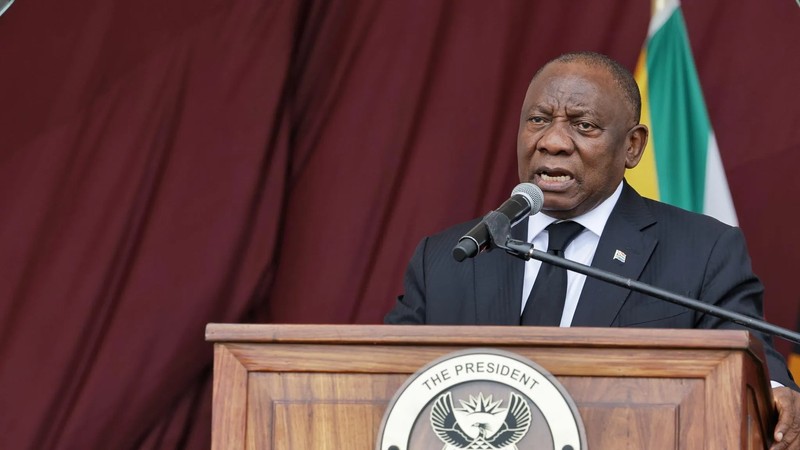
The latest World Bank approval is also viewed as an indication of increasing confidence in South Africa’s economic reform programme under President Cyril Ramaphosa.
The administration has prioritised restoring electricity reliability, improving freight logistics, strengthening infrastructure governance and expanding private-sector participation in strategic industries.
International development institutions have increasingly shifted towards supporting policy reforms that create favourable conditions for long-term investment rather than funding isolated infrastructure projects.
For South Africa, that approach offers an opportunity to address structural weaknesses while improving competitiveness across key sectors of the economy.
If reforms continue to deliver measurable improvements, the latest World Bank financing could become an important catalyst for stronger investment, improved public services and more sustainable economic growth over the next decade.