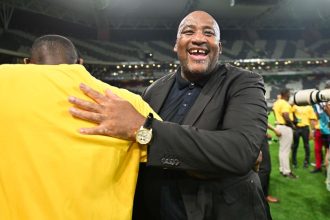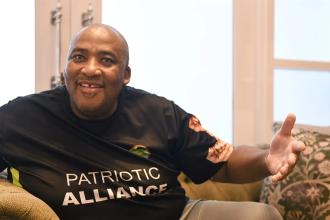
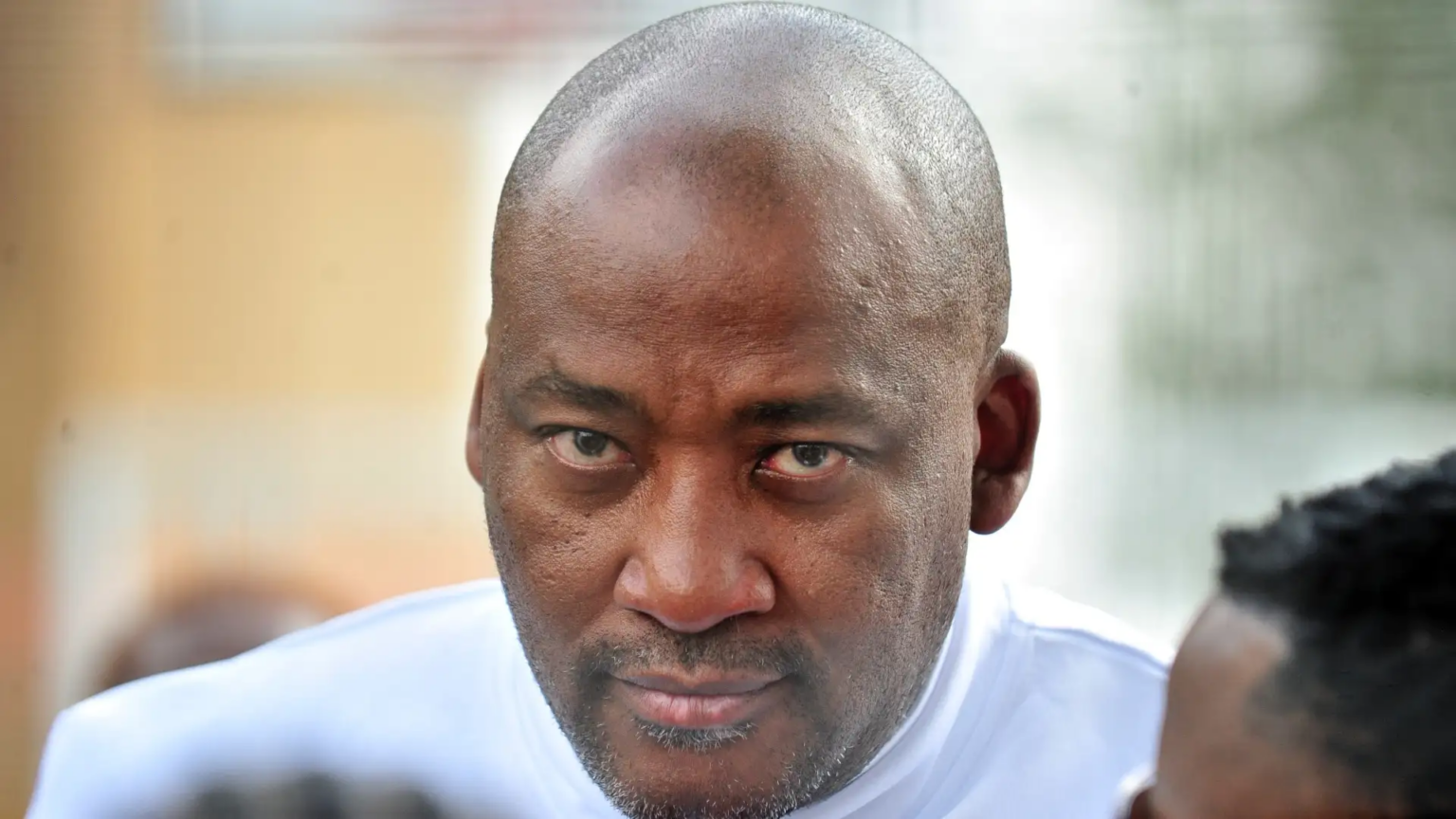
Sports Minister Gayton McKenzie has intensified his confrontation with the South African Football Association (SAFA), demanding the return of R30 million in government funding after the football governing body failed to meet a deadline to implement Video Assistant Referee (VAR) technology.
- McKenzie says SAFA ignored his letters
- “How do you ignore me after receiving my money?”
- SAFA unable to provide clear VAR answers
- DA questions why R30 million was transferred
- McKenzie: “Soccer needs it. Period.”
- SAFA’s administrative problems also come under scrutiny
- SAFA CEO ejected from parliamentary meeting
- Danny Jordaan absent from the hearing
- The R30 million dispute is now bigger than VAR
- Bafana’s World Cup success adds another layer
- What happens to the R30 million now?
The minister made the demand during a tense parliamentary portfolio committee hearing on Tuesday, where SAFA officials were questioned about the failed VAR rollout, administrative problems surrounding Bafana Bafana and other issues affecting South African football.
The confrontation comes shortly after Bafana Bafana’s historic progression to the knockout stages of the 2026 FIFA World Cup, but the team’s success was overshadowed by questions about the administration of the national game.
McKenzie says SAFA ignored his letters
McKenzie told the Sport, Arts and Culture Portfolio Committee that he had been publicly criticised over the government’s promise to introduce VAR and had expected SAFA to support him.
Instead, he said, the association failed to defend him.
The minister said he eventually wrote to SAFA demanding answers about the implementation of VAR.
According to McKenzie, the letter was ignored.
He said that prompted him to send a second letter demanding that the R30 million be returned immediately.
Only after the second demand, McKenzie said, did SAFA respond by requesting a 21-day grace period.
The minister told MPs that he was particularly offended because the money had come from his department.
“How do you ignore me after receiving my money?”
McKenzie expressed his frustration in unusually blunt terms during the hearing.
He said he had remained silent when accusations were made against him because he expected SAFA to eventually defend the government’s VAR initiative.
Instead, he said, there was no public statement from the football association.
The minister’s frustration escalated after he said SAFA subsequently ignored correspondence from his department.
For McKenzie, the dispute is no longer simply about whether VAR should be introduced.
It is about whether public money was transferred to an organisation that was not sufficiently prepared to deliver the project.
SAFA unable to provide clear VAR answers
SAFA representatives faced repeated questions from members of the portfolio committee about the progress of the VAR project.
The delegation struggled to provide clear answers about the implementation process, with committee members repeatedly pressing officials for specific details.
The hearing became increasingly uncomfortable as SAFA representatives were challenged over what had happened to the money and why the technology was not ready for the new Premier Soccer League season.
The lack of clear answers strengthened the minister’s argument that the funding should be returned.
DA questions why R30 million was transferred
Democratic Alliance MP Leah Potgieter questioned McKenzie over why the government had provided the funding without SAFA first demonstrating that it had a viable implementation plan.
Potgieter argued that introducing VAR requires more than simply deciding that the technology is necessary.
FIFA’s implementation process, she said, requires considerations including stadium infrastructure, referee readiness and other operational requirements.
Her argument was essentially that government should have established whether South Africa was ready to implement VAR before releasing the money.
McKenzie: “Soccer needs it. Period.”
McKenzie maintained that the need for VAR was obvious.
He pointed to other major South African sports, including cricket and rugby, which already use video review systems.
His position was that football should follow the same path.
However, Potgieter challenged that reasoning, arguing that the existence of VAR elsewhere does not prove that South Africa was ready to spend R30 million on implementation without first conducting a feasibility assessment.
That exchange exposed one of the central questions surrounding the controversy:
Was the failure primarily SAFA’s, or should government have done more due diligence before releasing the money?
SAFA’s administrative problems also come under scrutiny
The VAR dispute was not the only issue facing SAFA during the parliamentary hearing.
Officials were also questioned about administrative problems involving former Bafana Bafana team manager Vincent Tseka.
Tseka became a central figure in the controversy surrounding Teboho Mokoena’s suspension, after the midfielder was fielded while serving a ban.
The incident threatened to complicate South Africa’s World Cup qualification campaign.
SAFA CEO Lydia Monyepao also blamed Tseka for failing to secure visas for the national team on time.
According to Monyepao, Tseka attributed the delays to coach Hugo Broos announcing his squad late.
The competing explanations added another layer of scrutiny to SAFA’s administration.
SAFA CEO ejected from parliamentary meeting
The hearing became even more heated when Monyepao was ordered to leave the meeting.
Portfolio committee chairperson Joseph McGluwa instructed her to leave after she refused to disclose Hugo Broos’ salary.
The issue arose after Eugene Mthethwa of the Economic Freedom Fighters questioned SAFA about the remuneration offered to incoming Bafana Bafana coach Pitso Mosimane.
Mthethwa questioned why Mosimane had reportedly been offered substantially less than Broos had earned before leaving his position.
Monyepao’s refusal to disclose Broos’ salary ultimately resulted in her removal from the meeting.
Danny Jordaan absent from the hearing
One notable absence from the parliamentary engagement was SAFA president Danny Jordaan.
His absence came at a particularly difficult moment for the association, with MPs questioning its handling of VAR, national-team administration and financial decisions.
Jordaan has also been facing legal scrutiny in a separate fraud-related matter.
His absence meant SAFA’s senior delegation had to face the committee’s questions without its president present.
The R30 million dispute is now bigger than VAR
The disagreement between McKenzie and SAFA has developed into a broader accountability battle.
The minister’s demand is straightforward: return the R30 million in government funding because the agreed VAR implementation deadline was not met.
SAFA, meanwhile, has requested additional time.
The dispute now raises questions about how government funding is allocated to sporting bodies and what safeguards should be in place before public money is released.
It also highlights the complicated relationship between government and football administration.
While SAFA governs football in South Africa, the government remains responsible for overseeing public funding allocated to sporting initiatives.
Bafana’s World Cup success adds another layer
The timing of the dispute is particularly interesting.
Bafana Bafana’s progress to the 2026 FIFA World Cup knockout stages represents one of the strongest performances by the national team in recent years.
That success has generated renewed optimism around South African football.
But the parliamentary hearing demonstrated that strong performances on the pitch do not necessarily mean that the administration behind the team is functioning smoothly.
Questions over VAR, visas, player suspensions, coaching contracts and financial accountability remain.
What happens to the R30 million now?
The immediate question is whether SAFA will return the money or secure the additional time it requested.
McKenzie has made his position clear.
Unless SAFA can demonstrate that it can deliver on the VAR project within an acceptable framework, the minister wants the state’s money back.
The portfolio committee’s scrutiny could also lead to further questions about the original funding agreement, procurement processes, implementation plans and oversight mechanisms.
For South African football supporters, the dispute is ultimately about more than technology.
VAR was supposed to improve officiating and bring the local game closer to international standards.
Instead, its failed rollout has become another test of whether South African football’s administrators can deliver major projects effectively — and account for public money when they do not.