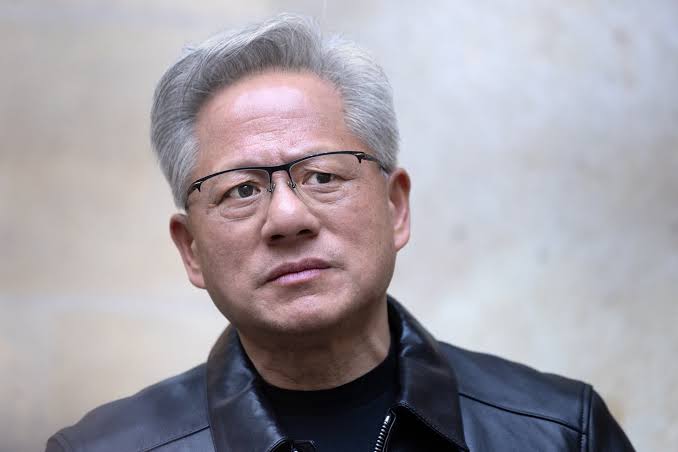
Jensen Huang has reportedly stepped down as chief executive of Nvidia following a series of scandals that have shaken the technology company he helped build into one of the world’s most valuable businesses.
- Allegations trigger mounting pressure on Nvidia leadership
- Nvidia shares fall as investors react
- From a diner conversation to a $4 trillion technology empire
- How Nvidia positioned itself at the centre of the AI revolution
- Huang’s philosophy on leadership and resilience
- Colette Kress faces major leadership challenge
According to the supplied CNN report, Nvidia’s board announced on Thursday that Huang had resigned after 33 years at the helm. Chief Financial Officer Colette Kress is expected to take over as interim CEO.
The reported departure comes after growing scrutiny of Huang’s personal relationships, including allegations involving a woman described by US officials as a Chinese intelligence asset and a separate reported relationship with an Nvidia executive.
The developments have placed the leadership of the artificial intelligence chipmaker under intense pressure, with investors also reacting to the uncertainty surrounding the company’s future.
Allegations trigger mounting pressure on Nvidia leadership
The controversy reportedly intensified after claims emerged that Huang had been involved in a relationship with a woman whom US officials allegedly identified as having links to Chinese espionage.
Nvidia’s board reportedly appointed a law firm to investigate the allegations.
Pressure increased further following reports that Huang had also been involved in a relationship with another woman employed by Nvidia.
The board subsequently met late on Wednesday, with the reported resignation announcement coming the following day.
The allegations have not, in the supplied report, been established as proven misconduct. Nevertheless, their emergence has reportedly created a major challenge for the company’s leadership and corporate reputation.
Nvidia shares fall as investors react
News of Huang’s reported departure sent Nvidia shares sharply lower in premarket trading, according to the report.
The company occupies a central position in the global artificial intelligence industry, supplying the advanced graphics processing units (GPUs) used to develop and operate AI systems.
Its market value and influence mean that movements in its share price can have consequences beyond the technology sector.
Nvidia is one of the largest companies represented in major stock market indexes, including the S&P 500. Significant share-price volatility can therefore affect investment portfolios and retirement funds held by investors around the world.
The leadership uncertainty comes at a particularly important time for the company, whose chips have become essential infrastructure for the expanding AI industry.
From a diner conversation to a $4 trillion technology empire
Huang’s journey with Nvidia began in 1993, when he and co-founders Curtis Priem and Chris Malachowsky discussed the idea for the company in the back of a Denny’s restaurant.
Their initial ambition was to develop chips capable of producing more realistic graphics for video games.
However, Nvidia’s early years were far from guaranteed success.
The company came close to financial collapse after developing an unconventional chip that few game developers could effectively use. An emergency investment from Japanese gaming company Sega helped keep the business alive.
That intervention proved critical to Nvidia’s survival.
How Nvidia positioned itself at the centre of the AI revolution
By the mid-2000s, Nvidia had begun developing the technology that would eventually establish its dominance in artificial intelligence.
The company invested in specialised processors and software designed to handle demanding computing workloads.
Its graphics processing units eventually became particularly valuable for AI development, giving Nvidia an early advantage as demand for advanced computing power accelerated.
The global AI boom transformed the business into a technology powerhouse, with its chips becoming central to the development of increasingly sophisticated artificial intelligence systems.
Despite its success, Nvidia has experienced setbacks, including disappointing product launches and the collapse of its proposed $40 billion acquisition of British chip designer Arm.
Yet Huang remained at the company’s helm through those challenges.
Huang’s philosophy on leadership and resilience
Huang frequently spoke about the importance of resilience, character and learning through difficult experiences.
During a 2024 appearance before Stanford University students, he reflected on how adversity shapes successful leaders.
“Greatness comes from character and character isn’t formed out of smart people: It’s formed out of people who’ve suffered.”
The philosophy reflected his own experience guiding Nvidia through near-bankruptcy, failed ventures and major industry changes.
However, according to the supplied report, the latest controversy surrounding his personal life has created a challenge unlike the commercial setbacks he previously navigated.
Colette Kress faces major leadership challenge
With Huang reportedly stepping aside, CFO Colette Kress is expected to assume the interim chief executive position.
Her immediate challenge will be maintaining investor confidence, protecting Nvidia’s corporate reputation and ensuring that its operations remain stable during the leadership transition.
The company is also expected to face questions about its internal governance and how the board handled the allegations surrounding its outgoing chief executive.
Nvidia’s next steps could have significant implications for the wider technology industry, given the company’s central role in supplying the hardware powering the AI revolution.
The information above reflects the claims and developments in the supplied report. The allegations and reported resignation have not been independently verified here.