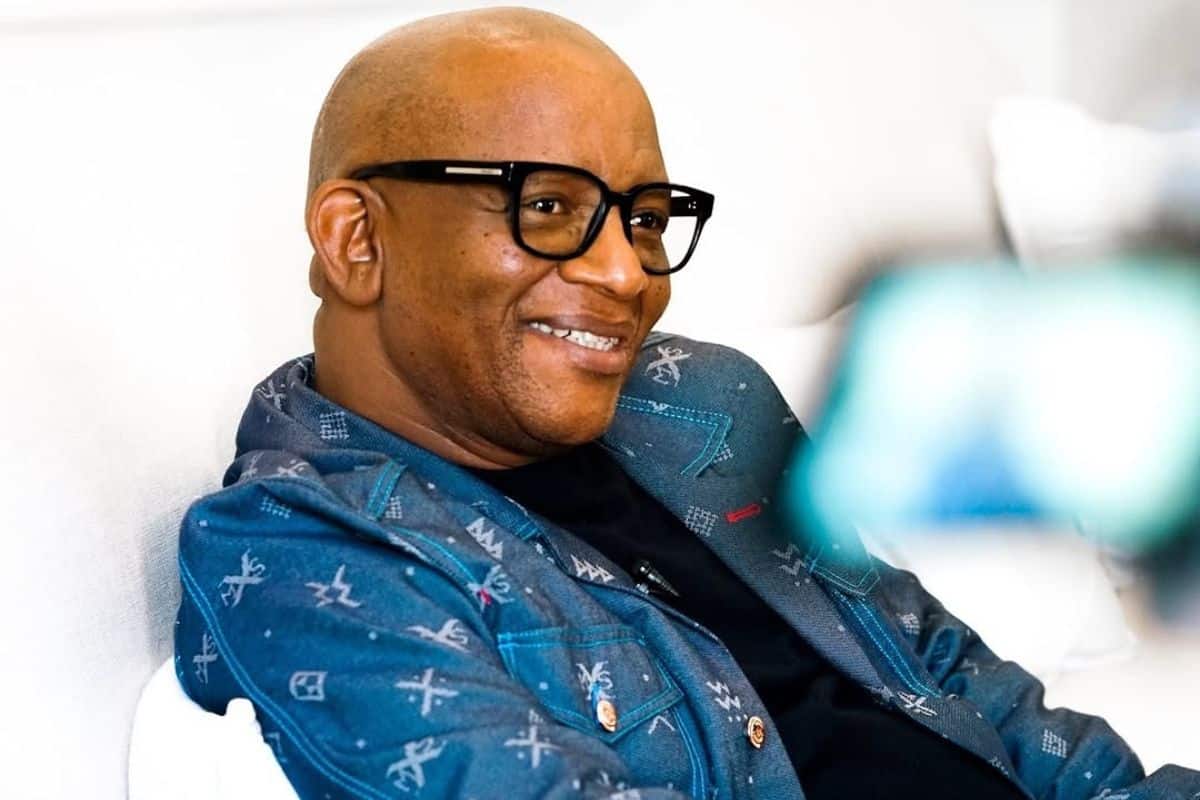
South African music producer Lebohang “Lebo M” Morake could lose his Mercedes-Benz A 200 after the Johannesburg High Court cancelled his vehicle finance agreement and authorised Mercedes-Benz Financial Services to repossess the car.
The order, issued on 14 August 2026, gives the financier unusually broad powers to locate the vehicle if it is not voluntarily surrendered, including permission to activate its built-in tracking technology.
If the vehicle cannot be recovered voluntarily, the Sheriff of the High Court or a deputy may locate, attach and remove it from wherever it is found in accordance with the court order.
How the Mercedes-Benz payment dispute began
Court papers indicate that Morake entered into an instalment sale agreement with Mercedes-Benz Financial Services in Sandton on 6 March 2020.
The agreement placed the total purchase price, including finance charges, at R785,423.45, with Morake required to make monthly payments of more than R8,000.
Mercedes-Benz Financial Services says it delivered the vehicle as agreed, but alleges that Morake subsequently fell behind on his instalments.
By 5 March 2026, the outstanding arrears had reportedly exceeded R19,700.
The finance company says it sent notices calling on Morake to bring the account up to date. According to the court documents, those efforts did not resolve the dispute.
The financier ultimately cancelled the agreement and approached the High Court for an order compelling the return of the vehicle.
High Court authorises tracking and repossession
The court’s order goes beyond simply requiring the Mercedes-Benz to be returned.
Mercedes-Benz Financial Services was authorised to activate the vehicle’s tracking device to establish where the car is located.
Should Morake fail to hand it over, the Sheriff or a deputy has authority under the order to locate and attach the vehicle before removing it.
The repossession order follows the cancellation of the instalment sale agreement, meaning the financier is entitled to seek the return of the vehicle under the terms of the court’s judgment.
Morake did not oppose the application, according to the information contained in the court papers. The matter was therefore not fought through a conventional contested hearing in which both sides presented competing evidence.
That distinction is important: the judgment concerns the contractual and repossession dispute, rather than a criminal finding against Morake.
Why ownership matters in vehicle finance cases
Vehicle finance disputes can be confusing because the person making the monthly payments is not necessarily the legal owner of the vehicle during the life of an instalment sale agreement.
In arrangements of this nature, the financier can retain ownership or a security interest until the contractual obligations have been fulfilled.
If the agreement is lawfully cancelled following a default, the financier can seek the return of the vehicle rather than allowing the customer to retain possession indefinitely.
In Morake’s case, Mercedes-Benz Financial Services relied on that contractual position when asking the High Court to order the vehicle’s repossession.
The court granted the requested relief, including the mechanism for locating and recovering the Mercedes-Benz.
Lebo M’s latest legal setback
The vehicle dispute adds another legal complication to a year in which the internationally recognised producer has faced litigation beyond South Africa.
Morake is best known globally for his contribution to The Lion King, including the iconic music associated with the Disney franchise and its later adaptations.
He has also remained a prominent figure in South African entertainment, with his personal life frequently attracting public attention.
The Mercedes-Benz case, however, is fundamentally a commercial dispute over a finance agreement and should not be confused with criminal proceedings.
US court dispute
Morake has also been involved in a separate legal dispute in the United States involving Zimbabwean comedian Prosper “The Comic Pastor” Magunje, known professionally as Q Dada Jonasi.
That matter reportedly arose from a joke involving The Lion King‘s famous opening chant and escalated into litigation.
The US case is separate from the South African Mercedes-Benz proceedings and does not affect the High Court’s repossession order.
What happens to the Mercedes-Benz now?
The immediate issue is whether the vehicle will be surrendered voluntarily.
If it is not, Mercedes-Benz Financial Services has court-backed authority to use the specified tracking and enforcement mechanisms to locate and recover it.
For Morake, the judgment effectively brings the vehicle finance dispute to a decisive point: the instalment agreement has been cancelled, and the court has authorised the financier to take steps to regain possession of the Mercedes-Benz A 200.
The case also illustrates the consequences that can follow when a financed vehicle falls into arrears and contractual notices do not resolve the outstanding dispute.