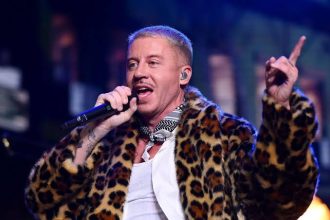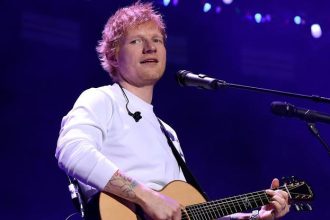
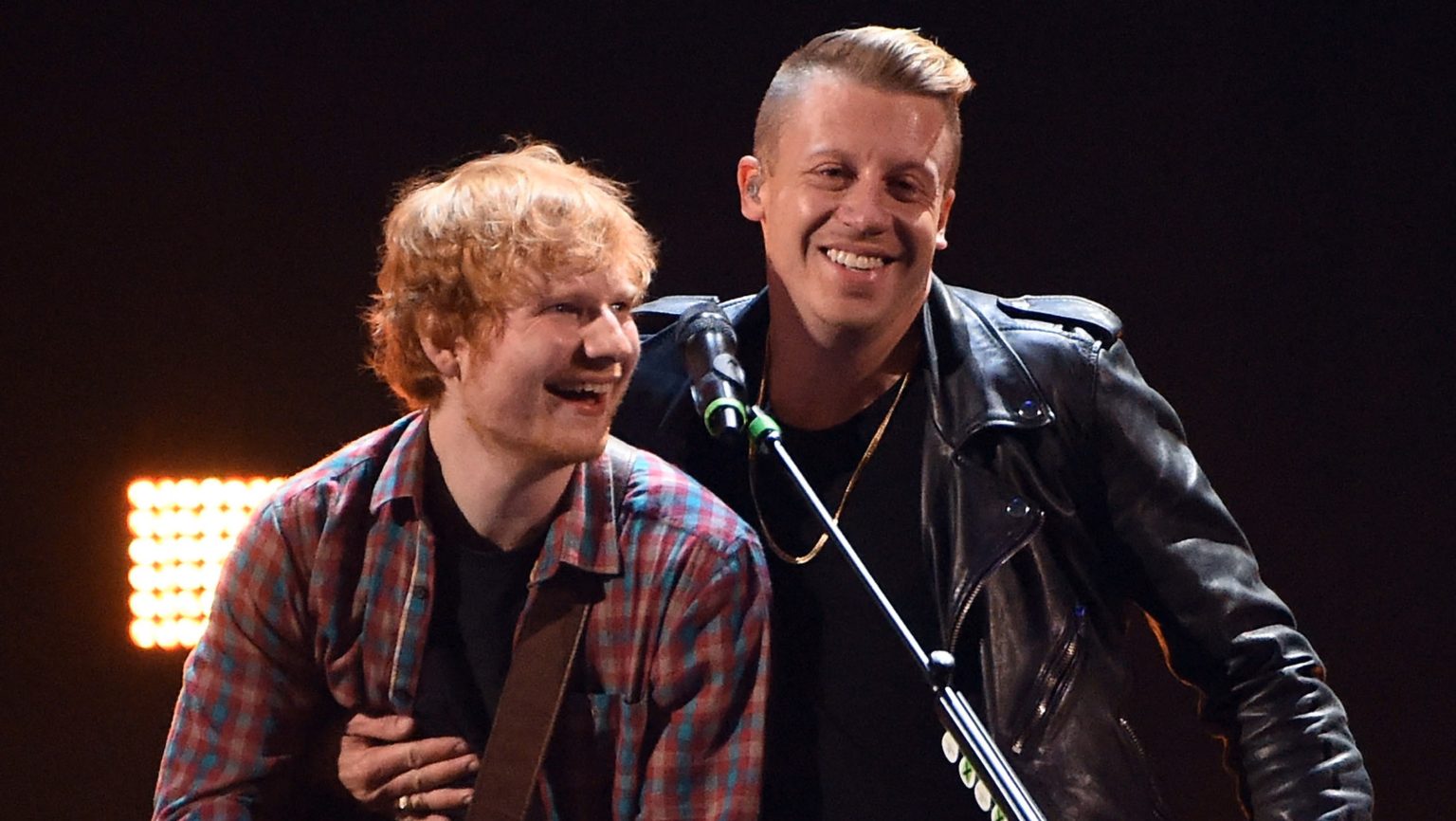
Ed Sheeran’s Loop Tour has been hit by a major shake-up after all four of its remaining supporting acts withdrew from upcoming shows in solidarity with rapper Macklemore, who was removed from the line-up following comments supporting Palestinians.
American singer Finneas, Irish singer Aaron Rowe, Danish band Lukas Graham and Irish folk group Beoga, which performs with Sheeran, have all announced their departures.
Their decisions came within hours of one another after Sheeran addressed the controversy surrounding Macklemore’s removal, saying the decision was ultimately made by the tour promoter following pressure from venues.
The developments have transformed what began as a dispute over one supporting act into a wider confrontation involving artists, promoters, venue owners and competing views about political expression at major concerts.
Why was Macklemore removed from Ed Sheeran’s tour?
The controversy followed Macklemore’s appearance at MetLife Stadium in New Jersey on 4 September, where he delivered a speech expressing support for Palestinians.
During the address, the rapper referred to the suffering of people in Gaza and the occupied West Bank and said “Free Palestine”.
The comments drew criticism from some Jewish and pro-Israel organisations, while an Israeli-American Council petition called for him to be removed from Sheeran’s tour.
The dispute subsequently escalated when several stadium owners reportedly indicated that they would not host the tour if Macklemore remained part of the line-up.
Macklemore has rejected the characterisation of his advocacy as antisemitic and has maintained that his comments were directed at the war and the treatment of Palestinians rather than Jewish people.
Ed Sheeran says the decision was not his
Sheeran addressed the controversy in a lengthy statement, saying he had attempted to find a solution before Macklemore’s departure was confirmed.
The singer said he was deeply concerned about the suffering resulting from the Israel-Palestine conflict and described the removal as a decision made by the promoter rather than by him personally.
According to Sheeran, allowing Macklemore to remain on the tour would have resulted in some venues refusing to host the scheduled concerts.
He said abandoning the tour was not an option because fans had already made plans and because the production involved a large number of workers and musicians whose livelihoods depended on the shows.
The promoter has similarly indicated that venue restrictions were central to the decision.
Finneas becomes the latest act to leave
Finneas, who was scheduled to support Sheeran on six South American dates in November, announced his withdrawal on Tuesday.
He said artists should be able to speak about issues affecting people around the world and declared his support for Palestinians.
His departure followed Aaron Rowe’s announcement that he would no longer perform on the remaining North American dates for which he had been booked.
Rowe, who previously supported Sheeran in Australia, said he had not made the decision lightly and acknowledged his friendship with the headline artist.
He nevertheless said his own background as an Irish person influenced his decision to leave, citing historical experiences involving occupation, famine and violence.
Sheeran’s backing band also walks away
Irish traditional music group Beoga, which has worked with Sheeran for more than a decade, subsequently announced that it would leave the US leg of the tour.
The group said it remained grateful for its relationship with Sheeran but objected to what its members described as the silencing of Macklemore.
Beoga said it supported dialogue surrounding the suffering of Palestinians while making clear that its members would continue to have a relationship with Sheeran outside the immediate dispute.
The withdrawal means the controversy now directly involves musicians who have worked alongside Sheeran for years rather than only artists brought in as external opening acts.
Lukas Graham joins the withdrawals
Danish pop group Lukas Graham was the fourth supporting act to announce its departure.
Lead singer Lukas Forchhammer said artists should be able to discuss war, civilian deaths and the experiences of children regardless of where they live.
The band also questioned whether financial influence should determine which issues performers can discuss publicly.
Together, the four withdrawals leave Sheeran’s upcoming dates without the supporting line-up that had originally been announced.
Robert Kraft defends his position
One of the most prominent figures in the dispute is Robert Kraft, owner of the New England Patriots and Gillette Stadium, where Sheeran is scheduled to perform.
Kraft confirmed that his organisation had decided Macklemore would not perform at the stadium, citing both his recent comments and what Kraft described as a broader history of rhetoric and imagery that he believes has been offensive to Jewish people.
The reference includes a 2013 incident in which Macklemore apologised after appearing on stage in a costume that critics said resembled an antisemitic caricature.
Kraft has said his objection is not intended to deny Palestinians’ suffering or their right to advocate for their cause. He has instead argued that advocacy should not come at the expense of the Jewish community or overlook Hamas’s actions.
He has also said he would be willing to meet Macklemore to discuss their differences.
The wider debate goes beyond one concert
The dispute has quickly become part of a broader argument over how much political expression artists should be able to bring into commercial entertainment spaces.
Supporters of Macklemore’s position argue that performers should not face professional consequences simply for speaking about Palestinian suffering.
Critics, meanwhile, have argued that public advocacy about the Israel-Palestine conflict can cross into rhetoric that Jewish audiences experience as threatening or antisemitic.
Those positions remain sharply contested, and the disagreement has now produced a tangible consequence for Sheeran’s tour: every scheduled supporting act has withdrawn.
The controversy also highlights the competing interests involved in stadium tours. Headline artists, promoters, venue owners, supporting performers and thousands of workers can all have different stakes in decisions about who appears on stage. The Associated Press noted that while promoters often exercise substantial control over touring arrangements, major artists also typically have significant influence over their shows.
For Sheeran, the immediate challenge is now logistical as well as reputational: the Loop Tour must continue after losing the entire announced supporting line-up amid a politically charged dispute that shows no sign of disappearing.