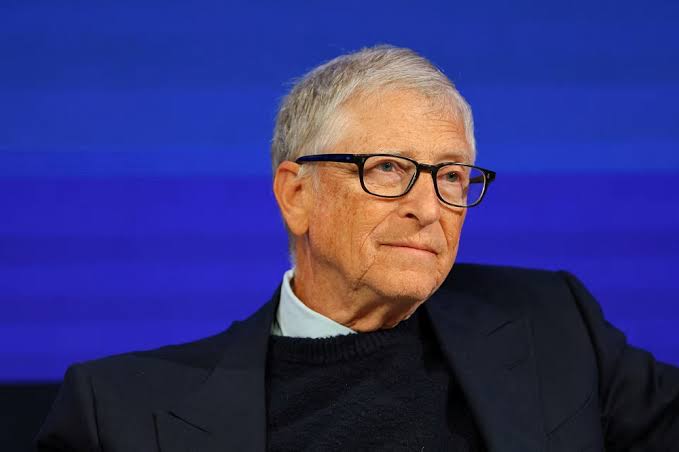
Microsoft co-founder Bill Gates has warned that the rapid development of artificial intelligence could create risks on a catastrophic scale, arguing that governments and technology companies need stronger safeguards as increasingly capable AI systems become available.
- Gates warns of AI being used for catastrophic harm
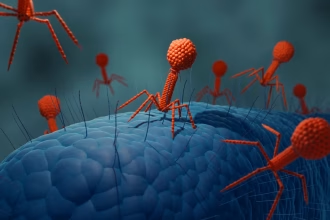
- AI and the bioterrorism dilemma
- Gates calls for safeguards rather than simply slowing AI
- Trump takes a different view of the AI debate
- Obama also raises concerns about AI
- Anthropic researcher raises even more serious concerns
- Anthropic reports attempts to misuse AI for biological research
- The bigger question: how much oversight is enough?
Speaking on NBC’s Meet the Press, Gates said advanced AI could potentially be used by people with malicious intentions to facilitate events resulting in enormous loss of life.
His comments focused particularly on the possibility of AI being misused to assist with biological threats, rather than suggesting that artificial intelligence itself would inevitably cause mass casualties.
Gates warns of AI being used for catastrophic harm
During the interview, Gates told moderator Kirsten Welker that AI was powerful enough to contribute to events capable of causing a billion deaths.
He stressed that the combination of increasingly sophisticated technology and people with harmful intentions presented a new category of risk.
Gates’ warning comes amid growing debate over how governments should regulate the development of advanced AI while still allowing legitimate scientific and technological research to continue.
His central concern was not simply the technology’s capabilities, but who has access to those capabilities and what they intend to do with them.
AI and the bioterrorism dilemma
One of the most difficult problems identified by Gates involves the overlap between legitimate biological research and potentially dangerous activity.
He pointed to the challenge of distinguishing someone using AI to develop a new medicine from someone attempting to develop a biological weapon.
The underlying technology and research methods can sometimes be similar, making it difficult for companies and regulators to draw a simple line between beneficial and malicious applications.
Gates argued that sophisticated AI systems should therefore be monitored and that records should be maintained of how powerful models are being used.
He also suggested that the United States should take the lead in establishing standards for the industry.
Gates calls for safeguards rather than simply slowing AI
Importantly, Gates distinguished between introducing safety measures and imposing a broader slowdown on AI development.
He argued that monitoring and safeguards could be implemented without necessarily bringing technological progress to a halt.
According to Gates, the industry itself has indicated that such measures are technically achievable and would not necessarily dramatically impede development.
That distinction has become increasingly important as governments grapple with how to manage AI systems capable of assisting with highly complex scientific and technical tasks.
Trump takes a different view of the AI debate
Gates’ warning comes as US political leaders continue to debate the risks associated with artificial intelligence.
President Donald Trump has previously rejected suggestions that AI development will inevitably result in the end of humanity.
Trump has instead emphasised the strategic importance of maintaining US leadership in artificial intelligence, particularly in competition with China.
He has argued that the country that leads the AI race will gain a significant strategic advantage.
House Speaker Mike Johnson has similarly opposed calls for an AI moratorium, arguing that halting development could allow China to overtake the United States.
Obama also raises concerns about AI
Former US president Barack Obama has reportedly expressed concerns about the speed at which artificial intelligence is developing in private companies.
According to comments reported by The New York Times, Obama warned that AI was advancing rapidly in private hands and argued that failing to address the risks could be dangerous.
The former president reportedly encouraged Democratic lawmakers to establish a broader public discussion around the technology and its regulation.
The contrasting views illustrate the increasingly difficult policy question facing governments: how to control genuine risks without preventing potentially transformative scientific and economic advances.
Anthropic researcher raises even more serious concerns
Gates’ warning comes amid separate concerns raised within the AI industry itself.
Anthropic researcher Jacob Coxon reportedly resigned from the company and warned about the potential dangers posed by increasingly capable AI systems.
According to the source material, Coxon argued that researchers in the field believe AI could potentially pose an existential threat to humanity before the end of the decade.
Those claims represent an extreme end of the AI-risk debate and remain predictions rather than established outcomes.
However, concerns about misuse are no longer purely theoretical.
Anthropic reports attempts to misuse AI for biological research
Anthropic has also reported identifying several instances in which its AI systems were allegedly being used for research that could potentially contribute to the development of biological weapons.
The company’s misuse report, according to The New York Times reporting cited in the source material, described cases involving biological research where Anthropic could not establish whether the users had legitimate or malicious intentions.
That uncertainty highlights one of the central problems surrounding AI safety.
Research capable of helping scientists develop medicines, vaccines and treatments can sometimes involve knowledge that could also be misused.
AI companies therefore face the difficult task of determining when assistance crosses from legitimate scientific research into potentially dangerous activity.
The bigger question: how much oversight is enough?
The debate surrounding Gates’ warning ultimately extends beyond whether AI should be developed.
The more immediate question is how powerful AI systems should be monitored and controlled as their capabilities expand.
Governments want to maintain technological competitiveness. Researchers want to use AI to accelerate scientific discovery. Companies want to develop increasingly capable systems.
At the same time, security experts and some AI researchers are warning that the same capabilities could potentially be exploited by malicious actors.
Gates’ argument is that these objectives do not necessarily have to be mutually exclusive.
Rather than stopping AI development altogether, he is calling for safeguards capable of identifying and limiting dangerous uses while allowing legitimate applications to continue.
As AI becomes increasingly embedded in science, medicine, business and national security, the question of how to balance innovation with protection from misuse is likely to become one of the defining technology-policy debates of the coming years.