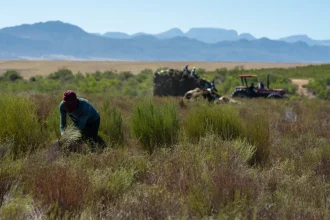
South Africa is releasing approximately 2.5 million hectares of state-owned land to black farmers, with the government aiming to help emerging agricultural producers build commercially viable businesses, create jobs and strengthen national food security.
- Government targets barriers facing black commercial farmers
- Redlands Farm shows how blended finance can help
- Black farmers account for about 10% of agricultural output
- South Africa’s agricultural exports reach R270 billion
- Land ownership must be matched with skills and technology
- Government seeks new markets for South African produce
- Will the land programme create a new generation of commercial farmers?
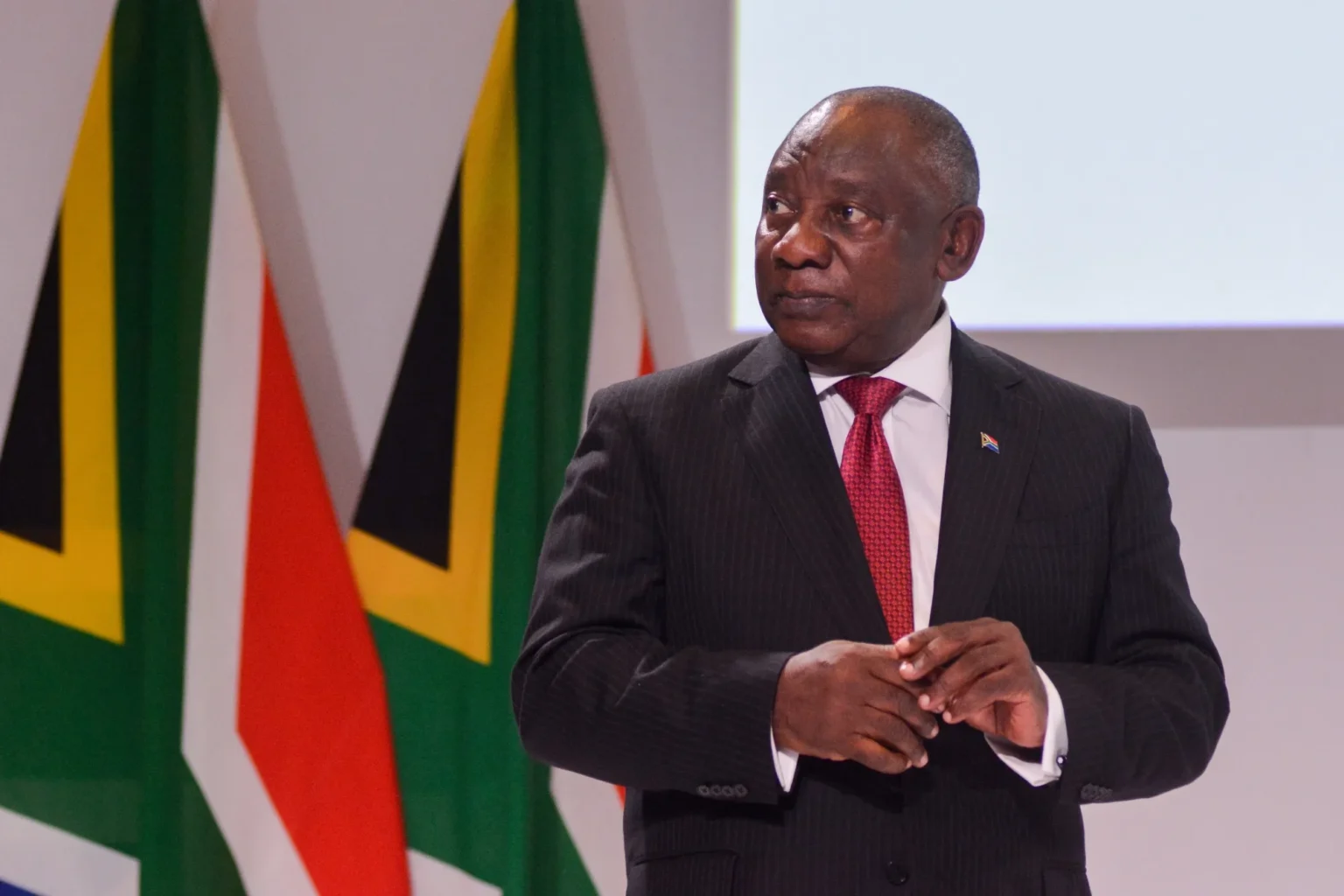
President Cyril Ramaphosa announced the initiative in his weekly letter to the nation, highlighting land ownership, access to financing and agricultural training as key elements in transforming the country’s farming sector.
Through the government’s Proactive Land Acquisition Strategy, the land is being made available to black farmers in different parts of the country, with title deeds forming part of the effort to provide greater security of land ownership.
Ramaphosa said access to land must be accompanied by financial support, practical skills, mentorship and technology if emerging farmers are to expand beyond subsistence farming and compete in commercial markets.
“The first step in building a new generation of South African farmers is providing them with titled access to land,” he said.
Government targets barriers facing black commercial farmers
While land ownership remains central to agricultural transformation, Ramaphosa acknowledged that emerging farmers frequently struggle to secure the funding needed to establish and grow their operations.
Farmers need capital for equipment, seeds, fertiliser, livestock, infrastructure and additional land. Without access to affordable financing, gaining access to land may not be enough to establish a sustainable agricultural business.
“Far too often, emerging farmers are kept trapped at subsistence level because they cannot get the financing they need for farming inputs, infrastructure and additional land,” Ramaphosa said.
The government’s stated objective is therefore to connect land redistribution with the support systems required to make farming commercially sustainable.
That includes improving access to lenders, strengthening agricultural training and building partnerships between emerging farmers and established businesses.
Redlands Farm shows how blended finance can help
Eastern Cape agricultural development

Ramaphosa highlighted Redlands Farm in Stutterheim in the Eastern Cape as an example of young black farmers developing a commercial agricultural operation with financial assistance.
The dairy farm has received support from the Land Bank and benefits from its Blended Finance Scheme, which combines government grant funding with loan finance.
The approach is designed to help eligible farmers access capital while reducing some of the barriers that can prevent emerging agricultural businesses from expanding.
Ramaphosa said Redlands demonstrated how partnerships could contribute to rural economic development and job creation.
He encouraged more financial institutions and agribusinesses to participate in similar arrangements and develop additional financing options for farmers.
Black farmers account for about 10% of agricultural output
Despite the growth of South Africa’s agricultural industry since 1994, Ramaphosa said the sector continued to reflect significant historical inequalities.
He described the industry as having “two agricultures”, with predominantly white-owned commercial farms accounting for most commercial production while black farmers contribute approximately 10%.
The president argued that widening participation was important not only for addressing historical exclusion but also for improving the country’s ability to meet future food demand.
South Africa’s population continues to grow, increasing the need for productive farms, reliable food supplies and an agricultural industry capable of supporting both domestic consumption and exports.
“Being reliant on the productive capacity of a relatively small segment of the population to meet our country’s food needs is unsustainable,” he said.
The government’s challenge will be to ensure that newly allocated land is supported by the resources, infrastructure and market access needed to increase production.
South Africa’s agricultural exports reach R270 billion
Ramaphosa said the country’s agricultural sector had more than doubled in size since 1994, with exports reaching a record R270 billion in 2025.
He also said South Africa ranked as the world’s 32nd-largest agricultural exporter.
The country’s agricultural exports include citrus, table grapes, maize, beef, wine, sugar and wool.
Nearly half of these exports go to other African countries, while the remainder reaches markets in the European Union, Asia, the Middle East and the Americas.
The figures illustrate the sector’s role in generating export revenue and supporting employment. However, the president argued that the benefits of this growth needed to reach a wider group of farmers and rural communities.
According to Ramaphosa, agriculture employs approximately 944,000 people, with another 200,000 working across the broader agricultural value chain.
He also cited a 2025 University of Pretoria study that found a strong correlation between agricultural investment and poverty reduction.
Land ownership must be matched with skills and technology
Ramaphosa cautioned that access to land alone would not guarantee agricultural success.
Farmers must understand crop management, local weather conditions, livestock health, animal diseases and the technologies needed to improve productivity.
He pointed to the work of industry organisations supporting farmers and developing agricultural capacity, including:
-
Citrus Growers’ Association
-
Grain South Africa
-
National Wool Growers’ Association
-
Potatoes South Africa
-
Red Meat Industry Services
-
Milk Producers’ Organisation
-
Fruit South Africa
These organisations operate across different agricultural industries, providing expertise, market connections and other forms of support.
Ramaphosa said partnerships between government, lenders, established farmers, agribusinesses, traditional leaders and local communities would be important to expanding the participation of black farmers in commercial agriculture.
Government seeks new markets for South African produce
The president also highlighted efforts to expand and diversify export markets for South African agricultural products.
He said government was engaging with farmers and agribusinesses on developments such as new breeding techniques and agricultural biotechnology.
Access to international markets can provide farmers with opportunities to increase sales, but commercial success also depends on meeting quality standards, maintaining reliable supply chains and producing goods at competitive prices.
For emerging farmers, the ability to reach established buyers and export markets may be just as important as securing land and finance.
Will the land programme create a new generation of commercial farmers?
The release of 2.5 million hectares represents a significant land-access initiative, but its long-term impact will depend on how effectively the programme connects beneficiaries with financial assistance, infrastructure, agricultural expertise and reliable markets.
Title deeds can provide greater security over land, while blended finance and mentorship can help farmers establish productive businesses. However, the amount of land made available does not, by itself, show how much agricultural output or employment will result.
The key measure of progress will be whether beneficiaries can develop sustainable operations that increase production, generate income and contribute to rural economic growth.
Ramaphosa said the broader ambition was to bring more land under cultivation, expand black commercial farming and increase South Africa’s capacity to feed its population while supplying international markets.
“We can bring more land under cultivation, create a new generation of black commercial farmers and ensure that we grow enough not only to feed all our people, but to sell to markets across the world,” he said.