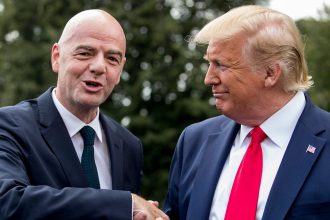
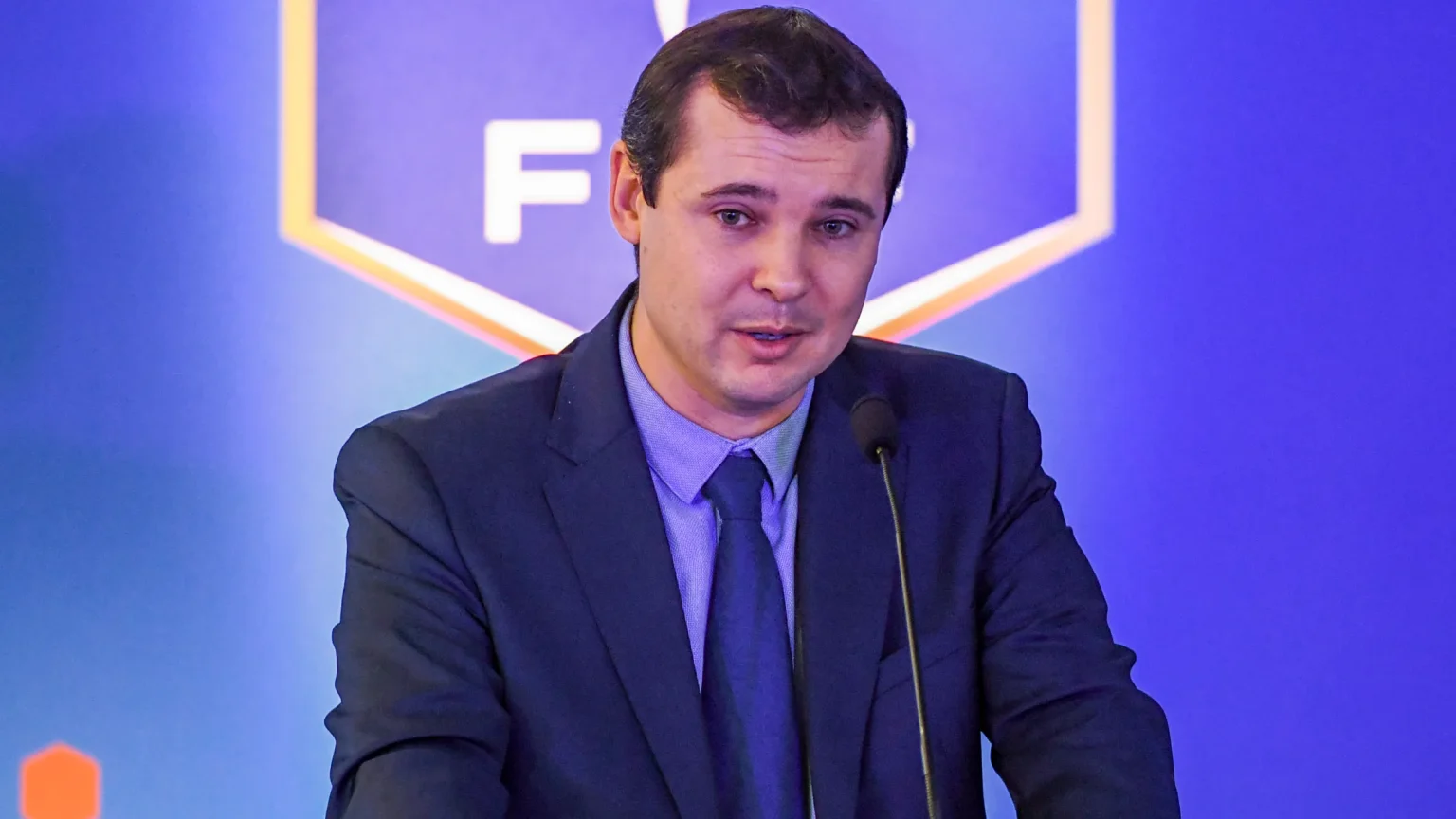
FIFA has reportedly parted ways with chief operating officer Kevin Lamour after he openly criticised president Gianni Infantino’s controversial plan to sell stakes in the FIFA World Cup, escalating tensions at football’s global governing body.
- Lamour openly challenged Infantino’s World Cup plan
- “If that means I lose my job, then so be it”
- FIFA tells staff the two sides have “agreed to part ways”
- Regional football bodies accused FIFA of breaking trust
- Why selling World Cup stakes became so controversial
- Infantino faces renewed scrutiny
- What Lamour’s departure means for FIFA
The development was communicated to FIFA employees by secretary-general Mattias Grafström, who said Lamour and the organisation had “agreed to part ways” following discussions between the two sides.
FIFA confirmed to BBC Sport that Lamour’s tenure as COO ended on Monday, thanking him for two years of service and wishing him well.
While FIFA has not publicly characterised the departure as a dismissal linked to the World Cup proposal, Lamour’s outspoken criticism of the plan had placed him at the centre of an increasingly public dispute over how the world’s biggest sporting tournament should be financed and controlled.
Lamour openly challenged Infantino’s World Cup plan
Lamour had publicly criticised a proposal associated with Infantino to sell stakes in the World Cup to outside investors.
The idea generated significant resistance from football’s regional governing bodies and was ultimately abandoned after attracting widespread criticism.
Lamour was particularly blunt in his assessment of the proposal, describing it as “the project of one person” and accusing FIFA’s administration of being misled about the plans.
His criticism went beyond the financial proposal itself.
He argued that FIFA’s leadership should be focused on bringing football’s stakeholders together rather than creating divisions within the organisation.
“Our mission — the mission of the hundreds of passionate, dedicated, and exemplary FIFA employees — is to serve football,” Lamour said.
“A president must bring people together, unite them, and inspire them. Today, we are experiencing the opposite.”
“If that means I lose my job, then so be it”
Lamour appeared to recognise that his comments could have consequences for his position.
Rather than withdrawing his criticism, he said he was prepared to accept whatever happened next.
“If that means I lose my job, then so be it,” he said.
“I will understand and respect that decision. At least I’ll sleep well tonight.”
His departure now comes against that backdrop, although FIFA’s official explanation is that the two sides mutually agreed to end the working relationship.
That distinction matters because there has been no reported formal finding that Lamour was dismissed specifically for opposing Infantino’s proposal.
FIFA tells staff the two sides have “agreed to part ways”
In his message to FIFA employees, Grafström described the departure as an administrative change made after “careful consideration”.
He expressed appreciation for Lamour’s contribution during his two years with the organisation and wished him well.
FIFA’s public statement similarly thanked Lamour for his service.
The wording stops short of directly linking his departure to the controversy surrounding the World Cup investment proposal.
Nevertheless, the timing has inevitably drawn attention because Lamour’s criticism came during one of the most significant recent disputes over FIFA’s governance and commercial strategy.
Regional football bodies accused FIFA of breaking trust
The controversy intensified when UEFA, CONCACAF and the Asian Football Confederation (AFC) jointly accused FIFA of a “fundamental breach of trust” over how the World Cup investment proposal had been handled.
The three confederations argued that the issue extended beyond the proposed financial structure.
They framed it as a question of governance, accountability and the relationship between FIFA’s leadership and the organisations responsible for football across the world’s regions.
Their joint statement said:
“This is about something more fundamental: the integrity of the game, and the integrity of those elected to lead it.”
The organisations also criticised what they described as a breakdown in trust between FIFA’s leadership and its constituent football authorities.
Why selling World Cup stakes became so controversial
The FIFA World Cup is football’s most valuable global property, generating enormous revenues through broadcasting rights, sponsorship, hospitality and commercial partnerships.
Any proposal to sell investors a stake connected to the tournament therefore carries implications far beyond a conventional business transaction.
For FIFA, outside investment could potentially unlock significant capital.
For national associations and continental confederations, however, the concern is whether commercial investors could gain influence over an asset that has historically been controlled through football’s governing structures.
That tension sits at the heart of the dispute.
The backlash from UEFA, AFC and CONCACAF demonstrated that the proposal was not simply a matter of corporate finance. It had become a governance issue involving who gets to make decisions about football’s most important tournament.
Infantino faces renewed scrutiny
The controversy represents another episode in the broader debate over Infantino’s leadership of FIFA.
His administration has pursued increasingly ambitious commercial and structural projects, seeking to expand FIFA’s revenues and global reach.
That approach has generated both support and criticism.
Supporters argue that FIFA needs to modernise its commercial model and maximise the value of its global competitions.
Critics, meanwhile, have questioned whether major decisions are being developed with sufficient consultation among FIFA’s regional and national stakeholders.
The World Cup investment proposal exposed that tension particularly clearly.
What Lamour’s departure means for FIFA
The immediate impact will be administrative, but the political implications could be more significant.
Lamour was a senior figure within FIFA’s executive structure. His public criticism of the president’s proposal also provided an unusually direct insight into internal disagreements over the organisation’s direction.
His exit is therefore likely to intensify questions about how much room senior FIFA officials have to challenge major decisions taken by the organisation’s leadership.
At the same time, it would be premature to conclude that his departure proves retaliation for his comments.
FIFA has formally presented the move as an agreed separation, and any definitive explanation for the decision would require evidence beyond the timing of events.
What is clear is that the World Cup investment controversy has exposed a significant fault line within international football governance.
And with the proposal already abandoned, the departure of one of its most vocal internal critics ensures that the debate over power, transparency and commercial control at FIFA is unlikely to disappear with it.