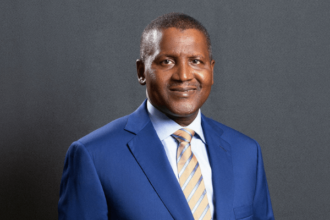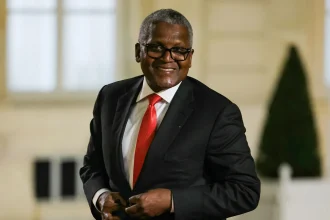

Africa’s wealthiest man, Aliko Dangote, has signalled that he is willing to give up more of his ownership in the Dangote Petroleum Refinery if demand for its shares proves significantly stronger than the current public offering can accommodate.
The comments could open the door to a broader transfer of ownership in one of Africa’s largest industrial assets, although Dangote has not committed to a specific additional share sale or indicated how far his stake could ultimately fall.
Speaking to ARISE News, Dangote said his priority was to bring ordinary investors into the refinery rather than preserve his current level of ownership at all costs.
“I don’t mind to be diluted as much as possible because I want people to actually be part of this good journey,” Dangote said, according to ARISE News.
He added that the company could release more shares if necessary.
Dangote wants 10 million refinery shareholders
The Dangote Petroleum Refinery’s public offering is being positioned as a broad-based ownership opportunity rather than an investment aimed exclusively at institutional investors.
Dangote said the company wants to attract at least 10 million shareholders, with smaller retail investors receiving priority during the allocation process.
“This business does not belong to Mr Dangote; it belongs to all of us,” he said.
The strategy represents a significant shift in emphasis for an asset that has largely been associated with Dangote and his business empire since construction began.
The current IPO comprises 4.1 billion new shares priced at N525 each, raising approximately N2.15 trillion, or about $1.6 billion.
Those shares represent roughly 3.3% of the refinery’s enlarged share capital, putting the company’s implied valuation at about $49 billion.
That is higher than the approximately $40 billion valuation attached to the refinery during its $2.5 billion private placement in July.
Retail investors could face an allocation squeeze
The offer has been designed to allow relatively small investors to participate.
Applications can start at just 10 shares, costing N5,250, or roughly $4 at the exchange rate used in the offering.
That low entry point, combined with the prominence of the Dangote brand and the size of the refinery, has generated considerable interest from Nigerian retail investors.
Some investment platforms reportedly experienced heavy traffic after subscriptions opened on 14 September.
If valid applications substantially exceed the number of shares available, investors could receive fewer shares than they requested.
The IPO prospectus already provides for an over-allotment mechanism, giving the company scope to increase the number of shares available under certain circumstances.
Dangote’s latest comments indicate that the company is also considering what could happen beyond the existing allocation if demand remains exceptionally strong.
“We will do whatever it takes to make sure that we satisfy people who have actually persisted in getting these shares,” he said.
No confirmed 30% additional sale
A report by BusinessDay subsequently suggested that Dangote was considering 30% more share sales.
However, that figure does not appear in Dangote’s published comments to ARISE News. It should therefore be treated as a reported possibility rather than a confirmed target.
Dangote has not publicly specified how many additional shares could be made available, when such a transaction might take place or what minimum ownership percentage he would be prepared to retain.
Any expansion of the offer would also depend on the applicable regulatory approvals and, where existing shareholders are selling their holdings, agreement from those shareholders.
A larger public float would change the refinery’s ownership structure
The significance of Dangote’s comments goes beyond the number of investors who could receive shares.
A larger public offering would increase the portion of the refinery available to ordinary investors and potentially broaden the company’s publicly traded share base.
It would not, however, automatically mean that Dangote would lose control of the business.
The current offering represents only a small percentage of the enlarged company, meaning existing shareholders will continue to own the overwhelming majority after the IPO.
The key distinction is between public participation and control: thousands or millions of additional shareholders can own small portions of the refinery without fundamentally changing who controls its strategic direction.
Dangote Refinery is targeting major capacity expansion
The refinery began production in 2024 and currently has the capacity to process around 700,000 barrels of crude oil per day.
Its longer-term plan is considerably larger.
The company intends to increase capacity to approximately 1.4 million barrels per day by 2029, with the expansion expected to require around $14.3 billion in investment.
That expansion makes the IPO significant beyond the immediate fundraising exercise.
For investors, the valuation attached to the public offering reflects expectations about the refinery’s future production, profitability and expansion. For Dangote, bringing a much larger shareholder base into the company could also create a broader pool of public ownership around an asset intended to become an increasingly important part of Nigeria’s energy infrastructure.
IPO marks a new phase for Africa’s largest refinery
The public offering is scheduled to close on 13 October, with trading on the Nigerian Exchange expected to begin in November, subject to regulatory approval.
Whether Dangote ultimately sells additional shares will depend on the level of demand, the allocation process and the regulatory framework governing the offer.
For now, his message is clear: he is prepared to accept further dilution if it allows significantly more investors to participate.
That makes the Dangote refinery IPO more than a conventional capital-market transaction. It is also an attempt to move ownership of one of Africa’s most prominent industrial projects from being concentrated among a relatively small group of investors towards a much wider shareholder base.