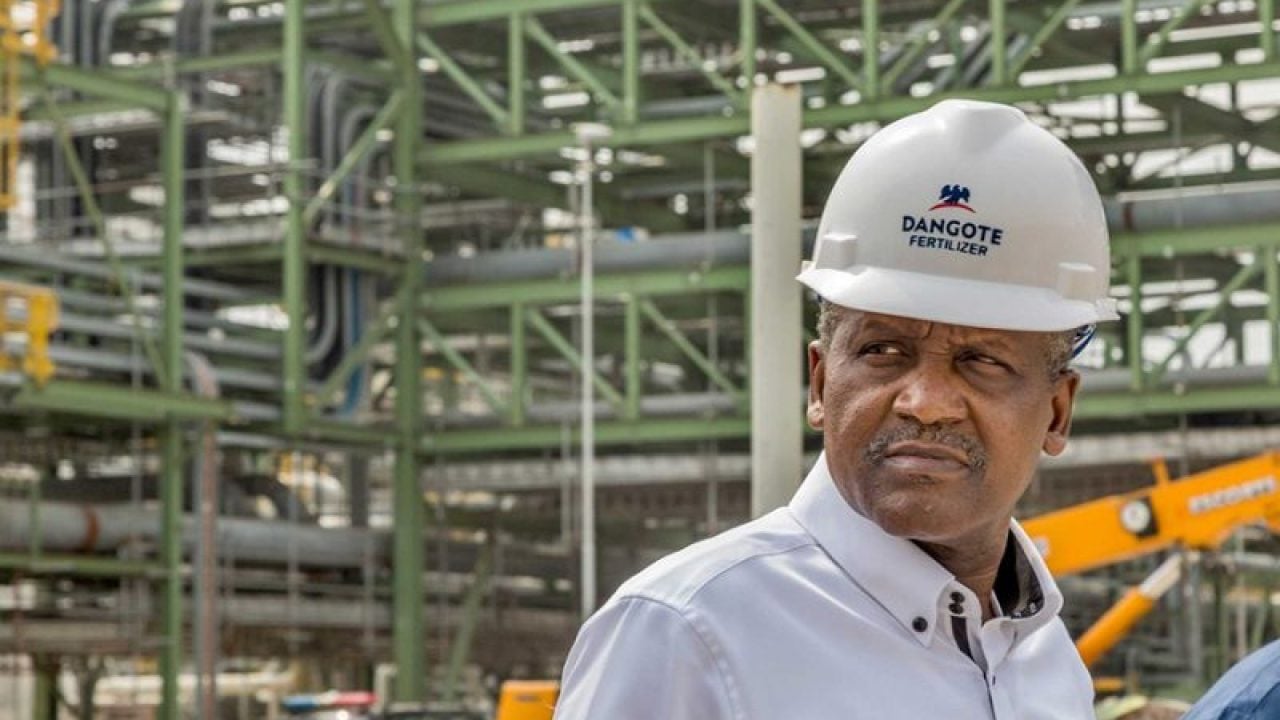
Africa’s biggest oil refinery is moving closer to the public markets after the Dangote Refinery secured a $400 million underwriting commitment ahead of its planned initial public offering.
- Dangote Refinery attracts another $400 million
- Dangote targeting $5 billion from the IPO
- Kenya could bring another R8.6 billion to the table
- South Africa could get a secondary Dangote listing
- Why the Dangote IPO matters to Africa
- A refinery built to reshape Nigeria’s oil industry
- A Pan-African investment story
- What investors will be watching
- Nigeria gets first shot at the listing
- A major test for African capital markets
The commitment from Marob Strategies and Consulting DIFC Ltd. and Lilium Capital Group adds further momentum to what could become one of the continent’s most closely watched capital-market transactions.
The proposed listing is expected to begin in Nigeria, while discussions are under way about giving investors in other African markets access to the share sale through possible secondary listings.
Dangote Refinery attracts another $400 million
Marob Strategies and Lilium Capital said the $400 million commitment will be implemented when the IPO launches, provided the transaction satisfies market conditions, corporate and regulatory approvals, definitive documentation and applicable securities laws.
The two firms have been appointed co-financial advisers to the refinery for the transaction.
They said they had previously helped secure $600 million through a private placement underwriting commitment, with shares subsequently being offered to sovereign wealth funds, governments, institutional investors and other eligible investors across Africa and the Caribbean.
According to the advisers, investor interest has been strong.
They attributed the response to demand for major industrial assets with the potential to play a significant role in Africa’s economic development.
Dangote targeting $5 billion from the IPO
The fundraising forms part of a much larger ambition.
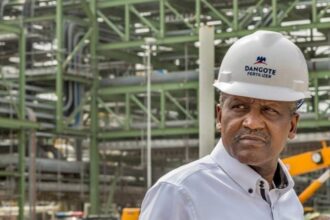
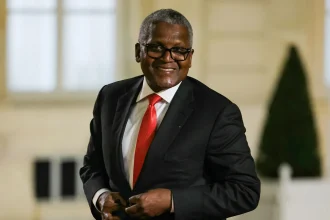
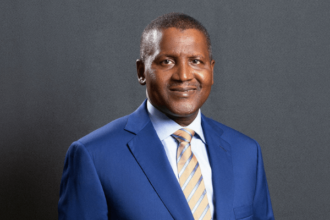
Aliko Dangote, Africa’s wealthiest individual and the refinery’s owner, is seeking to raise approximately $5 billion through the planned transaction.
The refinery has already raised about $2.5 billion through an oversubscribed private placement, according to the information provided for the proposed listing.
The latest $400 million underwriting commitment therefore represents another significant piece of the capital-raising puzzle.
If the broader IPO target is achieved, the transaction would give Dangote additional capital while potentially providing African and international investors with direct exposure to one of the continent’s most strategically important industrial projects.
Kenya could bring another R8.6 billion to the table
Interest in the offering is not limited to Nigeria.
Kenyan institutional investors could potentially commit as much as $500 million, equivalent to approximately R8.6 billion at an indicative exchange rate of R17.20 to the US dollar.
The potential Kenyan participation is particularly significant because institutional investors such as pension funds have substantial pools of long-term capital.
If the full $500 million were committed, Kenyan investors alone could account for roughly 10% of Dangote’s targeted $5 billion fundraising.
That would underline the extent to which the refinery has become an investment proposition extending beyond Nigeria’s borders.
South Africa could get a secondary Dangote listing
South Africa is also potentially part of the refinery’s Pan-African capital-market strategy.
The Johannesburg Stock Exchange (JSE) has acknowledged discussions with the Dangote Group regarding a potential listing.
The current plan is understood to involve a Nigerian listing first, followed by consideration of secondary listings elsewhere.
For South African investors, a JSE secondary listing could provide a more direct route into the refinery without requiring participation through the Nigerian market.
It would also give the JSE another opportunity to position Johannesburg as a gateway for major African companies seeking regional investor exposure.
Why the Dangote IPO matters to Africa
The proposed listing is significant well beyond the amount of money being raised.
The Dangote Refinery represents one of Africa’s largest private industrial investments and was developed with the ambition of transforming Nigeria’s petroleum supply chain.
Its scale means that the IPO could become a test of how effectively African capital markets can finance large infrastructure and industrial businesses.
For years, African companies seeking substantial funding have often looked towards international financial centres and foreign investors.
A successful Pan-African offering would provide a different model: African capital helping finance an African industrial asset through African markets.
That is precisely the opportunity highlighted by the refinery’s financial advisers.
A refinery built to reshape Nigeria’s oil industry
The Dangote facility is located in the Lekki area of Lagos and was designed as an integrated petroleum refinery and petrochemical complex.
Its development has attracted considerable attention because Nigeria is one of Africa’s major oil producers but has historically depended heavily on imported refined petroleum products.
The refinery’s emergence therefore has implications beyond Dangote’s corporate balance sheet.
Its ability to process crude domestically has the potential to reduce Nigeria’s dependence on imported refined fuels, while creating opportunities for exports to other African markets.
That regional dimension is one reason investors beyond Nigeria are paying close attention to the company.
A Pan-African investment story
The growing interest from Kenya, South Africa and other African markets suggests that Dangote is positioning the IPO as more than a conventional Nigerian stock-market listing.
The strategy could create a broader investor base while strengthening links between Africa’s major exchanges.
Kenya’s potential participation is particularly noteworthy because the Nairobi Securities Exchange has previously indicated an interest in facilitating access to the offering.
The JSE, meanwhile, has confirmed that discussions with Dangote Group have taken place.
If secondary listings eventually materialise, investors in multiple African markets could gain exposure to the refinery.
What investors will be watching
Despite the growing interest, the $400 million commitment should not be interpreted as money already guaranteed to flow into the refinery regardless of circumstances.
The advisers have made it clear that implementation depends on several conditions, including regulatory approvals, market conditions and completion of definitive transaction documents.
Investors will also be watching the refinery’s financial performance, production capacity, operating costs, crude supply arrangements and the broader outlook for global oil and refined-product markets.
The valuation attached to the IPO will be another critical factor.
A high valuation could help Dangote achieve its fundraising ambitions but could also influence how attractive the shares appear to institutional investors.
Nigeria gets first shot at the listing
The immediate priority remains a Nigerian listing.
The refinery’s advisers include Stanbic IBTC Capital, Vetiva Advisory Services and FirstCap, which have been selected to assist with the IPO.
Once the Nigerian process advances, attention is expected to turn increasingly towards the potential secondary-market opportunities elsewhere in Africa.
That could put the proposed transaction on the radar of pension funds, asset managers and other institutional investors across the continent.
A major test for African capital markets
The Dangote Refinery IPO could ultimately become one of the defining African capital-market transactions of 2026.
Its size, industrial importance and cross-border investor interest make it considerably more consequential than a routine corporate listing.
If Dangote succeeds in raising its targeted $5 billion, the transaction could demonstrate that African companies can mobilise significant pools of African institutional capital for projects of global scale.
The $400 million underwriting commitment is another step in that direction.
But the real test will come when the refinery enters the public markets and investors have to decide what the world’s largest single-train refinery is worth.