
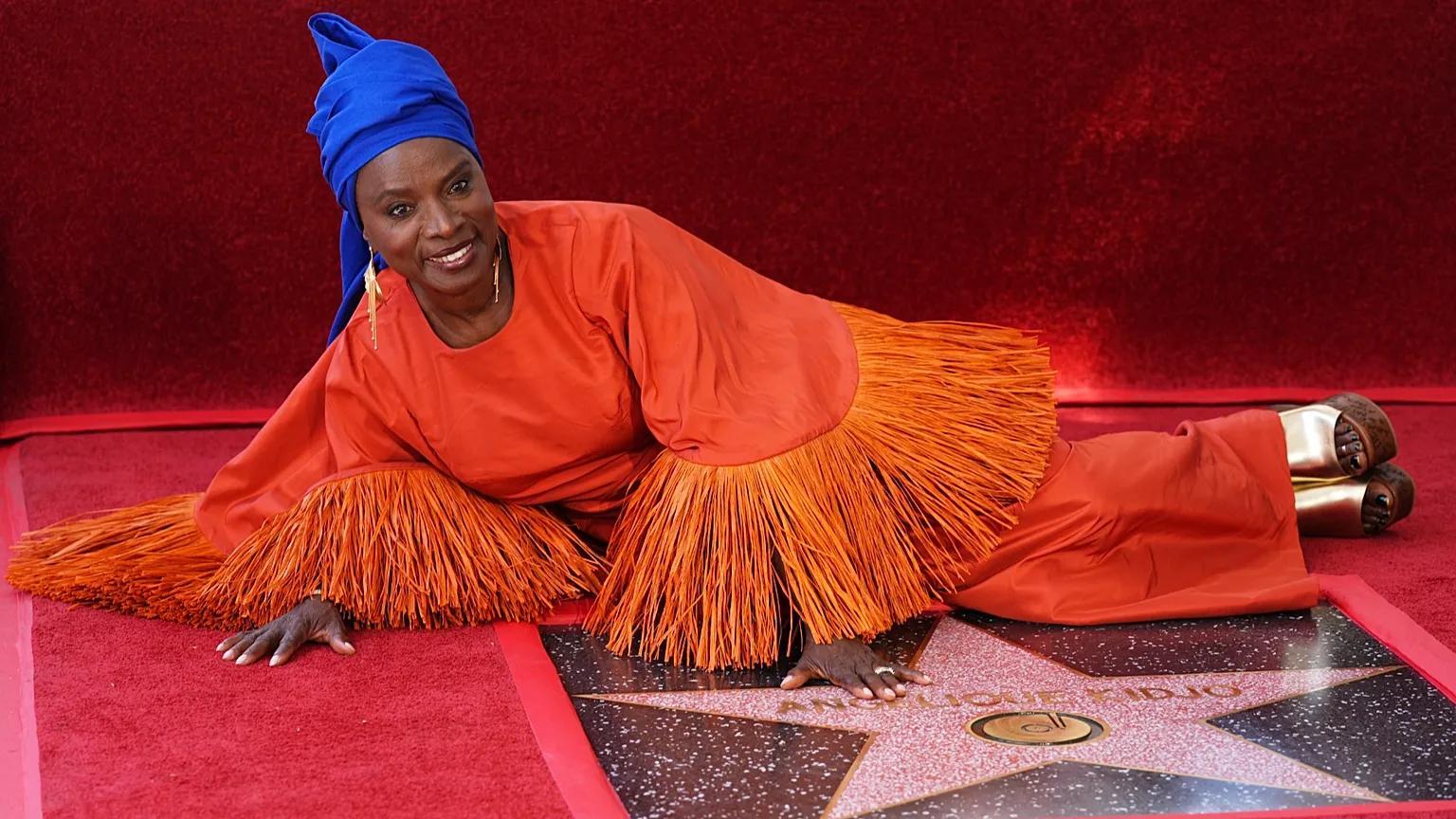
Beninese music legend Angélique Kidjo is set to make history in Los Angeles this week, becoming the first African musician — and the first Black African — to receive a star on the Hollywood Walk of Fame.
- Angélique Kidjo to receive Hollywood’s highest-profile music honours
- A career built across music, culture and activism
- Five Grammy Awards and counting
- Why the Hollywood Walk of Fame matters
- A milestone for African representation
- From Benin to Hollywood Boulevard
- A recognition that arrives at the right time
- More than a star on the pavement
The five-time Grammy Award winner will be honoured in the Recording category during a ceremony at 7011 Hollywood Boulevard, marking another major milestone in a career that has taken African music from West Africa to some of the world’s biggest stages.
The recognition is more than a personal achievement for Kidjo. It also represents a significant moment for African music, which has become increasingly influential in the international entertainment industry.
Angélique Kidjo to receive Hollywood’s highest-profile music honours
According to Billboard, Kidjo’s star will be unveiled during a ceremony featuring actor Willem Dafoe and music executive Harvey Mason Jr. as guest speakers.
The honour places Kidjo among the thousands of entertainers who have been recognised along Hollywood Boulevard for their contributions to film, television, music and other areas of popular culture.
For an artist whose career has been deeply connected to African identity and culture, the location of the honour is particularly significant.
Kidjo has spent decades challenging the idea that African music belongs solely within a regional or niche market.
Her career has instead positioned African sounds, languages and traditions alongside global pop, jazz, soul and other musical traditions.
A career built across music, culture and activism
Kidjo’s influence extends well beyond her recording career.
The Beninese-born artist has established herself as a performer, songwriter and cultural ambassador while using her public profile to advocate for social causes.
Her music has frequently drawn on African traditions while incorporating influences from around the world, helping her build an audience far beyond the continent.
She has also used her platform to highlight issues affecting African communities and support humanitarian initiatives.
That combination of artistic success and social advocacy has become a defining feature of her international career.
Five Grammy Awards and counting
Kidjo’s Hollywood recognition comes after years of international acclaim.
She is a five-time Grammy Award winner, placing her among the most decorated African artists in the history of the prestigious US music awards.
Her success has helped establish a pathway for African musicians seeking international audiences without abandoning the cultural identity that shaped their music.
That distinction matters at a time when African music is enjoying unprecedented global attention.
Afrobeats, Amapiano and other African genres have increasingly crossed borders, while African performers have become regular fixtures on international festival stages, streaming charts and major award ceremonies.
Kidjo’s career predates much of the current explosion in global African music, making her contribution particularly notable.
Why the Hollywood Walk of Fame matters
The Hollywood Walk of Fame is one of the world’s best-known entertainment landmarks.
Stretching along Hollywood Boulevard and Vine Street in Los Angeles, it features more than 2,800 stars embedded into the pavement.
Each permanent monument recognises an individual or fictional character for achievements in entertainment.
The stars are divided into categories including recording, motion pictures, television, radio and live theatre.
Kidjo’s recognition in the Recording category therefore specifically acknowledges her contribution to music.


A milestone for African representation
The significance of Kidjo’s star extends beyond the ceremony itself.
For decades, African musicians have achieved international fame without necessarily receiving the same institutional recognition as artists from the United States and Europe.
Kidjo’s honour represents a shift in that landscape.
It also reflects the changing global perception of African music. African artists are no longer simply participating in international music markets; they are increasingly influencing them.
Kidjo’s achievement can therefore be viewed as part of a much larger story about African creativity becoming a central component of global popular culture.
From Benin to Hollywood Boulevard
Kidjo’s journey from Benin to one of the world’s most recognisable entertainment landmarks is also symbolic of the international reach of African artistry.
Her career has demonstrated that African musicians can build sustainable global audiences while retaining strong connections to their cultural roots.
Rather than treating African identity as a limitation, Kidjo has made it a central part of her artistic language.
That approach has helped make her one of the continent’s most respected musical ambassadors.
A recognition that arrives at the right time
The Hollywood Walk of Fame ceremony comes at a particularly important moment for African music.
Streaming platforms have made it easier than ever for artists from Lagos, Johannesburg, Accra, Nairobi, Dakar and other African cities to reach audiences thousands of kilometres away.
Genres such as Afrobeats and Amapiano have become global commercial forces, while collaborations between African artists and international stars have become increasingly common.
Kidjo’s career provides an important historical bridge between the current global boom and the generations of African musicians who spent decades building international audiences before today’s digital music economy existed.
More than a star on the pavement
For Kidjo, the Hollywood Walk of Fame star adds another major honour to an already extraordinary career.
For African music, however, the moment carries a wider meaning.
The five-pointed star embedded into a Hollywood pavement may be physically small, but its symbolism is considerably larger: one of Africa’s most influential musicians is being formally recognised at one of the world’s most famous entertainment landmarks.
Kidjo’s achievement is therefore not simply about Hollywood.
It is about how far African music has travelled — and how much further its influence could go.