
The United States has announced new visa restrictions targeting certain foreign nationals connected to the development or implementation of policies in South Africa that Washington says involve uncompensated land seizures, race-based discrimination or the incitement of imminent violence against minority ethnic or racial groups.
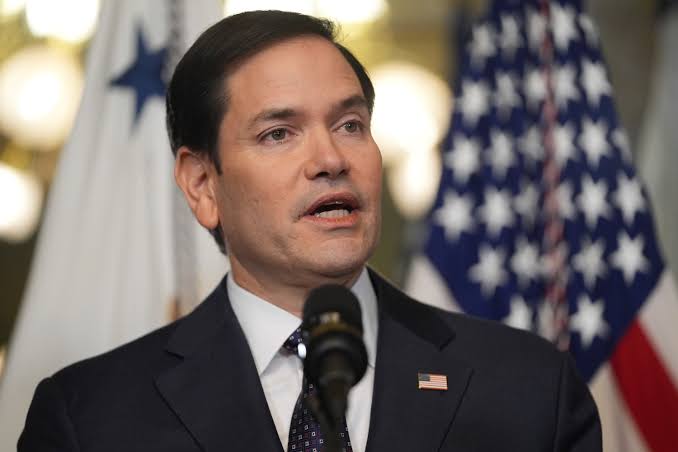
US Secretary of State Marco Rubio announced the measure on Tuesday, 15 September 2026, as relations between Washington and Pretoria remain strained under President Donald Trump’s administration.
The announcement does not amount to a blanket visa restriction on South African citizens. Instead, the policy is directed at foreign nationals whom the US says are responsible for, or complicit in, specified laws or policies.
Rubio did not name any individuals who would be affected by the announcement.
What the new US visa restrictions target
According to Rubio, the restrictions apply to foreign nationals whom Washington considers responsible for, or involved in, the enactment or implementation of policies that enable three broad categories of conduct.
These are:
- uncompensated land seizures;
- race-based discrimination; and
- the incitement of imminent violence against members of minority ethnic or racial groups in South Africa.
Rubio said the South African government had not adequately addressed concerns previously raised by the US administration.
The announcement therefore represents a targeted immigration measure linked to Washington’s assessment of South African government policies, rather than a general suspension of US visas for South Africans.
Why US-South Africa relations have deteriorated
The visa announcement comes after months of increasingly difficult relations between Washington and Pretoria.
The Trump administration has repeatedly criticised South Africa’s approach to land reform and policies intended to address racial inequality following apartheid.
Washington has also objected to South Africa’s decision to bring a case against Israel at the International Court of Justice concerning Israel’s military operations in Gaza. The US is a close ally of Israel.
The disagreements have extended beyond diplomatic statements.
Trump previously cut US assistance to South Africa, expelled South Africa’s ambassador to Washington and offered a pathway for some white South Africans to relocate to the United States.
The Trump administration has also repeatedly raised allegations concerning the treatment of white South Africans — claims that Pretoria has rejected.
Pretoria rejects claims of white persecution
South Africa’s government disputes Washington’s characterisation of conditions in the country.
Pretoria has maintained that there is no state-backed campaign of persecution or discrimination against white South Africans and has rejected claims of a “white genocide”.
President Cyril Ramaphosa has previously called for misinformation about South Africa to be challenged, while arguing that the country’s post-apartheid constitutional order is based on equality and non-racialism.
South African officials have also argued that land reform must be understood within the country’s history of dispossession and the continuing inequalities created by apartheid.
The competing positions mean the latest visa measure is not simply an immigration announcement; it is also part of a broader disagreement over how South Africa’s race, land and foreign policies are understood.
No names announced by Rubio
One of the immediate uncertainties is who will actually be affected.
Rubio’s announcement did not identify specific people or provide a public list of individuals whose US visa eligibility has been restricted.
That means it is not currently possible to establish from the announcement alone how many people could ultimately be subject to the restrictions.
The policy’s practical impact will depend on how the US State Department applies the criteria to individual cases.
This distinction is important for South Africans travelling to the United States: the announcement does not state that ordinary South African tourists, students, business travellers or other visa applicants are collectively being banned from entering the US.
The US Embassy’s Johannesburg visa information continues to provide ordinary visa-processing information for applicants, including interview and security-screening requirements.
A wider tightening of US visa policy
The South Africa announcement comes against the backdrop of broader changes to US visa policy under the Trump administration.
The State Department has been restructuring visa services in Africa, including moving routine visa operations from several locations to regional hubs from August 2026. The department said the changes were intended to strengthen security screening and make visa adjudication more consistent.
The US has also introduced or maintained various visa restrictions affecting nationals of particular countries and categories of applicants.
Those measures are separate from the new South Africa-specific policy announced by Rubio.
What the announcement means for ordinary South Africans
For now, the most significant point is the scope of the announcement.
The policy targets certain foreign nationals based on their alleged responsibility for or involvement in specified South African laws or policies. It is therefore different from a country-wide visa suspension covering all South African passport holders.
No specific list of affected individuals was provided in Rubio’s announcement.
The development nevertheless adds another layer to an already strained US-South Africa relationship.
It follows earlier disputes over land reform, racial policy, South Africa’s position on Israel and Gaza, and Washington’s claims about the treatment of white South Africans.
Pretoria, meanwhile, continues to defend its constitutional and foreign-policy positions and has rejected allegations of white persecution.
What happens next?
The immediate focus will be on how the US State Department implements the new restrictions and whether it identifies individuals who fall within the announced criteria.
For South Africa, the measure adds pressure to a relationship that has already experienced significant diplomatic friction under the Trump administration.
For ordinary South Africans, however, the announcement currently does not constitute a blanket US visa ban.
The practical effect will depend on the identities of those targeted, the specific legal basis applied to individual cases and any further guidance issued by Washington.





![Chinese and Iranian naval vessels dock near Simon’s Town as South Africa hosts a Chinese-led BRICS-linked maritime exercise amid renewed US scrutiny. [Dwayne Senior/Bloomberg via Getty Images] ©provided by Business Insider Africa](https://myvirgo.co.za/wp-content/uploads/2026/01/warship-south-africa-330x220.png)