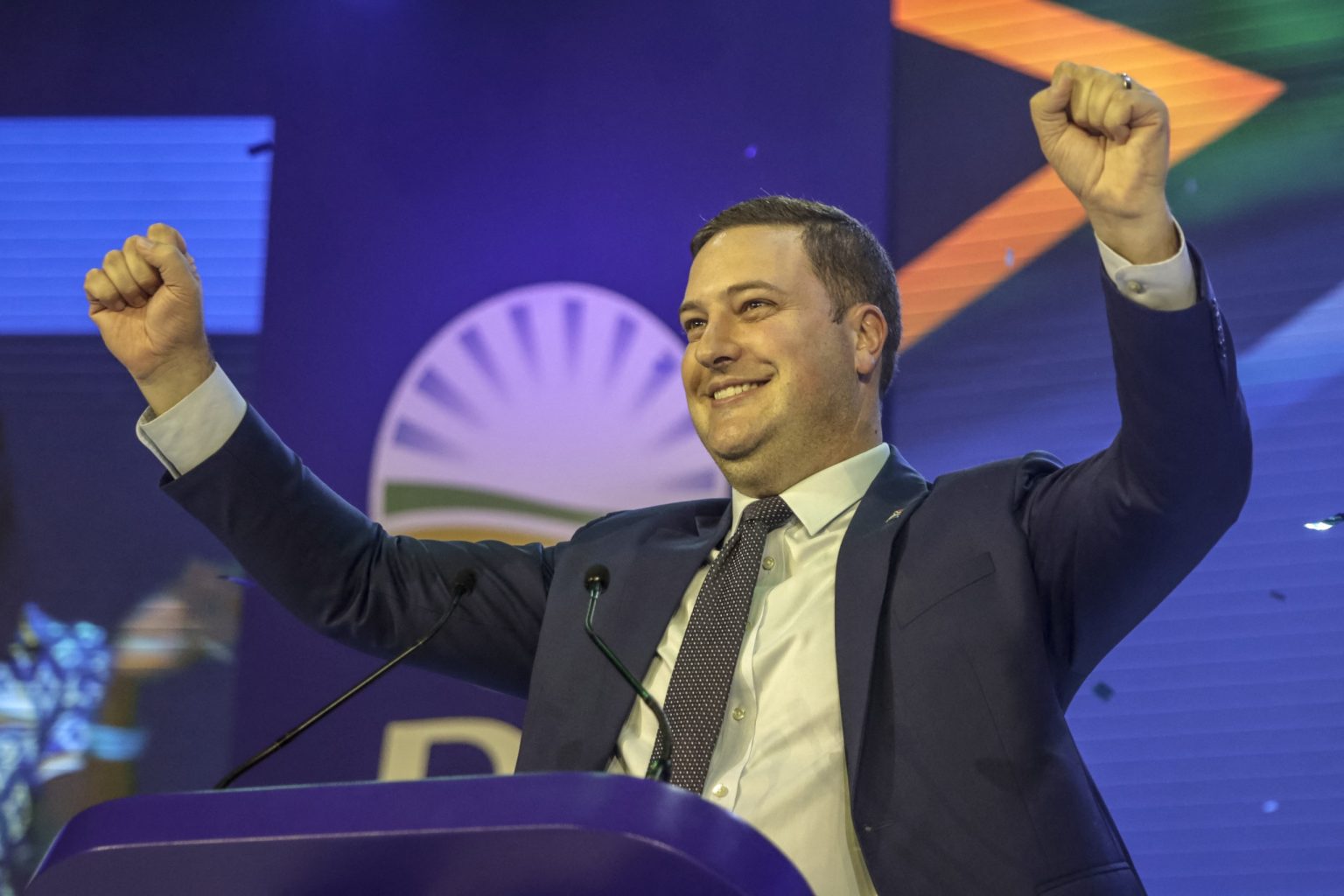
The Democratic Alliance (DA) has made public its proposed coalition agreement with ActionSA for Gauteng’s three metropolitan municipalities, setting the stage for another confrontation between the two parties as negotiations over local government control remain unresolved.
DA federal leader Geordin Hill-Lewis described the proposal as the party’s “full and final offer” after details of the previously confidential arrangement were leaked on Saturday, 21 November.
The proposed agreement would see the two parties support each other’s mayoral and Speaker candidates in Johannesburg, Tshwane and Ekurhuleni. However, it would also allow the party winning the mayoral position in each municipality to govern independently, appointing its executive entirely from within its own ranks.
ActionSA president Herman Mashaba rejected the proposal, while national chairperson Michael Beaumont accused the DA of offering his party a deal that would leave it without meaningful influence in two of the three metros.
How the DA wants to divide Gauteng’s three metros
Under the DA’s proposed arrangement, ActionSA’s Dr Nasiphi Moya would retain the mayoral position in Tshwane, while the DA would take control of Johannesburg and Ekurhuleni.
The proposed leadership structure is as follows:
-
Johannesburg: DA’s Helen Zille would become mayor.
-
Tshwane: ActionSA’s Nasiphi Moya would lead the municipality.
-
Ekurhuleni: DA’s Khathutshelo Rasilingwane would become mayor.
Hill-Lewis argued that offering Tshwane to ActionSA represented a significant concession by the DA, particularly because the party had identified Cilliers Brink as its preferred mayoral candidate for the capital.
The proposed arrangement would operate on a confidence-and-supply basis. Both parties would support one another’s mayoral and Speaker candidates and protect their respective administrations against motions of no confidence.
However, the party securing the mayoralty in each metro would have the authority to appoint its own Mayoral Committee, without sharing executive positions with its coalition partner.
Hill-Lewis also indicated that the DA would hold separate discussions with other political parties in municipalities where the combined DA and ActionSA seat totals fall short of the majority required to govern.
Mashaba rejects the proposal
Mashaba did not hide his dissatisfaction with the DA’s final offer, dismissing it as unacceptable.
The ActionSA leader said the proposal did not deserve a response and accused the DA of treating his party as foolish over its expectations for the coalition negotiations.
He also raised concerns about the implications of the proposed arrangement for Black voters in townships, particularly regarding access to public services.
His response signalled that ActionSA was unwilling to accept an agreement that would leave it with limited influence in the metropolitan governments where it had secured significant electoral support.
Beaumont calls the DA proposal an ‘April Fools’ joke’
ActionSA national chairperson Michael Beaumont was equally critical, describing the DA’s proposal as an “April Fools’ joke.”
Beaumont argued that the arrangement would effectively reduce ActionSA to an observer in Johannesburg and Ekurhuleni.
Under the DA’s proposal, ActionSA would not receive Mayoral Committee positions or Section 79 oversight roles in those municipalities, despite being expected to support the DA’s mayoral candidates.
He also criticised the prospect of handing Johannesburg and Ekurhuleni to DA leaders Helen Zille and Khathutshelo Rasilingwane without providing ActionSA with meaningful executive participation.
For ActionSA, the central issue is not simply which party occupies the mayoral office, but whether coalition partners have sufficient representation to influence policy, service delivery and municipal oversight.
ActionSA reveals its rejected counter-proposal
Beaumont also disclosed that ActionSA had previously presented the DA with an alternative coalition arrangement.
Under that proposal, the DA would receive the mayoralties of both Johannesburg and Ekurhuleni, while ActionSA would secure deputy mayor positions and representation in the municipal executives.
However, ActionSA attached a significant condition: Helen Zille, Cilliers Brink and Herman Mashaba would all have to step aside to allow alternative candidates to take up leadership positions.
The proposal was intended to remove the political tensions surrounding the three figures and create room for a working relationship between the parties.
The DA rejected those terms.
The disagreement highlights how leadership rivalries and personal relationships have become major obstacles in negotiations that could determine the political future of Gauteng’s largest municipalities.
Hill-Lewis accuses Mashaba of moving towards the ANC
Hill-Lewis responded to ActionSA’s rejection by accusing Mashaba of using the disagreement to justify a shift towards the African National Congress (ANC).
He also dismissed demands that specific political leaders be excluded from mayoral contests as unworkable.
The DA’s position is that its proposal offers ActionSA a route to retain control of Tshwane while allowing the DA to govern Johannesburg and Ekurhuleni.
ActionSA, however, wants greater executive participation and has rejected an arrangement that would leave it supporting DA-led administrations without representation in their municipal executives.
ActionSA opens discussions with other political parties
With the DA proposal rejected, ActionSA has confirmed that it is engaging the ANC, Economic Freedom Fighters (EFF) and uMkhonto weSizwe (MK) Party as alternative coalition possibilities are explored.
These discussions could reshape the political negotiations across Gauteng, particularly if ActionSA finds common ground with parties outside the DA-led arrangement.
The outcome remains uncertain, with both the DA and ActionSA maintaining positions that appear difficult to reconcile.
At the centre of the dispute is a fundamental question: should coalition agreements focus primarily on securing stable mayoral administrations, or should every participating party receive a meaningful share of executive power and oversight responsibilities?
Until that question is resolved, negotiations over Johannesburg, Tshwane and Ekurhuleni are likely to remain politically tense.