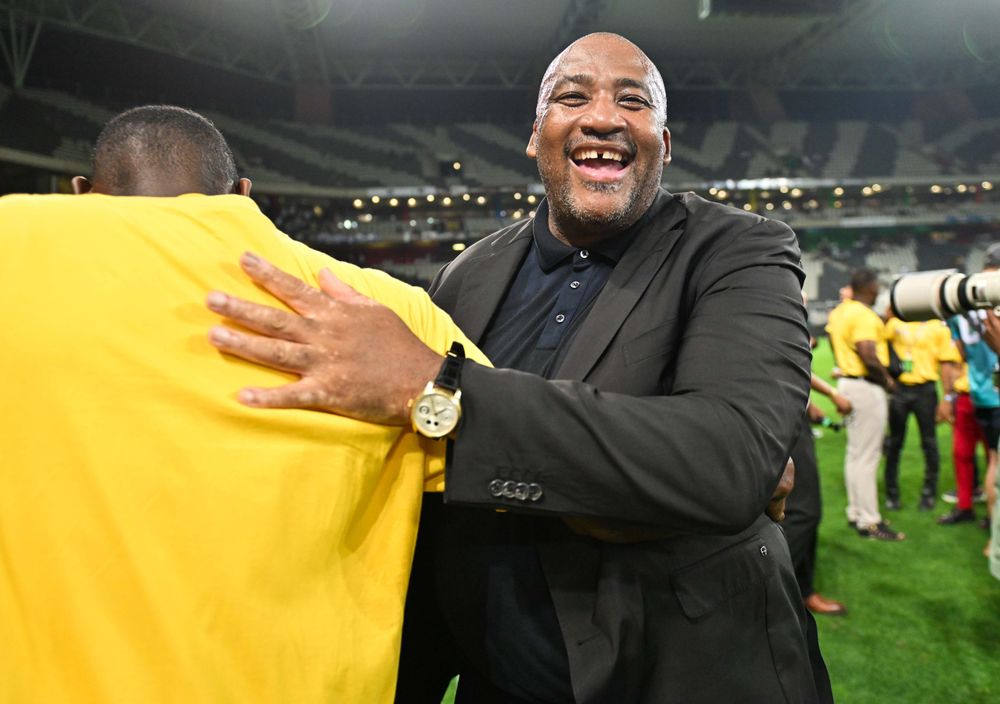
Minister of Sport, Arts and Culture Gayton McKenzie has publicly defended the department’s expenditure on South Africa’s FIFA World Cup promotional programme, releasing a detailed breakdown of costs after opposition parties questioned spending amounting to approximately R31 million.
The controversy emerged after members of the Democratic Alliance (DA) and ActionSA scrutinised the department’s spending on a 151-member delegation that travelled to the FIFA World Cup in North America.
Responding to the criticism, McKenzie said the expenditure had already been disclosed through a parliamentary reply and insisted there had been no attempt to conceal how public funds were spent.
He also challenged anyone alleging corruption or financial misconduct to present evidence supporting those claims.
Minister releases detailed spending breakdown
According to McKenzie, the World Cup programme involved 151 delegates travelling to the United States and Mexico, excluding service providers.
He said private sponsors contributed towards portions of the programme, although the final reconciliation of sponsorship contributions is still being completed.
The department’s expenditure was divided across several categories designed to promote South Africa through sport, arts and cultural diplomacy.
The spending included:
- R7.86 million for the official government delegation, including flights, accommodation, local transport, travel insurance, daily allowances and logistical support.
- R6.71 million for the South Africa 2010 Legends Programme, including exhibition matches involving former Bafana Bafana players and Mexico’s 2010 legends team.
- R3.36 million for official hospitality venues in Atlanta and Monterrey.
- R3.01 million for 294 FIFA World Cup match tickets.
- Approximately R10 million for South African exhibition and promotional spaces in Mexico City, Atlanta and Monterrey.
McKenzie argued that the programme aligned with the department’s responsibility to market South Africa internationally through sport, culture and the creative industries.
McKenzie rejects corruption allegations
Addressing criticism surrounding the expenditure, McKenzie rejected suggestions that he had personally benefited from the trip.
“If any person believes money was improperly allocated, appropriated, or spent, or that I personally benefited in a corrupt manner, I invite them to bring that evidence forward,” he said.
He further argued that some public commentary had incorrectly suggested that he personally spent R31 million, describing those claims as inaccurate.
According to the minister, the reported amount represents the cost of the broader departmental programme rather than personal expenditure.
Minister outlines his own travel costs
McKenzie also disclosed his individual travel expenses during the five-week programme.
He said his official travel, including flights, accommodation and travel insurance, amounted to R1,058,379.75.
The minister added that he declined subsistence and travel allowances valued at approximately R55,000.
He also stated that he used shared transport whenever possible and confirmed that no government funds were used to pay for travel by members of his family.
Opposition seeks greater accountability
The spending has become a point of political debate, with opposition parties questioning whether the programme represented appropriate use of public resources.
Public expenditure on international events often attracts heightened scrutiny, particularly during periods of fiscal pressure and competing demands on government budgets.
While critics have questioned the scale of the expenditure, the department maintains that international sporting events provide opportunities to promote South Africa’s tourism, investment, cultural industries and sporting profile.
Whether those objectives justify the associated costs remains a matter of political debate.
Transparency and public accountability
The release of detailed expenditure forms part of Parliament’s oversight process, allowing elected representatives to scrutinise how government departments spend public funds.
Should any allegations of financial misconduct arise, they would need to be supported by evidence and investigated through the appropriate legal and oversight institutions.
At present, McKenzie maintains that the expenditure complied with government procedures and has invited any party alleging wrongdoing to provide supporting evidence.
The discussion is therefore likely to continue both in Parliament and in the public arena as questions around government spending priorities remain under close scrutiny.