
The South African government is preparing to introduce one of its most comprehensive migration reform programmes in years, with proposals that could reserve selected business activities exclusively for South African citizens while overhauling the country’s immigration, refugee and citizenship laws.
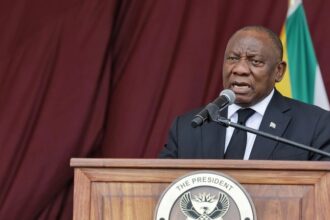
Justice and Constitutional Development Minister Mmamoloko Kubayi, who chairs the Inter-Ministerial Committee (IMC) on Migration, announced the reforms during a media briefing on Sunday, describing them as part of a broader strategy to improve migration management, strengthen law enforcement and protect economic opportunities for local communities.
The proposed legislative changes form part of government’s long-term effort to modernise migration policy while balancing national security, economic development and South Africa’s constitutional obligations.
New Bills Aim to Reshape Migration Policy
At the centre of the reform agenda are three key pieces of legislation currently under review:
- The Citizenship, Immigration and Refugee Protection Bill
- The Employment Services Amendment Bill
- The Business Licensing Bill
Among these, the proposed Business Licensing Bill has attracted particular attention because it would allow certain categories of businesses to be reserved exclusively for South African citizens.
Government believes the measure could help expand opportunities for local entrepreneurs and address concerns about unemployment, particularly in sectors where competition for small business opportunities has become increasingly contentious.
While officials have confirmed the policy direction, the specific business sectors that could be reserved for citizens are expected to be clarified during the legislative process.
Government to Engage Key Industries
As part of the consultation process, the Department of Trade, Industry and Competition (DTIC) will begin discussions with stakeholders across several industries, including:
- Hospitality
- Agriculture
- Tourism
These engagements are expected to examine labour market dynamics, business regulation and the role of migration in supporting economic growth while ensuring greater participation by South African workers.
Government says the consultations are intended to balance economic realities with the need to improve employment prospects for citizens.
Five-Point Migration Plan Begins Showing Results
Kubayi also provided an update on government’s Five-Point Plan on Migration Management, which was introduced to improve the country’s ability to manage migration more effectively.
According to the minister, implementation of the strategy is beginning to produce measurable progress across several priority areas.
These include:
- Strengthening law enforcement against immigration-related offences.
- Improving border security and border management.
- Enhancing cooperation with neighbouring countries.
- Reforming migration legislation and policy.
- Maintaining humanitarian protections in line with constitutional and international obligations.
Government maintains that these reforms are designed to improve coordination between departments while ensuring that migration systems remain efficient, lawful and responsive to changing circumstances.
Closing Legislative Gaps
Kubayi said government has identified weaknesses within existing legislation that may be limiting effective migration management.
The ongoing policy review seeks to strengthen enforcement mechanisms, improve coordination between state institutions and close regulatory loopholes that have emerged over time.
According to the minister, the objective is not simply to tighten immigration controls but to create a system that remains fair, constitutionally compliant and capable of responding to modern migration challenges.
She emphasised that human dignity, social cohesion and respect for human rights will continue to underpin government’s approach, even as enforcement measures become more robust.
Balancing Economic Growth and Migration Management
South Africa continues to face one of the highest unemployment rates in the world, placing increasing pressure on policymakers to find solutions that stimulate economic growth while protecting local employment.
The proposed reforms reflect government’s attempt to address both economic and migration-related concerns simultaneously. Supporters argue that clearer immigration rules, improved enforcement and targeted business regulations could reduce regulatory uncertainty and create a more orderly migration system.
However, legal experts and business organisations are expected to closely examine the proposed legislation to ensure that any restrictions remain consistent with the Constitution, international obligations and South Africa’s investment environment.
As the Bills move through the consultation and parliamentary process, further details are expected to emerge regarding implementation timelines, affected industries and the practical impact on businesses, employers and migrants already living and working in South Africa.
What Happens Next?
Over the coming weeks, government departments will continue consulting industry stakeholders before finalising the proposed legislation for parliamentary consideration.
If approved, the reforms could represent one of the most significant changes to South Africa’s migration and business regulatory framework in recent years, with implications for employers, entrepreneurs, investors and migrants alike.
The legislative process will also provide opportunities for public participation, allowing businesses, civil society organisations and citizens to comment before the Bills become law.