
As debate over migration intensifies across Africa, South Africa has urged fellow African Union (AU) member states to prioritise solutions over political finger-pointing. Government says the continent must tackle the economic, political and security pressures forcing millions to leave their home countries rather than focusing solely on the countries receiving migrants.
The remarks come ahead of the African Union Executive Council meeting in Addis Ababa, where migration is expected to dominate discussions following growing diplomatic concern over immigration policies, border management and recent anti-immigration protests in South Africa.
South Africa Rejects Blame Over Migration Debate
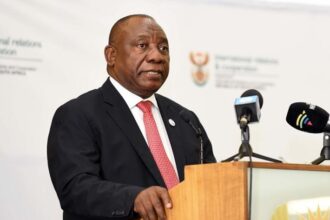
Speaking during a government media briefing, Minister of International Relations and Cooperation Ronald Lamola cautioned against turning the upcoming AU discussions into an exercise of assigning blame.
According to Lamola, migration is a continental issue that requires collective responsibility and coordinated policy responses rather than criticism directed at individual member states.
He stressed that discussions should focus on strengthening cooperation between African countries while respecting each nation’s sovereign right to enforce its immigration laws.
Migration Pressures Affect the Entire Continent
South Africa remains one of Africa’s biggest destinations for both documented and undocumented migrants, attracting people seeking employment, education and improved living conditions.
Lamola noted that migration cannot be viewed purely through a law enforcement lens.
Instead, he argued that African leaders should address the underlying drivers of migration, including:
- High unemployment
- Limited economic opportunities
- Political instability
- Armed conflict
- Climate change
- Weak governance
Government believes reducing these pressures in countries of origin will lessen irregular migration across the continent over the long term.
Balancing Border Security and Human Rights
The South African government maintains that every sovereign state has the responsibility to protect its borders and regulate immigration.
However, Lamola emphasised that immigration enforcement should always occur within the framework of the law and with respect for human dignity.
He reiterated that concerns raised by several African governments have largely centred on incidents involving vigilante groups targeting foreign nationals rather than criticism of South Africa’s official immigration enforcement.
Government insists that immigration violations must be handled by authorised law enforcement agencies rather than private individuals.
African Frameworks Already Provide a Path Forward
Lamola highlighted that existing continental agreements already provide guidance for managing migration responsibly.
The African Union’s Protocol on the Free Movement of Persons and the Southern African Development Community (SADC) migration framework encourage member states to promote safe, orderly and regulated migration while recognising each country’s authority to enforce its immigration laws.
Government believes these frameworks should remain the foundation for future continental cooperation.
Diplomatic Relations Remain Strong
The minister also rejected speculation that South Africa’s recent diplomatic engagement with Ghana had been unsuccessful.
He said discussions with Ghanaian President John Mahama reaffirmed the strong historical relationship between the two countries while recognising South Africa’s constitutional responsibility to manage its borders.
Pretoria has indicated that it would welcome an African Union fact-finding mission or broader continental dialogue, provided the process remains balanced and focuses on finding practical solutions rather than assigning political blame.
Why the Debate Matters for Africa’s Economy
Migration has become one of Africa’s most significant policy issues because it directly affects labour markets, regional trade, border management and economic integration.
As implementation of the African Continental Free Trade Area (AfCFTA) continues, governments face the challenge of encouraging the legal movement of people while addressing illegal migration, organised crime and border security concerns.
Economists argue that sustainable migration management depends not only on stronger border controls but also on creating jobs, improving governance and promoting economic development across the continent.
A coordinated African approach could help reduce irregular migration while supporting regional stability, investment and long-term economic growth.
Looking Ahead
With migration expected to feature prominently at the African Union Executive Council meeting, South Africa is positioning itself as an advocate for a broader continental conversation focused on cooperation rather than confrontation.
Whether AU member states can reach consensus on balancing border security, human rights and economic integration may shape the future of migration policy across Africa for years to come.