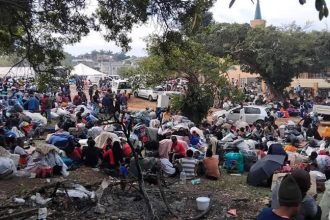
South Africa’s intensified immigration enforcement campaign has produced an unexpected financial headache: a R292 million repatriation bill that the Department of Home Affairs says it was not adequately budgeted to cover.
- Home Affairs seeks reimbursement from three African countries
- The bill has exploded beyond the original budget
- More than 82,000 people processed
- Malawians make up the largest group
- Nigeria has also organised large-scale voluntary returns
- Deportation and repatriation are not the same thing
- Lindela continues to process deportations
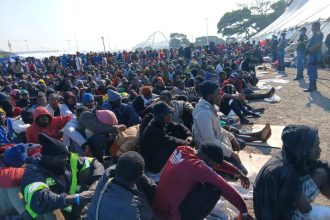
- Musina became a major processing hub
- South Africa’s migration bill raises questions about planning
- The diplomatic bill could be harder to collect
- The crackdown comes amid rising migration tensions
- Who should pay for repatriation?
- A costly turning point in South Africa’s migration policy
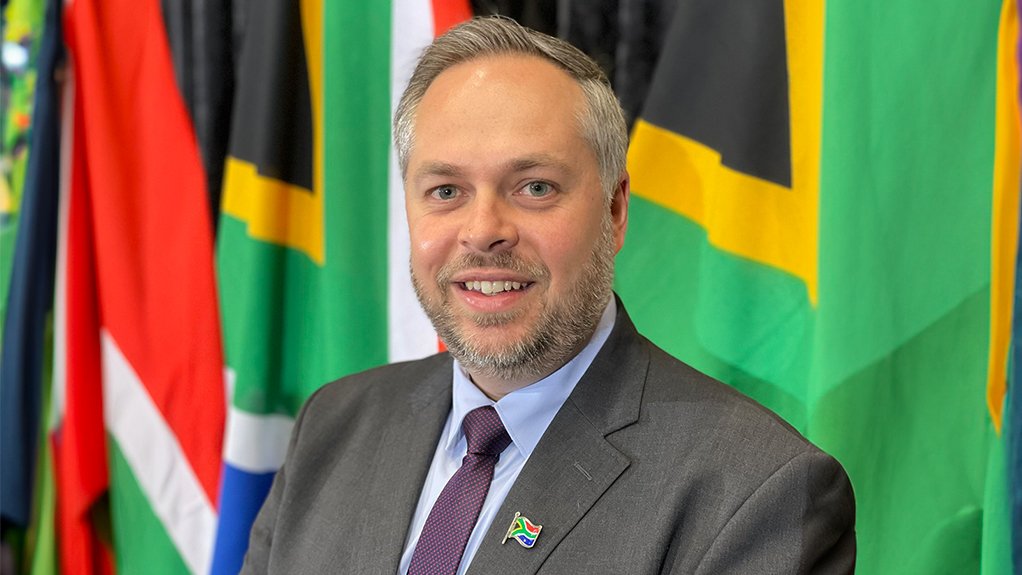
The department is now seeking reimbursement from Nigeria, Malawi and Ethiopia for costs incurred in returning their nationals, according to Home Affairs Director-General Tommy Makhode.
The expenditure is almost five times the department’s original R60 million allocation for deportations, highlighting the financial pressure created by the sharp increase in immigration enforcement and assisted returns.
But the issue is more complicated than simply sending undocumented migrants home. South Africa’s government distinguishes between deportation, which is a formal legal process, and voluntary or assisted repatriation, which involves people returning to their countries with government and diplomatic assistance.
Home Affairs seeks reimbursement from three African countries
Makhode told Parliament’s Portfolio Committee on Home Affairs that the department had written to the Malawian government and, through the Department of International Relations and Cooperation (DIRCO), to the embassies of Nigeria and Ethiopia.
The requests seek reimbursement for expenses incurred during the repatriation operation.
Transport has been one of the biggest costs, with authorities moving people between assembly points, processing facilities and border or departure points.
South Africa says it is now waiting for responses from the three governments.
The reimbursement request could become an important test of how African countries share the financial burden associated with migration management.
The bill has exploded beyond the original budget
The most striking figure is the gap between what Home Affairs planned to spend and what it has actually spent.
The department’s original allocation for deportations was R60 million.
The reported expenditure has now reached approximately R292 million.
That represents an overspend of about R232 million, or nearly 387% above the original allocation.
The scale of the increase reflects the rapid expansion of the operation during a period of heightened political and social pressure over undocumented migration.
South African government statements have repeatedly stressed that immigration enforcement must be conducted within the law while also maintaining humanitarian protections for vulnerable people.
More than 82,000 people processed
As of 6 August 2026, Home Affairs had processed 82,875 foreign nationals through its repatriation centres, according to the figures supplied to Parliament.
That number does not include people who were repatriated before 30 June or individuals processed directly by the Border Management Authority.
The government’s figures have therefore been compiled across several different channels, making it important to distinguish between people processed through specific repatriation centres and the broader number of deportations and returns handled by the state.
Earlier government updates recorded 68,327 undocumented foreign nationals repatriated between 14 June and 24 July, with Malawians accounting for 81%, Zimbabweans 16% and Mozambicans 3%.
The government has subsequently reported higher totals as the operation continued.
Malawians make up the largest group
Malawian nationals have emerged as the largest group involved in the mass return operation.
South African government figures show that Malawians accounted for more than 80% of those processed during an earlier phase of the operation, followed by Zimbabweans and Mozambicans.
The scale of the Malawian returns has also involved significant cooperation between Pretoria and Lilongwe.
In June, the South African government said it had stepped in with assisted repatriation after challenges arose around Malawi’s ability to finance sufficient buses for its citizens’ return.
That arrangement illustrates why the distinction between deportation and repatriation matters.
The South African government has said voluntary repatriation is ordinarily the responsibility of the requesting country, including the transportation and logistical arrangements. In practice, however, South African authorities and municipalities have ended up carrying substantial costs during the current operation.
Nigeria has also organised large-scale voluntary returns
Nigeria is another country that has been actively involved in returning its citizens.
The Nigerian National Emergency Management Agency said 1,516 Nigerian nationals voluntarily returned from South Africa between 11 June and 15 July 2026.
The returnees travelled in seven batches, arriving in Lagos on Air Peace and South African Airways flights.
South Africa had earlier confirmed that 586 Nigerian nationals had been processed for repatriation in June after being found to be residing in the country unlawfully.
The figures demonstrate that the movement of people back to their countries has involved both South African enforcement measures and voluntary-return initiatives coordinated with foreign governments.
Deportation and repatriation are not the same thing
The terminology surrounding the operation is particularly important.
Deportation is a formal legal process in which South Africa removes a non-citizen from the country under the Immigration Act.
Repatriation, by contrast, can refer to voluntary assisted return to a person’s country of origin.
South Africa’s Inter-Ministerial Committee on Migration has emphasised this distinction, saying that voluntary repatriation should ordinarily be funded and managed by the requesting countries, while deportation follows a formal legal process.
The current operation has blurred the financial lines somewhat because South African government departments, municipalities and other entities have provided transport, security and accommodation in various circumstances.
That helps explain how Home Affairs ended up with a bill far larger than its original deportation allocation.
Lindela continues to process deportations
The repatriation campaign is also taking place alongside the country’s normal deportation system.
The Lindela Repatriation Centre in Krugersdorp remains a major facility for people facing removal from South Africa.
According to the figures supplied in the source material, 44,607 foreign nationals were deported through Lindela during the previous financial year, while another 16,078 were deported between 20 April and 28 July 2026.
These figures should not simply be added to the assisted-repatriation totals, because the government uses different processes and reporting channels for deportations and voluntary returns.
Musina became a major processing hub
The surge in returns also led to the creation of the Temporary Repatriation Processing Centre in Musina.
The facility began operating on 1 July and was initially designed to handle up to 20,000 people.
As the number of people requiring processing declined, the government announced that the centre’s capacity would be reduced to 1,500 from 1 August.
The scaling down of the facility suggests that the extraordinary peak in demand experienced during June and July had begun to ease.
However, the financial consequences of the operation remain.
South Africa’s migration bill raises questions about planning
The R292 million expenditure is likely to prompt questions about whether Home Affairs had sufficient contingency planning for a large-scale migration operation.
The department’s original R60 million allocation was clearly not designed for the scale eventually reached.
There is a legitimate policy argument for the state to enforce immigration laws and remove people who have no legal right to remain in the country.
But large-scale enforcement carries substantial operational costs.
Those costs include transport, accommodation, security, processing, documentation, detention and legal administration. When voluntary returns are also facilitated, additional logistics can be required.
The central fiscal question is therefore not merely whether South Africa should enforce its immigration laws, but how the state should budget for enforcement when the scale of the operation can change dramatically within weeks.
The diplomatic bill could be harder to collect
South Africa’s decision to seek reimbursement from Nigeria, Malawi and Ethiopia is also likely to require diplomatic negotiations.
There is a practical difference between asking another government to assist with the return of its citizens and sending that government a bill for expenses already incurred.
The success of the reimbursement requests may depend on existing bilateral arrangements, the nature of each return operation and whether the respective governments accept responsibility for specific costs.
South Africa has emphasised that migration is a regional challenge requiring cooperation between governments rather than unilateral action. DIRCO is continuing discussions with affected countries and regional bodies around repatriation protocols and coordination.
The crackdown comes amid rising migration tensions
The intensified enforcement campaign is taking place against a backdrop of heightened public frustration over undocumented migration.
Concerns about employment, crime, access to public services and competition for economic opportunities have fuelled political pressure for tougher immigration controls.
The government, however, has repeatedly warned against vigilantism, discrimination and unlawful enforcement by private groups.
Its stated approach is to combine stronger immigration enforcement with constitutional protections and humanitarian assistance.
That balance is becoming increasingly important as South Africa attempts to address migration pressures without allowing legitimate immigration concerns to become a justification for violence or collective punishment.
Who should pay for repatriation?
The R292 million bill ultimately raises a broader question for South Africa and its neighbours.
When a foreign national is found to be unlawfully in South Africa, who should bear the cost of returning that person?
South Africa argues that some of these costs should be recovered from the countries whose citizens are being returned.
But African governments also face their own financial constraints, and voluntary-return programmes can involve substantial logistical costs on both sides.
The answer may require clearer regional agreements on who pays for transportation, documentation, temporary accommodation and other expenses.
Without such agreements, the immediate financial responsibility is likely to continue falling on the country where the person is being processed.
A costly turning point in South Africa’s migration policy
South Africa’s latest migration enforcement campaign has already produced numbers that would have been difficult to anticipate when Home Affairs budgeted R60 million for deportations.
With expenditure now approaching R300 million, the government is attempting to recover some of that money from Nigeria, Malawi and Ethiopia.
Whether those reimbursement requests succeed remains to be seen.
What is clear is that South Africa’s migration debate is no longer only about border control and deportation numbers. It is also becoming a significant public-finance and regional diplomacy issue.
The state must enforce immigration law, protect constitutional rights, maintain humane treatment and manage the financial consequences of doing so.
For Pretoria, the immediate challenge is straightforward but expensive: recover as much of the R292 million as possible while establishing a more predictable and sustainable framework for future migration operations.