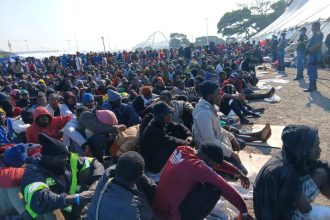
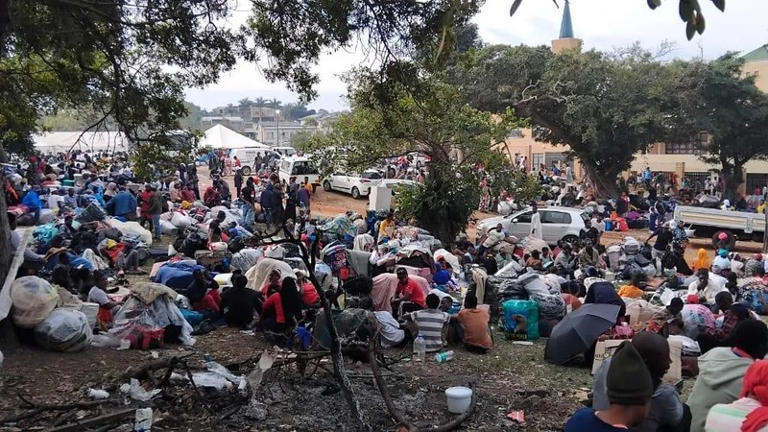
South Africa’s immigration authorities have intensified enforcement efforts in KwaZulu-Natal after nearly 1,900 Malawian nationals were identified as residing in the country without valid immigration status.
- Nearly 1,900 Individuals Found in Violation of Immigration Laws
- Special Court to Fast-Track Deportation Orders
- Hundreds Have Already Returned to Malawi
- Humanitarian Measures Remain in Place
- Rights of Affected Individuals Protected
- Part of a Broader Immigration Enforcement Strategy
- Balancing Enforcement and Regional Relations
- What Happens Next?
The Department of Home Affairs, working alongside the Department of Justice and Constitutional Development, has established a dedicated priority court to accelerate the processing of immigration matters linked to a group currently residing at Sherwood Park in Durban.
Officials say the initiative is intended to ensure that immigration laws are enforced efficiently while protecting the constitutional rights of those affected.
The move comes amid growing national attention on immigration enforcement, border management, and compliance with South Africa’s immigration regulations.
Nearly 1,900 Individuals Found in Violation of Immigration Laws
According to Home Affairs, a comprehensive verification process was conducted to determine the legal status of Malawian nationals residing at the Durban site.
The assessment found that 1,876 individuals were living in South Africa in contravention of immigration laws.
Authorities identified several categories of violations, including:
- Expired visas
- Visa overstays
- Expired travel documents
- Undocumented immigration status
Under South Africa’s Immigration Act, such violations may result in deportation proceedings.
Officials say the verification process was conducted to establish accurate records before any further action could be taken.
Special Court to Fast-Track Deportation Orders
To manage the large number of cases, government has introduced a dedicated court process operating through a virtual platform.
The priority court will function under the authority of the Durban Magistrate’s Court and will operate directly from Sherwood Park.
Officials believe this approach will improve efficiency by reducing delays and enabling immigration matters to be processed closer to where the affected individuals are currently located.
The court will primarily be responsible for reviewing and confirming deportation orders in accordance with South African law.
Government has stressed that all proceedings will follow legal requirements and established judicial procedures.
Hundreds Have Already Returned to Malawi
While authorities prepare for formal deportation proceedings, voluntary repatriation efforts have already resulted in hundreds of departures.
Government figures indicate that 676 Malawian nationals had returned to Malawi by 15 June 2026 with assistance from Malawian authorities.
Officials say cooperation between the two countries has helped facilitate the voluntary return process.
However, authorities acknowledge that the pace of voluntary departures has been slower than anticipated, leading government to activate formal deportation mechanisms for those who remain in violation of immigration laws.
The dual-track approach aims to encourage voluntary compliance while ensuring enforcement where necessary.
Humanitarian Measures Remain in Place
Government officials have emphasised that immigration enforcement will be accompanied by humanitarian support measures.
Special attention is reportedly being given to vulnerable groups, particularly women and children.
Authorities say support services are being coordinated to ensure that basic welfare needs are addressed throughout the process.
This approach reflects the government’s obligation to balance immigration enforcement with humanitarian considerations and constitutional protections.
Rights of Affected Individuals Protected
One of the key concerns in large-scale immigration enforcement operations is ensuring that affected individuals receive fair treatment under the law.
Home Affairs has stated that all persons appearing before the priority court will retain their constitutional rights.
These protections include:
Access to Legal Representation
Individuals facing deportation proceedings will have the right to seek legal assistance where applicable.
Procedural Fairness
Authorities say decisions will be made through lawful processes that allow each case to be considered individually.
Constitutional Compliance
Government has reiterated that all actions must comply with South Africa’s Constitution and existing legal frameworks.
Legal analysts note that maintaining procedural fairness is essential to ensuring the legitimacy of immigration enforcement efforts.
Part of a Broader Immigration Enforcement Strategy
The Durban operation forms part of a wider national focus on immigration compliance and border management.
In recent months, government has increased efforts to identify undocumented foreign nationals, improve immigration administration, and strengthen enforcement against immigration violations.
These initiatives have been accompanied by broader discussions around employment, public services, border security, and the management of migration flows into South Africa.
Officials argue that consistent enforcement of immigration laws is necessary to maintain confidence in the country’s legal immigration system.
Balancing Enforcement and Regional Relations
The situation also highlights the complex relationship between immigration enforcement and regional mobility within Southern Africa.
South Africa remains one of the region’s largest economic destinations, attracting migrants from neighbouring countries seeking employment and economic opportunities.
At the same time, authorities face growing pressure to ensure that immigration laws are applied consistently and fairly.
The cooperation between South African and Malawian authorities in facilitating voluntary returns demonstrates the importance of regional collaboration in managing migration challenges.
What Happens Next?
The newly established priority court is expected to begin processing cases as authorities continue verification and deportation procedures.
Individuals found to be in violation of immigration laws may either voluntarily return to Malawi or be subject to formal deportation orders approved through the judicial process.
Government says its objective is not only to address the current situation at Sherwood Park but also to reinforce the integrity of South Africa’s immigration system.
As proceedings move forward, the operation is likely to remain under close public scrutiny, particularly regarding the balance between immigration enforcement, humanitarian responsibilities, and constitutional protections.