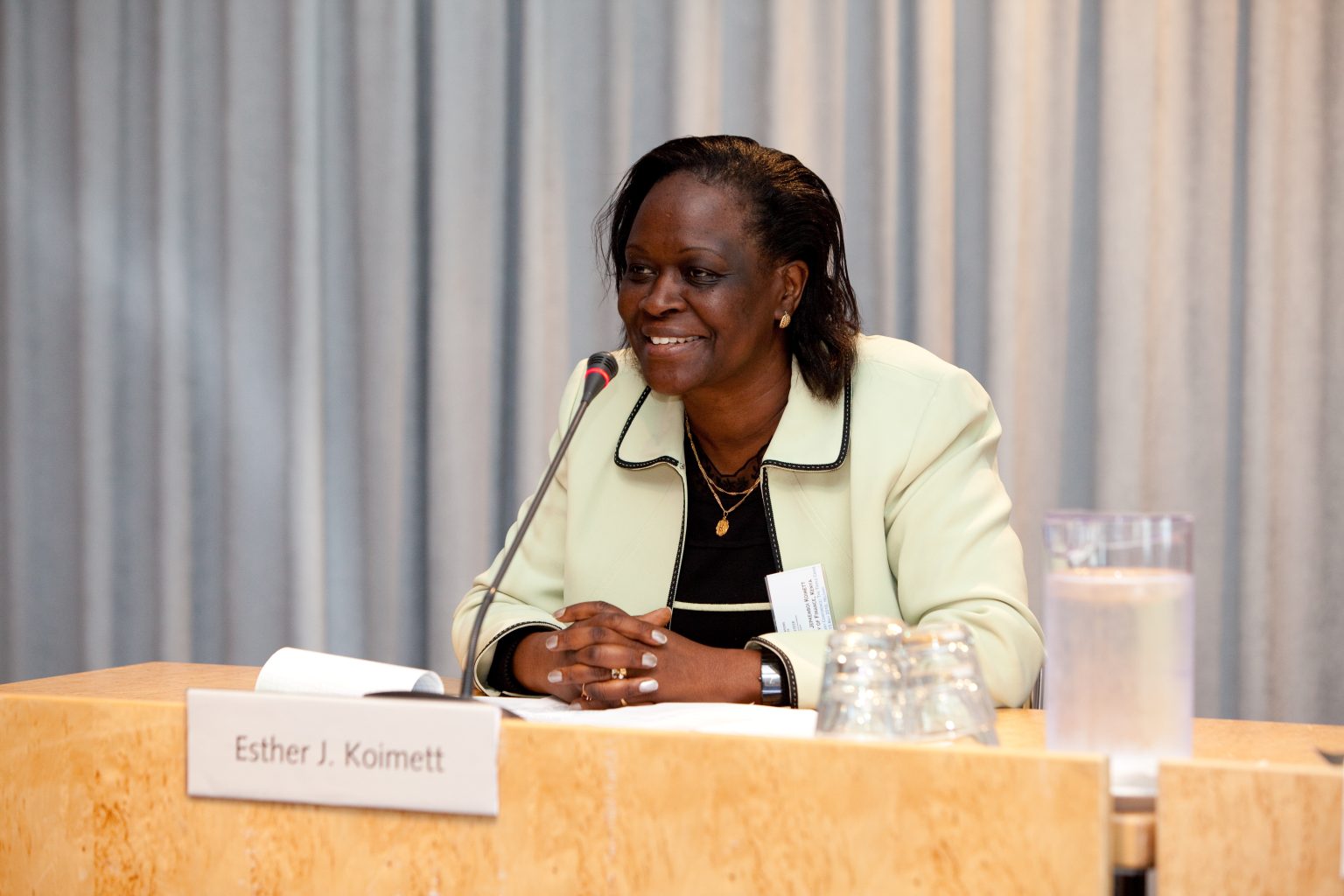
A multimillion-shilling family inheritance has propelled former Kenyan government official Esther Jepkemboi Koimett into a powerful position within Kenya’s banking sector, making her the largest individual shareholder in Middle East Bank Kenya.
- Koimett overtakes major corporate shareholders
- The inheritance behind the stake
- Who was Nicholas Biwott?
- Koimett already has deep banking and government experience
- She joined Middle East Bank’s board in 2024
- Middle East Bank is largely Kenyan-owned
- The bank remains a relatively small player with an established footprint
- Why the ownership change matters
- A notable milestone for female investors
- From public service to private-sector ownership
Koimett now holds a 17.48% stake in the privately owned lender, putting her ahead of several corporate shareholders and giving her a significant financial interest in one of Kenya’s established commercial banks.
The shareholding is linked to an inheritance from her late father, businessman and former Cabinet minister Nicholas Biwott, although publicly available disclosures do not establish exactly when Koimett acquired the Middle East Bank shares.
Her emergence as a major shareholder adds a new dimension to a career spanning government, banking, investment promotion and corporate leadership.
Koimett overtakes major corporate shareholders
Middle East Bank Kenya’s latest ownership disclosures put Koimett at the top of the individual shareholder rankings.
Her 17.48% holding is larger than the stakes held by several corporate investors, including:
- MEB Holdings Limited — 11.58%
- Mustang Limited — 10.47%
- Baumann Management Services Limited — 6.60%
- Good Fortune Limited — 6.60%
The development makes Koimett one of the most significant individual investors in the Kenyan banking industry.
Importantly, her position does not mean she owns the bank outright or controls a majority of its shares. Rather, she has become its largest individual shareholder, while corporate investors collectively continue to hold the majority of the institution.
The inheritance behind the stake
Koimett’s increased ownership is connected to the estate of her father, Nicholas Biwott, who died in July 2017.
According to the reported inheritance structure, Biwott’s children were each entitled to an equal one-fourteenth share of his estate. The subsequent transfer of wealth included the Middle East Bank interest that has now placed Koimett among the lender’s largest shareholders.
The precise timing of the transfer of the bank shares is not established by the public disclosures cited in the reporting.
That distinction is important because an inheritance can involve a lengthy process of estate administration, asset transfers and changes in registered ownership.
Who was Nicholas Biwott?
Biwott was a prominent Kenyan businessman and former government minister who became one of the better-known political figures during the Daniel arap Moi era.
His business interests and political career made the Biwott family one of the more prominent business families in Kenya.
Koimett’s latest position at Middle East Bank therefore represents not simply a change in share ownership, but the continuation of a significant family financial legacy into Kenya’s modern banking sector.
Koimett already has deep banking and government experience
The development is also notable because Koimett is not a newcomer to the financial sector.
Middle East Bank describes her as having more than 30 years of experience across investment promotion, banking, public enterprises and public policy.
Her public-sector career included serving as a principal secretary in government, including roles connected to transport and broadcasting and telecommunications.
She has also held senior positions and board appointments across Kenya’s corporate and public sectors.
Her experience makes the new shareholding particularly significant because she combines substantial ownership in the bank with a long professional background in financial and public-sector institutions.
She joined Middle East Bank’s board in 2024
Koimett became a director of Middle East Bank Kenya on 26 February 2024.
The bank’s 2024 annual financial statements list her among its directors and confirm her appointment date.
The bank’s official board profile says her career has included investment promotion, banking, public enterprise and public policy, while also highlighting her academic qualifications in commerce and business administration.
Her board role therefore predates the latest attention around her 17.48% shareholding.
That is significant because it means the inheritance-linked ownership has emerged alongside an already established governance relationship with the lender.
Middle East Bank is largely Kenyan-owned
Despite its name and historical links to the Middle East, Middle East Bank Kenya is now predominantly locally owned.
The bank says it was established in Kenya in 1981 as part of the UAE-based Al-Futtaim Group. In 1991, Al-Futtaim sold its shareholding, transferring control to Kenyan investors.
That history makes Koimett’s position especially interesting.
Her stake is part of a broader ownership structure in which Kenyan investors retain a dominant position, rather than the bank being controlled from outside the country.
According to the latest reported ownership breakdown, Kenyan investors account for 90.22% of the bank, while foreign shareholders hold the remaining 9.78%. Corporate shareholders collectively hold 79.69%, compared with 20.31% for individual investors.
Koimett’s 17.48% therefore represents a substantial portion of the bank’s individual ownership.
The bank remains a relatively small player with an established footprint
Middle East Bank has operated in Kenya for more than four decades and currently serves customers through branches in Nairobi, Mombasa and Eldoret.
Its corporate client base includes multinational companies, Kenyan businesses, agricultural and manufacturing interests, parastatals, NGOs, religious organisations, fund managers and insurance companies.
The bank reported a net profit of approximately R29.3 million equivalent in 2025, based on the reported Kenyan shilling figure and converted using an approximate exchange rate at the time of reporting.
Its core capital was reported at approximately R340 million equivalent as the Kenyan banking sector adjusted to higher capital requirements.
The figures underline that Koimett’s 17.48% holding represents a meaningful ownership position even though Middle East Bank is considerably smaller than Kenya’s largest banking groups.
Why the ownership change matters
Large individual stakes in commercial banks can be significant because shareholders have an economic interest in the institution’s long-term performance while also potentially influencing governance through voting rights and board participation.
Koimett’s position is particularly notable because she is both a major shareholder and a serving board member.
However, the 17.48% stake should not be interpreted as equivalent to outright control.
The bank’s ownership remains divided among multiple corporate and individual investors, meaning major decisions can depend on the wider shareholder structure and applicable banking regulations.
A notable milestone for female investors
Koimett’s emergence as the largest individual shareholder also highlights the relatively limited number of women with substantial direct ownership positions in African commercial banks.
Kenya has produced several prominent female investors and business leaders, but very large individual stakes in established financial institutions remain relatively uncommon.
Her position therefore places her in a small group of women with significant equity interests in African banking.
It would be premature, however, to describe her as definitively the first Kenyan woman to achieve such a position without a comprehensive historical review of commercial-bank shareholding records.
From public service to private-sector ownership
Koimett’s new status illustrates an unusual intersection between Kenya’s public sector and private capital.
Her career has moved between government policy, investment promotion, banking and corporate governance. The inheritance has now given her a substantial direct financial interest in the banking industry she has worked around for decades.
That makes the development more than a straightforward inheritance story.
It demonstrates how substantial family estates can reshape ownership structures in major businesses, particularly where assets are transferred to the next generation rather than sold outright.
For Middle East Bank, the change places one of its existing directors among its most important shareholders.
For Koimett, it marks a significant new chapter in a career that has already crossed government, finance and corporate leadership.
And for Kenya’s banking sector, it offers another example of how ownership remains concentrated among a relatively small group of established investors even as the industry evolves under tighter capital requirements and continued consolidation.