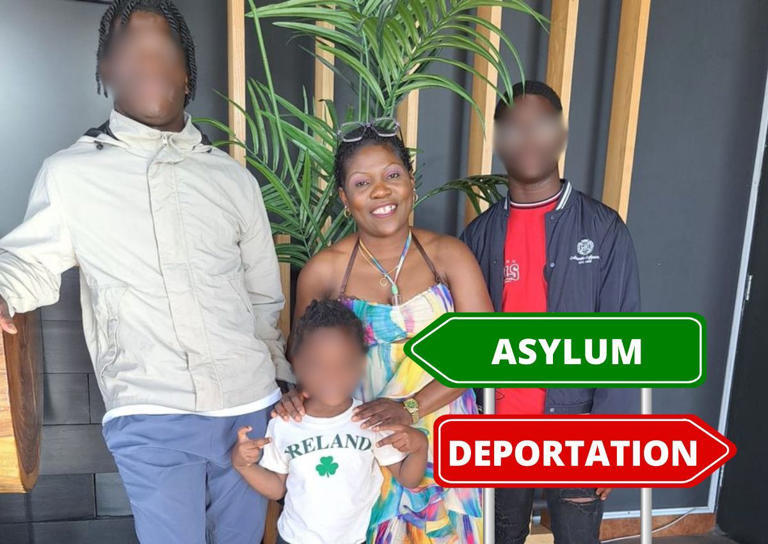
A Nigerian mother and her three sons, whose deportation from Ireland sparked protests and public debate, have been returned to Nigeria after briefly arriving in South Africa earlier this year.
The case attracted significant attention in Ireland, where community members, teachers, parents and fellow students rallied in support of the family in an attempt to prevent their removal from the country.
However, despite legal efforts and public campaigns, Irish authorities proceeded with the deportation after the family’s asylum application and subsequent appeals were unsuccessful.
New details released by South Africa’s Home Affairs Minister, Leon Schreiber, have now shed light on what happened after the family landed in South Africa.
Family Arrived on Charter Flight from Ireland
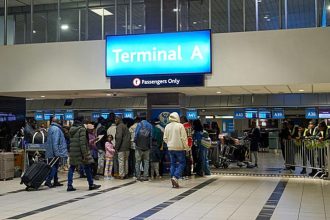
According to Schreiber, the family was among 63 deportees who arrived in South Africa on a chartered flight from Ireland on 26 February 2026.
The group formed part of Ireland’s immigration enforcement programme targeting individuals whose asylum claims and legal appeals had been exhausted.
Upon arrival at OR Tambo International Airport, the Nigerian family was transferred to the Lindela Repatriation Centre, where immigration authorities processed their status.
Schreiber told Parliament that the family did not remain in South Africa and was instead transferred to Nigeria shortly afterwards.
Returned to Nigeria Within 72 Hours
According to the minister, officials from the Nigerian Embassy assisted with the process by verifying the family’s nationality and issuing the necessary travel documents.
“The Nigerian Embassy identified and issued travel documents, and they were returned to Nigeria within 72 hours of their arrival,” Schreiber stated.
The revelation clarifies uncertainty surrounding the family’s immigration status after their removal from Ireland.
Authorities have not publicly disclosed details regarding the family’s previous immigration status in South Africa or the status of any South African identity documents they may have possessed.
Community Support Failed to Stop Deportation
The family, led by Titilayo Oluwakemi Oyekanmi, had been living in Ireland after leaving South Africa in late 2023.
According to legal representatives in Ireland, Oyekanmi sought asylum after allegedly experiencing violence and threats from an armed group while living in South Africa.
Her asylum application was ultimately rejected, and a deportation order was issued in April 2025.
Her legal team subsequently attempted to have the order revoked on humanitarian grounds.
The case gained significant public attention due to the integration of the family’s children into local schools and community activities.
Students and Residents Mobilised
Supporters organised protests and campaigns in an effort to persuade Irish authorities to halt the deportation.
The eldest son was reportedly preparing for major school examinations, while another child was attending a prestigious school on scholarship.
The family’s legal representatives described the public support as extraordinary, with community members, educators and fellow students rallying behind the family.
Despite these efforts, immigration authorities proceeded with the deportation after all available legal avenues had been exhausted.
Ireland’s Immigration Rules
Under Irish immigration law, asylum seekers who have had their applications rejected and who have exhausted appeal processes may be issued with deportation orders.
Before enforcement action takes place, authorities typically provide opportunities for voluntary return.
However, deportation orders can be reconsidered under certain circumstances, particularly where humanitarian considerations arise.
Factors that may be taken into account include:
- Children’s education and welfare
- Strong community ties
- Humanitarian concerns
- Changes in conditions in the individual’s country of origin
In this case, the application to overturn the deportation order was unsuccessful.
Questions Remain About South African Documentation
One aspect of the case that remains unclear is the family’s legal status while residing in South Africa before travelling to Ireland.
Neither South African nor Irish authorities have publicly disclosed details regarding any immigration documentation held by the family.
Questions surrounding the authenticity or validity of any South African identity documents have also not been addressed publicly.
As a result, it remains uncertain under what immigration category the family had previously lived in South Africa.
Broader Immigration Debate Continues
The case has emerged amid growing international debates around asylum systems, deportation policies and migration management.
Countries across Europe, Africa and elsewhere continue to face challenges balancing humanitarian obligations with immigration enforcement requirements.
In South Africa, immigration issues have become an increasingly prominent political and policy discussion, particularly around border management, asylum processing and undocumented migration.
Recent legal developments have also shaped the country’s asylum framework.
Last month, the Constitutional Court of South Africa ruled that individuals cannot submit a new asylum application once their original application has been finally determined through the legal process.
A Case That Crossed Three Countries
The deportation of Oyekanmi and her children highlights the complex realities of modern migration, where immigration decisions can involve multiple countries, legal systems and humanitarian considerations.
What began as an asylum claim in Ireland ultimately involved authorities in Ireland, South Africa and Nigeria.
While the family now finds itself back in Nigeria, the case continues to draw attention as an example of the challenges governments face in balancing immigration enforcement with human stories that often resonate deeply within local communities.