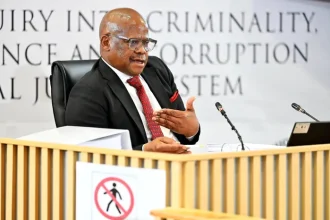
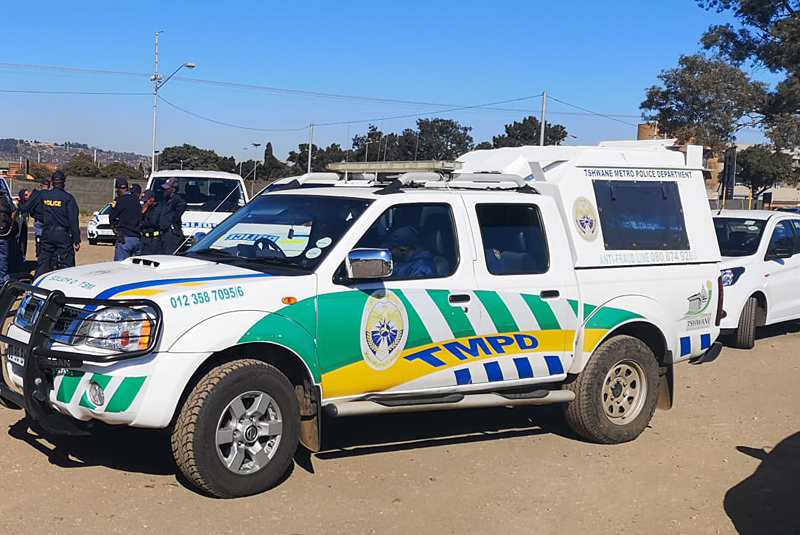
Allegations of corruption and internal breakdowns within the Tshwane Metro Police Department (TMPD) have taken centre stage at the Madlanga Commission, where testimony has exposed a troubling mix of tender manipulation and resistance to oversight at senior levels.
- Junior Officer Accused of Bypassing Procurement Systems
- Millions in Contracts Linked to Questionable Allocations
- Senior Officials Implicated in Communication Chain
- Refusal to Undergo Vetting Raises Red Flags
- Analysis: A Systemic Breakdown, Not an Isolated Case
- What the Madlanga Commission Must Determine
- What Happens Next?
At the heart of the revelations is a suspended junior officer accused of steering millions of rand in municipal contracts—raising serious questions about governance, accountability, and internal controls within one of South Africa’s key metropolitan law enforcement bodies.
Junior Officer Accused of Bypassing Procurement Systems
During testimony, TMPD deputy commissioner Sean Bolhuis detailed how Inspector Lebogang Phiri allegedly operated outside official procurement processes.
Phiri is accused of independently assigning contract work to private companies without the necessary authority, effectively bypassing established systems designed to prevent abuse.
Bolhuis, who served as caretaker head of the Asset Protection, Security and Services Unit between July 2024 and February 2025, distanced himself from the decisions, stating clearly that no authorisation had been granted.
He told the commission that Phiri had neither the delegated authority nor permission to allocate contracts.
Millions in Contracts Linked to Questionable Allocations
Despite the lack of authority, evidence presented to the commission shows that approximately 40 municipal sites were allocated to a private company, Gubis 85 Solutions, now under investigation.
The financial scale of the alleged irregularities is significant. According to testimony, purchase orders tied to these contracts exceeded R13.6 million, processed under the description of “ad hoc services.”
Crucially, these transactions were not hidden—they were registered within official TMPD systems in March 2025, suggesting systemic weaknesses rather than isolated misconduct.
Senior Officials Implicated in Communication Chain
The controversy extends beyond a single officer.
Testimony indicated that senior figures, including suspended chief financial officer Gareth Mnisi and suspended deputy police chief Umashi Dlamini, were allegedly connected to communications surrounding the procurement process.
These communications were reportedly relayed through Sergeant Fannie Nkosi, adding another layer of complexity to the investigation.
While no final findings have been made, the involvement of senior officials has intensified scrutiny on leadership accountability within the department.
Refusal to Undergo Vetting Raises Red Flags
Perhaps most concerning is the revelation that some senior officials have refused to undergo standard vetting procedures—an essential requirement for handling sensitive information and public resources.
Bolhuis expressed concern over this resistance, noting that he had complied with vetting requirements as expected.
The refusal has triggered fresh alarm over transparency and compliance, particularly given the scale of the alleged procurement irregularities.
Analysis: A Systemic Breakdown, Not an Isolated Case
The unfolding evidence suggests that the issue may go beyond the actions of a single junior officer.
Key concerns emerging from the hearings include:
- Weak enforcement of procurement controls
- Possible gaps in oversight and accountability
- Resistance to governance measures such as vetting
- The ease with which irregular transactions passed through official systems
Taken together, these factors point to a broader institutional vulnerability—one that could have allowed irregular practices to persist undetected.
What the Madlanga Commission Must Determine
As hearings continue, the Madlanga Commission faces critical questions:
- How did a junior officer allegedly gain such influence over multimillion-rand contracts?
- Were senior officials aware of, or complicit in, the procurement decisions?
- Why were standard vetting procedures not enforced uniformly?
- What reforms are needed to prevent similar incidents?
The answers could have far-reaching implications for municipal governance and public trust.
What Happens Next?
Inspector Phiri is currently facing internal disciplinary proceedings, but the broader investigation remains ongoing.
The commission’s final findings will be crucial in determining whether the case represents individual misconduct—or a deeper, systemic failure within the TMPD.
For residents of Tshwane, the stakes are high. The integrity of public safety institutions depends not only on enforcement—but on accountability behind the scenes.