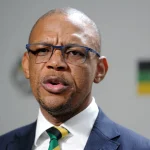
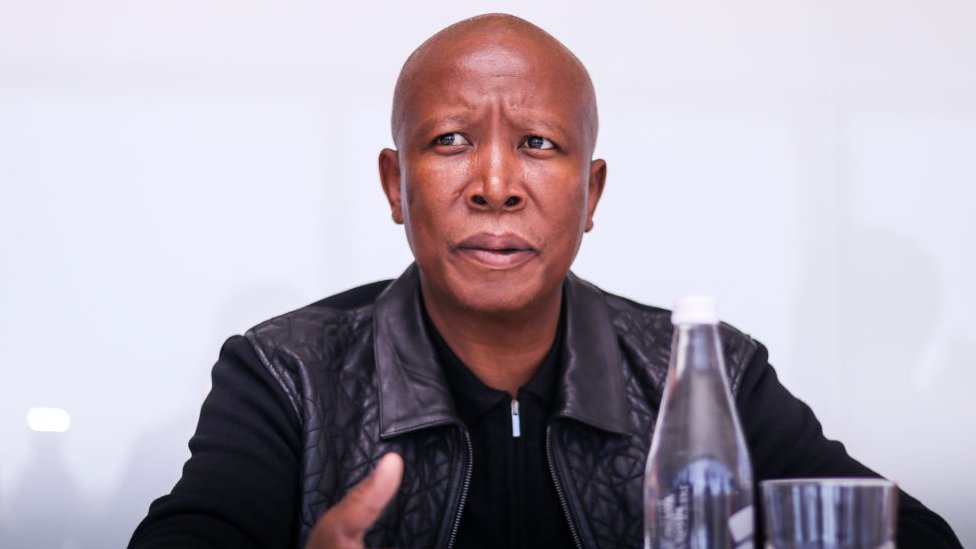
Julius Malema has strongly condemned violence against undocumented foreign nationals, warning that rising hostility toward migrants risks deepening social divisions across South Africa.
The Economic Freedom Fighters leader said unemployed South Africans and foreign nationals are both victims of wider economic inequality and exploitation rather than enemies competing against one another.
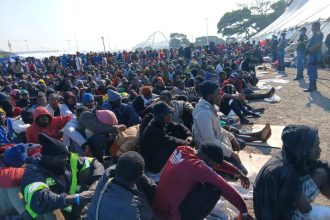
His comments come amid growing immigration protests and renewed calls from some activist groups for undocumented migrants to leave the country.
@@@@
Malema condemns violence against foreign nationals
Speaking on the issue, Malema said attacks on migrants could never be justified regardless of frustrations around unemployment, poverty and crime.
“We must say clearly that this violence can never be justified,” he said.
Malema argued that the deeper problem facing many African countries is an economic system that leaves millions trapped in poverty while wealth remains concentrated among a small elite.
“An unemployed South African and an unemployed Zimbabwean are both victims of the same global system of inequality and exploitation,” he said.
He added that ordinary African people should not be turned against one another while structural economic challenges remain unresolved.
EFF pushes pan-African message amid tensions
The EFF leader’s remarks reflect the party’s long-standing pan-African political position, which promotes continental unity and opposes xenophobia.
Malema stressed that African unity remains essential for the continent’s future.
“Without unity, there is no future for Africa,” he said.
He further argued that tensions between communities are often fuelled by economic desperation, poor governance and unequal access to opportunities.
“A Nigerian street trader and a South African worker are not enemies. A Somali shopkeeper and a township resident are not enemies,” Malema said.
“The true enemy is the system that keeps African people poor while a tiny elite accumulates wealth.”
Immigration debate intensifying across South Africa
The comments come at a time when immigration has once again become one of South Africa’s most politically sensitive issues.
Public frustration over unemployment, service delivery failures and crime has increasingly spilled into debates surrounding undocumented migration.
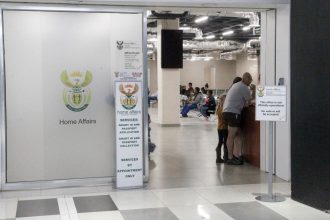
Several protest movements and community organisations have intensified campaigns demanding stricter border control, tighter immigration enforcement and deportations of undocumented foreign nationals.
Critics argue that undocumented migration places pressure on healthcare, housing, policing and employment opportunities.
However, researchers and economists have repeatedly cautioned that migrants are often unfairly blamed for deeper structural economic problems.
Experts warn against scapegoating migrants
Political analysts say migration debates in South Africa are closely linked to broader economic frustrations.
With youth unemployment remaining among the highest globally, many communities are experiencing worsening financial pressure, particularly in urban townships and informal settlements.
Experts warn that this environment creates fertile ground for scapegoating foreign nationals during periods of economic hardship.
Several studies have also shown that migrants frequently operate in informal sectors avoided by larger businesses and often contribute to local economic activity through small enterprises and trade networks.
At the same time, analysts acknowledge that weak immigration management and border enforcement continue fuelling public anger and political tension.
Xenophobia remains a major concern
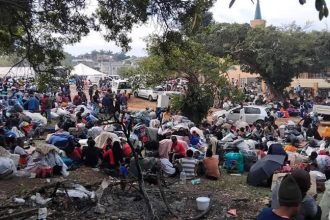
South Africa has experienced repeated outbreaks of xenophobic violence over the past two decades, with foreign-owned businesses and migrant communities frequently targeted during unrest.
Human rights organisations have consistently warned that inflammatory political rhetoric and misinformation can escalate tensions and place vulnerable communities at risk.
Malema’s intervention positions the EFF against anti-migrant violence at a time when political parties are increasingly under pressure to respond to public frustration around immigration policy.
Political divisions likely to deepen ahead of elections
Immigration is expected to remain a major political flashpoint ahead of future elections, particularly as economic pressures continue affecting households across the country.
Some political formations have adopted tougher rhetoric on border control and undocumented migration, while others continue advocating for regional solidarity and African integration.
Analysts believe these competing narratives could significantly influence voter sentiment in coming years.
Conclusion
Julius Malema’s comments highlight the growing divide in South Africa’s immigration debate. While frustrations over unemployment and economic hardship continue to fuel anti-immigration protests, the EFF leader argues that inequality, exploitation and concentrated wealth — rather than migrants themselves — are the deeper drivers behind the country’s social and economic tensions.