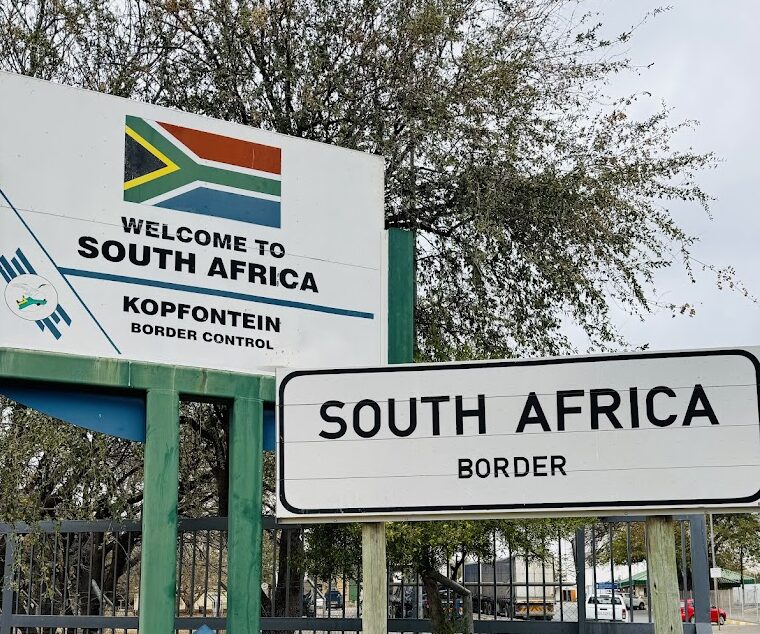
Foreign motorists travelling in and out of South Africa are set to face new border compliance rules as the South African Revenue Service rolls out mandatory online vehicle declarations from 1 June 2026.
Under the new system, all foreign-registered vehicles entering or exiting the country must be declared electronically through the Traveller Management System (TMS), part of SARS’ broader push to modernise customs operations and tighten border management.
The move is expected to affect tourists, cross-border traders, transport operators and travellers from neighbouring Southern African countries who regularly drive into South Africa.
What the New SARS Border Rules Mean
According to SARS, vehicle owners will now be expected to complete their declarations online before arriving at border posts.
The declaration process will apply to foreign-registered:
- Private vehicles
- Commercial vehicles
- Cross-border transport vehicles
- Frequent traveller vehicles
Travellers who comply with the new requirements are expected to benefit from:
- Faster border processing
- Reduced waiting times
- Streamlined customs clearance
- Improved traveller verification systems
SARS says the digital process forms part of efforts to improve efficiency while strengthening security and financial transparency at ports of entry.
Temporary Import Permits Still Available
The revenue service confirmed that temporary import permits will remain available for qualifying travellers.
These permits will allow:
- Multiple entries into South Africa
- Validity for up to six months
- Reduced need for repeated applications
The system is particularly relevant for frequent regional travellers who regularly cross borders for work, tourism or trade.
Countries likely to be most affected include neighbouring states within the Southern African Development Community (SADC), where road travel into South Africa remains common.
SARS Warns of Enforcement Action for Non-Compliance
Johnstone Makhubu warned that motorists who fail to declare their vehicles properly could face serious consequences.
According to the commissioner, providing false, incomplete or misleading information may result in:
- Delays at border posts
- Vehicle inspections
- Enforcement action
- Extended processing times
Makhubu stressed that compliance with customs regulations is mandatory.
He said the system would support better risk-based screening and improve coordination between customs officials and other law enforcement agencies.
Digital Border Systems Becoming More Common
The introduction of online vehicle declarations reflects a growing international shift toward digitised border control systems.
Authorities increasingly rely on electronic pre-clearance systems to:
- Track vehicle movements
- Detect customs fraud
- Improve border security
- Reduce congestion at ports of entry
South Africa has been under pressure in recent years to modernise border operations amid concerns around smuggling, undocumented migration and cross-border criminal activity.
Analysts say digitisation may improve operational efficiency, but successful implementation will depend heavily on system reliability and public awareness.
Concerns Around Border Delays and Connectivity
While SARS says the system will speed up border crossings for compliant travellers, some observers warn implementation challenges may emerge — particularly at busy border posts and rural crossings where internet access and digital literacy vary.
Cross-border transport operators and tourism stakeholders are expected to monitor how efficiently the system functions during its early rollout phase.
SARS has acknowledged that some travellers may struggle to complete declarations before arrival and said officials will still provide assistance at border posts where needed.
However, authorities emphasised that online pre-declaration remains the preferred process.
Physical Inspections Still Required
Despite the move toward digital processing, SARS confirmed that physical border procedures will remain in place.
Travellers will still need to:
- Present themselves to customs officials
- Undergo verification procedures
- Submit vehicles for inspection where necessary
The online declaration system therefore acts as an additional administrative layer rather than a replacement for existing border controls.
Impact on Tourism and Regional Trade
South Africa remains a major regional travel and trade hub, with thousands of vehicles crossing its borders daily from countries including:
Tourism and logistics industry players are likely to watch closely to see whether the system reduces congestion or creates additional administrative pressure during peak travel periods.
Final Word
The new SARS online declaration requirement marks another major step in South Africa’s broader effort to modernise customs and border management systems.
While authorities argue the digital platform will improve efficiency, security and transparency, travellers will need to adapt quickly to avoid delays and compliance complications once the new rules take effect on 1 June 2026.
For regular cross-border motorists, preparation and early online registration may soon become essential parts of travelling into South Africa.