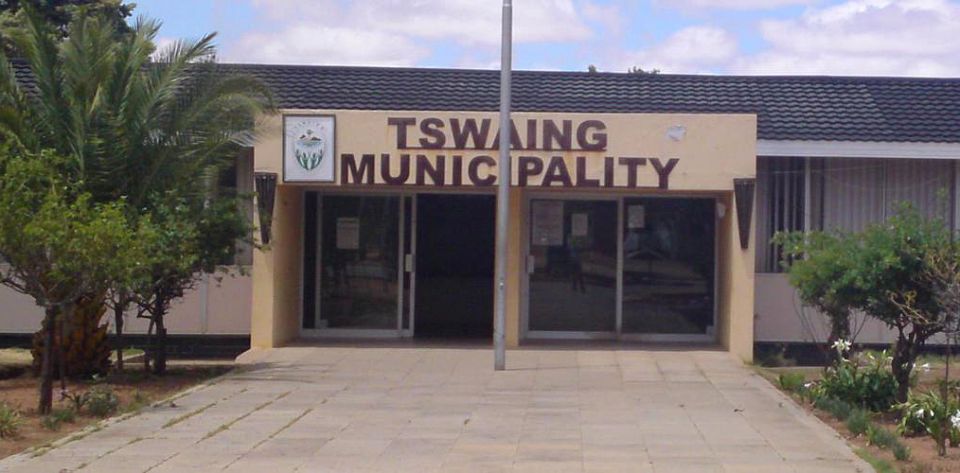
The Tswaing Local Municipality has suffered a significant legal defeat after the North West High Court dismissed its urgent application to halt the implementation of a report into alleged maladministration and governance failures.
The judgment marks a major development in an escalating dispute involving municipal leadership, provincial government oversight and allegations of financial mismanagement within the municipality.
Court dismisses urgent interdict application
The case stems from an investigation commissioned in September 2025 by North West Cooperative Governance MEC Gaoage Molapisi following instructions from Cooperative Governance Minister Velekosini Hlabisa.
The investigation, conducted by Tau Matsimela Attorneys, found serious governance failures within the municipality and recommended action against several senior officials.
After the report was released, Molapisi instructed the municipality to revoke the appointments of:
- Chief legal officer Advocate Lesang Lobakeng
- Acting municipal manager Borman Phutiyagae
- Housing manager Mogale Morwe
However, the municipality opposed the findings and launched a two-part court application aimed at stopping the implementation of the report.
Part A sought an urgent interim interdict, while Part B seeks a broader judicial review to challenge the validity of the investigation and the MEC’s directives.
Judge says municipality failed to prove irreparable harm
In his ruling delivered on 22 May, Acting Deputy Judge President Andre Henry Petersen dismissed the urgent application, finding that the municipality failed to prove it would suffer immediate and irreparable harm if the report’s recommendations were implemented.
Petersen stated that the applicants were required to demonstrate:
“A well-grounded apprehension of irreparable harm, not a reasonable anxiety about future contingencies.”
The court also stressed that local government autonomy does not shield municipalities from lawful provincial oversight.
“Local government autonomy exists within a constitutional system of cooperative governance, not institutional isolation,” Petersen said in the ruling.
Investigation exposed major financial concerns
The Tau Matsimela Attorneys report painted a troubling picture of governance within the municipality.
Among the key findings:
- Millions of rand were allegedly lost through questionable financial decisions
- Salary increases and promotions were prioritised over community service delivery
- Roughly R47.6 million was spent on litigation over a five-year period
Investigators concluded that Mayor Norah Mahlangu and the municipal council had failed in their fiduciary responsibilities.
The report warned that continued governance failures could potentially collapse the municipality’s administration if left unchecked.
Court leaves major legal questions for Part B
While the court dismissed the urgent interdict application, it did not rule on the legality of the investigation itself.
Judge Petersen noted that broader constitutional and procedural fairness issues raised by the municipality require a full judicial review process under Part B of the application.
The court indicated that these matters involve complex legal questions requiring:
- A complete investigation record
- Detailed constitutional arguments
- Full review proceedings
As a result, the substantive legal battle is still far from concluded.
Municipality vows to continue legal challenge
Attorney Benjamin Fihla, representing the municipality and implicated officials, said the legal fight would continue.
According to Fihla, the court’s decision only related to the urgent interim relief sought under Part A.
“The core legal arguments will now be the focus of the upcoming Part B review proceedings,” he said.
Fihla also argued that the MEC should refrain from taking action against officials until the review process is finalised.
The MEC and investigators have reportedly been given 30 days to submit the full investigation record to the court.
Governance and oversight under scrutiny
The case highlights growing tensions between municipalities and provincial oversight authorities across South Africa.
Local governments in several provinces continue facing scrutiny over:
- Financial mismanagement
- Irregular expenditure
- Governance instability
- Weak service delivery
Legal experts say the Tswaing matter could become an important test case regarding the balance between municipal autonomy and provincial intervention powers under South Africa’s constitutional framework.
Conclusion
The dismissal of Tswaing Municipality’s urgent application represents a major victory for provincial oversight efforts in North West. While the municipality plans to continue fighting the report through judicial review proceedings, the ruling allows provincial authorities to move forward — at least for now — with implementing recommendations linked to alleged maladministration and governance failures.
The outcome of the upcoming Part B proceedings could ultimately shape how future investigations into struggling municipalities are handled across South Africa.