
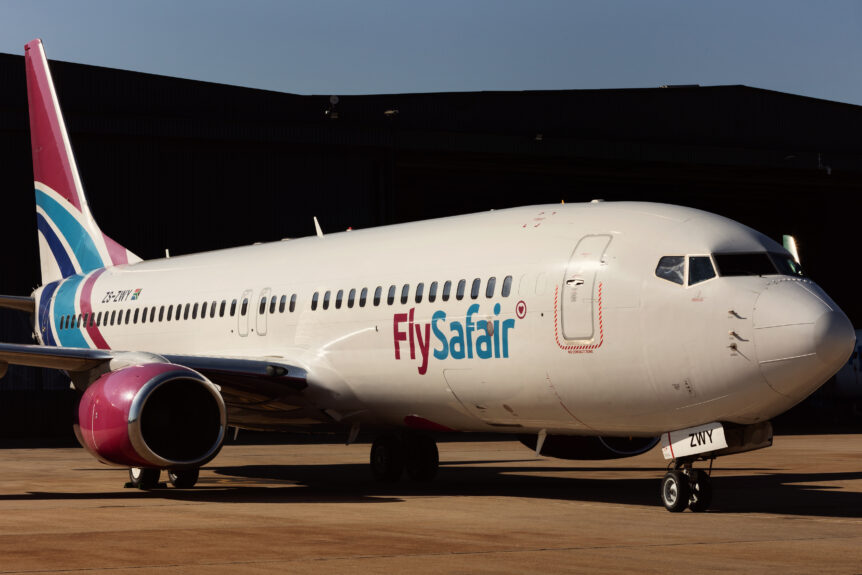
Low-cost airline FlySafair is facing mounting legal and regulatory pressure after South Africa’s consumer watchdog referred the company to the National Consumer Tribunal over alleged flight overbooking practices.
The move follows an investigation by the National Consumer Commission (NCC), which claims the airline may have systematically sold more tickets than available seats on certain flights.
If found guilty of violating consumer protection laws, FlySafair could face a substantial financial penalty amounting to up to 10% of its annual turnover.
Consumer complaints triggered investigation
According to the NCC, the investigation was launched after a growing number of complaints surfaced both in the media and across social media platforms.
Passengers reportedly claimed they arrived at airports with confirmed bookings and valid tickets, only to discover that no seats were available because flights had allegedly been overbooked.
One widely discussed incident involved a passenger who reportedly completed check-in procedures before being informed that the aircraft had already reached full capacity.
The commission said additional consumers later came forward with similar experiences.
NCC acting commissioner Hardin Ratshisusu confirmed that investigators examined whether FlySafair’s booking systems and operational practices complied with the Consumer Protection Act.
Overbooking allegations raise legal concerns
The NCC alleges that FlySafair’s conduct may have breached multiple provisions of South Africa’s consumer protection legislation.
According to the commission, businesses are prohibited from accepting payment for goods or services they are unable to provide.
The investigation identified several possible areas of non-compliance, including:
- Overselling services
- Misleading representations to consumers
- Unfair or unreasonable contract terms
- Failure to adequately disclose risks
- Failure to provide services as agreed
- Inadequate communication with customers
Authorities also noted that FlySafair had publicly acknowledged that overbooking formed part of its business model.
Thousands of passengers allegedly affected
The commission said investigators reviewed flight booking patterns between November 2024 and January 2025.
According to the NCC’s findings, FlySafair allegedly overbooked flights involving more than 5,000 passengers on average during the months examined.
Regulators claim the practice may have generated significant additional revenue for the airline that it would not otherwise have earned.
The scale of the allegations has intensified scrutiny over how airlines manage passenger demand and capacity planning in South Africa’s increasingly competitive domestic aviation market.
Airline industry practice now under spotlight
Overbooking is a common practice in parts of the global airline industry, where carriers often sell more tickets than available seats based on historical assumptions that some passengers will fail to arrive for flights.
Airlines typically argue that the strategy helps reduce losses linked to empty seats and improves operational efficiency.
However, consumer rights advocates warn that problems arise when airlines fail to adequately compensate, communicate with or accommodate passengers affected by oversold flights.
The FlySafair case may now test how South African consumer law applies to these industry practices.
Legal analysts say the tribunal’s eventual ruling could establish an important precedent for airline accountability and passenger rights in the country.
National Consumer Tribunal to decide next steps
The matter has officially been referred to the National Consumer Tribunal for adjudication.
The NCC is seeking a ruling declaring FlySafair’s conduct prohibited under the Consumer Protection Act.
In addition, the commission wants the tribunal to impose an administrative fine equal to 10% of the airline’s annual turnover — a potentially severe financial penalty depending on the company’s revenue figures.
At this stage, FlySafair has not publicly responded in detail to the latest developments.
Growing focus on consumer rights in South Africa
The case reflects broader efforts by regulators to strengthen consumer protections in South Africa, particularly in industries where customers often face complex contracts and limited bargaining power.
In recent years, authorities have increasingly scrutinised sectors including airlines, telecommunications, banking and online services over transparency, pricing and service delivery practices.
Consumer advocates argue that stronger enforcement is essential to rebuilding trust between businesses and customers.
Conclusion
FlySafair’s referral to the National Consumer Tribunal marks one of the most significant consumer protection cases involving South Africa’s aviation sector in recent years. As regulators push for accountability over alleged overbooking practices, the outcome could reshape how airlines manage ticket sales and passenger rights going forward.