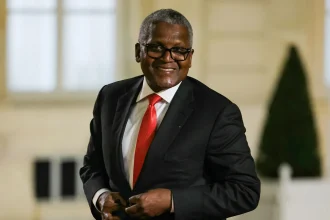
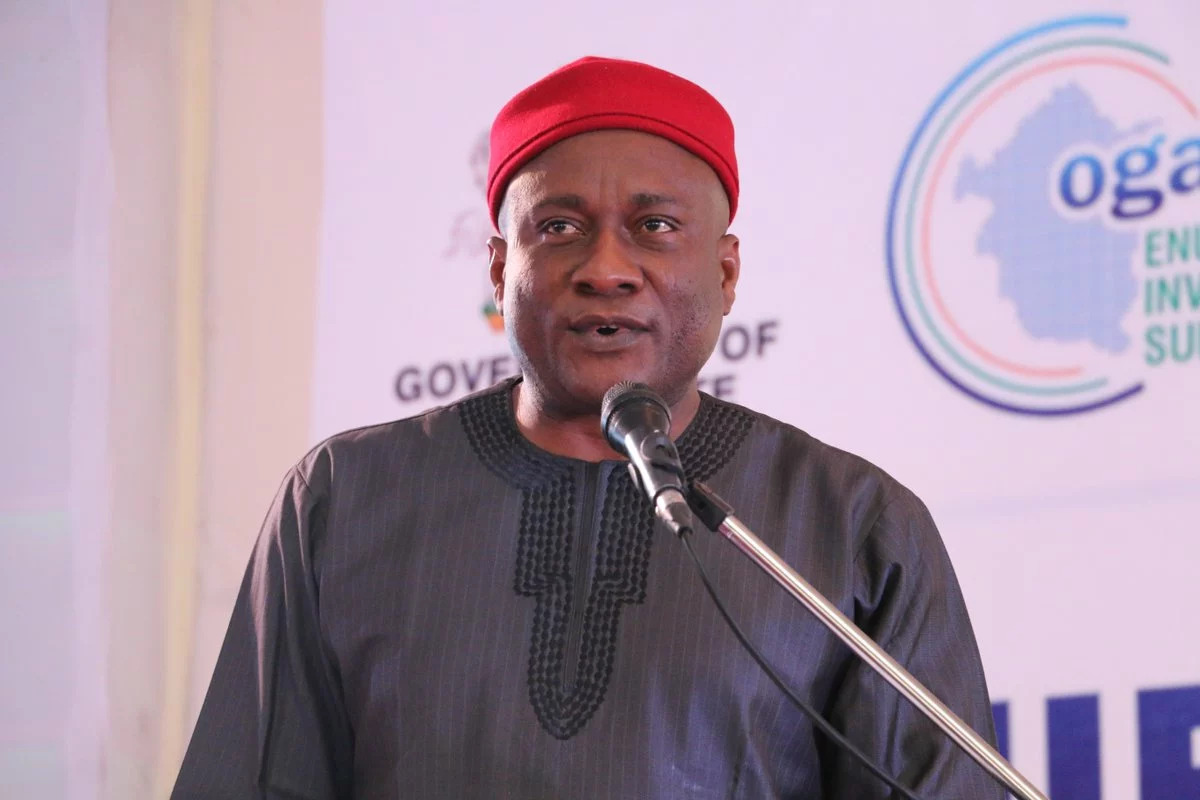
Allen Onyema, the founder and Chief Executive Officer of Nigeria’s largest airline, Air Peace, has called on Nigerians to reconsider their economic support for South African businesses amid growing concerns about anti-immigrant sentiment and tensions involving foreign nationals.
Speaking during a television interview, Onyema argued that economic measures could be a more effective response than confrontation or violence, which he said would only worsen relations and potentially harm innocent people.
His remarks come as immigration, border control and the treatment of foreign nationals remain at the centre of public debate in South Africa.
Call for Boycotts and Investment Withdrawal
Onyema proposed that Nigerians consider withdrawing support from South African-owned businesses operating in Nigeria and reducing investment in companies with South African interests.
The airline executive stressed that his position was not a call for retaliation through violence or intimidation but rather an appeal for peaceful economic action.
According to Onyema, consumers and investors have the power to influence corporate behaviour and government policy through their spending decisions.
The comments are likely to spark debate across both countries, given the deep commercial ties between South Africa and Nigeria.
Criticism of South African Authorities
During the interview, Onyema criticised South African authorities, claiming they had not done enough to protect foreign nationals during previous outbreaks of anti-immigrant unrest.
He questioned how incidents involving attacks on foreign-owned businesses and migrants could occur despite the presence of law enforcement agencies.
The Air Peace founder argued that governments have a responsibility to ensure the safety of all residents within their borders, regardless of nationality.
His comments reflect frustrations that have periodically surfaced among several African nations following episodes of xenophobic violence in South Africa over the past two decades.
Immigration Debate Intensifies in South Africa
South Africa has recently witnessed heightened public discussions around illegal immigration, border management and the enforcement of immigration laws.
Several community groups and civic organisations have called for stricter action against undocumented migrants, arguing that illegal immigration places pressure on public services, employment opportunities and local resources.
Government officials have acknowledged public concerns and have increased enforcement operations targeting individuals found to be in the country unlawfully.
At the same time, authorities have repeatedly urged communities not to take the law into their own hands and have condemned acts of violence, intimidation and vigilantism.
Economic Relationship Between Nigeria and South Africa
The comments from Onyema are particularly significant because South Africa and Nigeria maintain one of Africa’s largest bilateral economic relationships.
Major South African companies have invested billions of rand in Nigeria across sectors including telecommunications, banking, retail, hospitality and financial services.
Likewise, Nigerian entrepreneurs and businesses have expanded their footprint in South Africa through investments in aviation, technology, entertainment and trade.
Economic analysts note that cooperation between the continent’s two largest economies remains important for broader African growth and regional integration.
Nigerians’ Contribution to South Africa
Onyema also rejected narratives that portray Nigerians as a burden on the South African economy.
He argued that many Nigerians living in South Africa are business owners, professionals, students and workers who contribute positively to economic activity and job creation.
Migration experts have similarly pointed out that foreign nationals often play diverse roles in economies, ranging from entrepreneurship and skills development to consumer spending and investment.
However, immigration remains a politically sensitive issue across many countries, particularly during periods of economic strain and high unemployment.
A Wider African Conversation
The latest remarks highlight a broader debate taking place across the continent regarding migration, economic opportunity and Pan-African unity.
While African governments continue promoting regional cooperation through initiatives such as the African Continental Free Trade Area (AfCFTA), tensions surrounding migration and employment have exposed challenges in balancing economic integration with domestic concerns.
Political analysts suggest that managing migration effectively while protecting human rights and maintaining social cohesion will remain one of the continent’s most complex policy challenges.
What Happens Next?
It remains unclear whether Onyema’s call for economic action will gain widespread support among Nigerian consumers or business groups.
However, his comments are likely to add pressure on policymakers in both countries to address concerns surrounding immigration, community relations and the protection of foreign nationals.
As debates continue, business leaders, governments and civil society organisations may increasingly be called upon to find solutions that promote both lawful immigration enforcement and peaceful coexistence.
For South Africa and Nigeria, the challenge will be ensuring that disagreements over migration do not undermine decades of economic cooperation and people-to-people ties between two of Africa’s most influential nations.