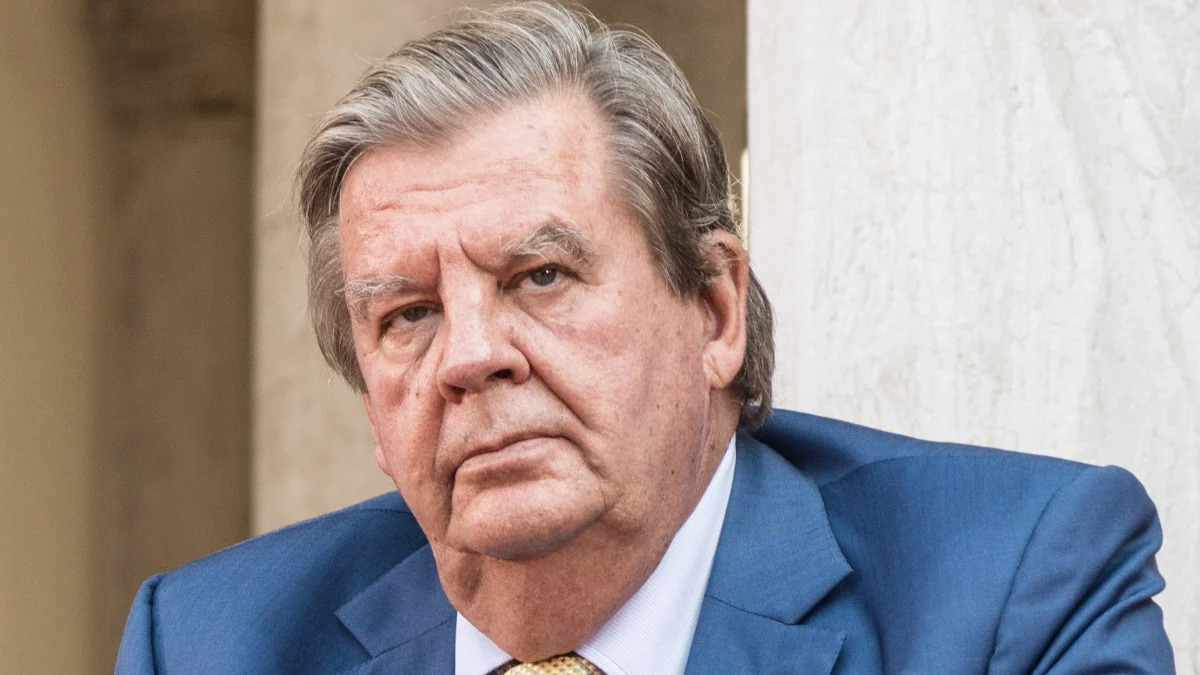
South African billionaire Johann Rupert has officially joined the ranks of the world’s ultra-wealthy after his net worth climbed above R360 billion, cementing his position as Africa’s second-richest person.
According to the latest billionaire rankings, Rupert’s fortune has reached approximately R364 billion, marking the first time the businessman has surpassed the R360 billion threshold.
The milestone places him behind only Nigerian industrialist Aliko Dangote on the African rich list and further strengthens South Africa’s representation among the world’s wealthiest individuals.
Rupert now ranks among the top 150 richest people globally, reflecting the remarkable growth of his investment portfolio and the continued success of his luxury goods empire.
A Tight Race for Africa’s Billionaire Rankings
For much of the past year, Rupert has been locked in a closely watched contest for Africa’s second-richest position with Nigerian billionaire Abdulsamad Rabiu.
At various stages, the gap between the two business leaders narrowed significantly as both fortunes fluctuated in response to market movements and company performance.
However, recent gains in Rupert’s wealth, combined with declines in Rabiu’s valuation, have allowed the South African businessman to pull ahead.
The latest figures place Rupert comfortably in second position on the continent’s billionaire rankings, although the competition among Africa’s wealthiest individuals remains dynamic and subject to market conditions.
Richemont Continues to Drive Wealth Growth
A major contributor to Rupert’s growing fortune is the performance of Richemont, the luxury goods group he controls.
The company reported strong annual results despite ongoing uncertainty in the global economy.
Sales increased significantly during the latest financial year, supported by strong consumer demand across key international markets.
Particularly noteworthy was the continued performance of Richemont’s prestigious jewellery brands, including Cartier and Van Cleef & Arpels.
These brands continued attracting affluent consumers worldwide, helping drive revenue growth and investor confidence.
The company’s market value has risen substantially over the past five years, reflecting strong demand for luxury products despite broader economic challenges affecting many industries.
Luxury Sector Defies Global Economic Uncertainty
Rupert’s latest wealth increase highlights a broader trend within the global luxury goods industry.
While many sectors have faced slowing growth, inflationary pressures and geopolitical uncertainty, luxury brands have largely remained resilient.
Industry analysts point to growing wealth among high-net-worth consumers, particularly in North America and parts of Asia, as a key factor supporting demand for premium products.
China’s gradual recovery in luxury spending has also provided an important boost for global luxury groups, including Richemont.
This resilience has enabled luxury-focused businesses to continue generating strong earnings and shareholder returns, benefiting investors such as Rupert.
Expanding Influence Beyond Luxury Goods
Beyond Richemont, Rupert has continued expanding his influence across several strategic sectors.
Recent developments have seen him strengthen his interests in property and healthcare, two industries expected to play increasingly important roles in South Africa’s future economic landscape.
One notable transaction involved the acquisition of interests linked to a major mixed-use development project in Stellenbosch, a region regarded as one of South Africa’s most valuable property markets.
Rupert has also received regulatory approval relating to a significant healthcare transaction that increases his exposure to South Africa’s private healthcare sector.
The deal reportedly expands his influence across a network of hospitals and healthcare facilities at a time when debates around healthcare reform and the future implementation of National Health Insurance (NHI) continue.
What Rupert’s Rise Means for South Africa
Rupert’s achievement comes at a time when South Africa continues to face economic challenges, including slow growth, high unemployment and pressure on public finances.
His rise serves as a reminder that South African businesses remain capable of competing successfully on the global stage.
Economic analysts note that companies with strong international exposure have often outperformed those heavily dependent on local economic conditions.
Richemont’s global footprint, which spans Europe, Asia, North America and the Middle East, has allowed Rupert to benefit from growth opportunities far beyond South Africa’s borders.
Africa’s Billionaire Landscape Continues to Evolve
Africa’s wealth rankings have shifted considerably over the past decade as commodity prices, global investment flows and business expansion have reshaped fortunes across the continent.
While Dangote remains firmly in first place thanks to his industrial and manufacturing empire, Rupert’s latest milestone reinforces South Africa’s continued prominence in African business.
With luxury markets remaining robust and Richemont continuing to deliver strong financial performance, Rupert’s wealth could continue growing in the months ahead.
For now, the South African billionaire has secured a place in one of the world’s most exclusive financial clubs — individuals whose fortunes exceed R360 billion — while strengthening his standing among Africa’s most influential business leaders.