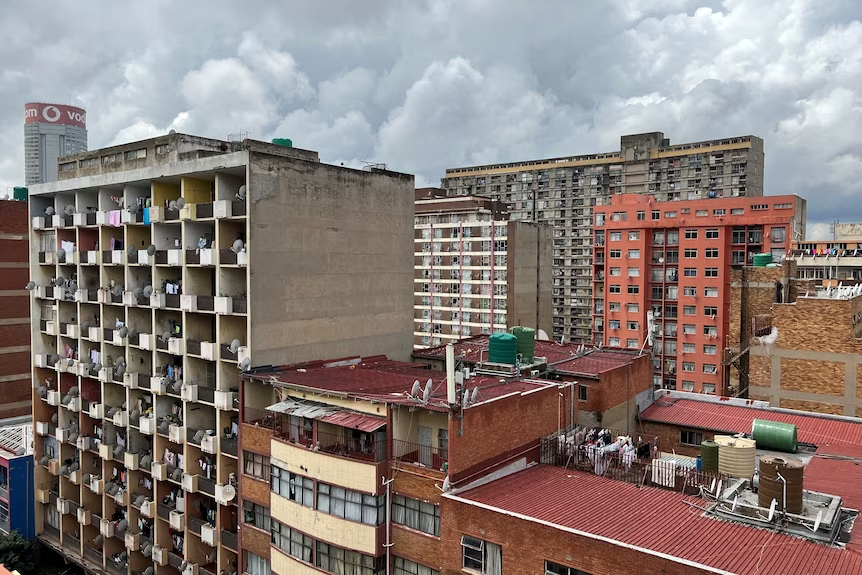
In a major push to reclaim control over illegally occupied properties, the Gauteng provincial government has begun seizing hijacked buildings in Johannesburg. Premier Panyaza Lesufi revealed this development while answering questions during a session in the Provincial Legislature, according to SABC News.
Lesufi confirmed that 413 buildings across Gauteng have been identified as illegally occupied and are currently undergoing verification. Of those, 22 buildings have been formally classified as “bad buildings”, some of which are also illegally occupied by undocumented foreigners.
“The majority of the occupants cannot be identified, which creates further legal complications,” Lesufi said, noting that current legislation prevents evictions unless alternative accommodation is provided — a requirement originally designed with South African citizens in mind.
Hijacked Buildings: A National Crisis
Lesufi’s statement comes amid growing national concern over hijacked buildings in urban areas:
- On 7 August 2024, the eThekwini Municipality evicted residents from a hijacked building in Durban, KwaZulu-Natal.
- In August 2024, Minister of Public Works Dean Macpherson revealed that 338 of the 88,000 government-owned buildings had been hijacked.
- The Khampepe Commission of Inquiry, formed after the deadly Usindiso Building Fire, heard that over 25 property owners have struggled to evict illegal tenants due to bureaucratic and legal challenges.
- In December 2024, 145 people were evicted from a hijacked building in the Johannesburg CBD.
- Political parties like the Democratic Alliance (DA) and ActionSA have accused the City of Johannesburg of negligence, citing slow responses and lax enforcement.
Legal Challenges and Human Rights Concerns
Premier Lesufi expressed frustration at the legal constraints imposed by South African law, which requires the government to find housing for individuals facing eviction — even in cases involving undocumented foreign nationals.
“The legislation is designed for South Africans,” Lesufi said. “It’s not fair to enforce it in the same way on those who are here illegally and cannot be verified.”
Human rights organisations have previously warned that mass evictions without due process could lead to constitutional violations. However, community safety and urban revitalization advocates argue that the proliferation of hijacked buildings contributes to crime, fire hazards, and unsafe living conditions.
What’s Next?
The Gauteng government has signaled its intent to work around legal and logistical hurdles to reclaim hijacked properties. With the verification of the 413 buildings underway, more seizures and possible evictions are likely in the coming months. The issue is also expected to dominate upcoming local elections, with housing, immigration, and urban safety among key voter concerns.