
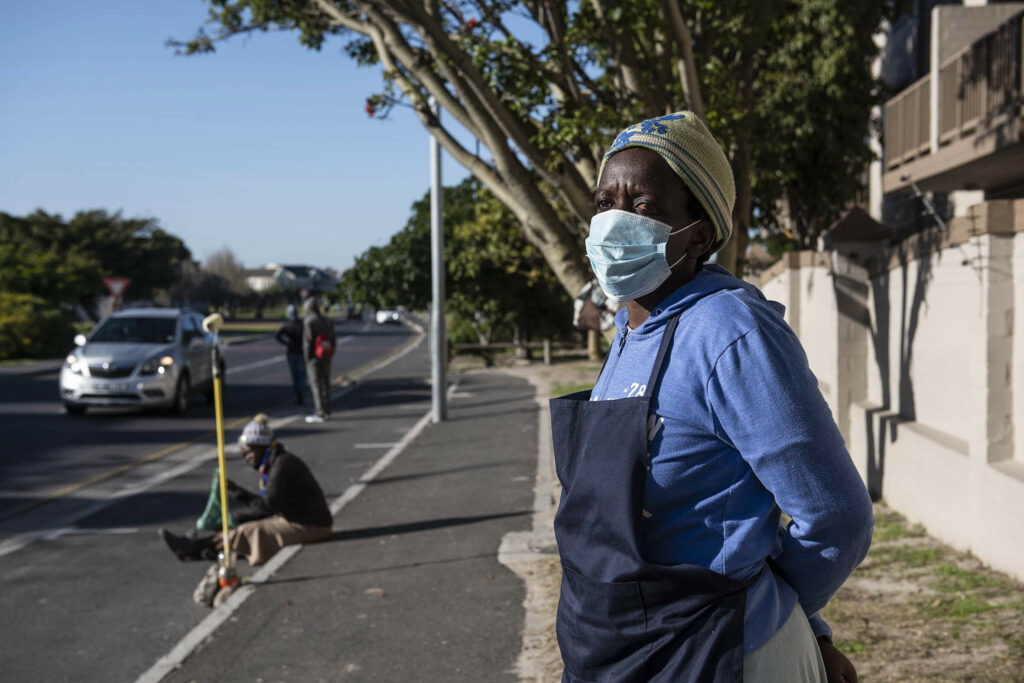
South African households and businesses could soon face significantly tougher penalties for employing undocumented foreign nationals, with proposed legislation introducing fines of up to R100,000 per worker for first-time offenders.
- What the New Bill Proposes
- Domestic Employers Also Affected
- Existing Immigration Laws Already Criminalise Illegal Employment
- Government Links Bill to Employment Priorities
- Experts Warn Against Broad Generalisations
- Domestic Work Sector Faces Broader Challenges
- Challenges Around Documentation and Regularisation
- What Employers Should Do Now
- Verify Documentation
- Keep Records Updated
- Formalise Employment Contracts
- Seek Legal Advice Where Necessary
- What Happens Next?
The proposed measures form part of the Employment Services Amendment Bill, recently gazetted following Cabinet approval and now set to proceed through Parliament’s legislative process.
If enacted, the legislation would expand accountability for employers and strengthen government efforts to combat illegal employment practices while tightening immigration compliance requirements.
Importantly, the proposed rules would apply not only to businesses but also to private households that employ domestic workers, gardeners, caregivers, and other household staff.
What the New Bill Proposes
The Employment Services Amendment Bill seeks to increase enforcement against employers who hire foreign nationals without the legal documentation required to work in South Africa.
Under the proposed framework:
- A first offence could attract a fine of R100,000 per undocumented worker.
- A second offence within three years could result in a R200,000 fine per worker.
- Repeated or serious violations could lead to penalties of up to R1 million.
- In certain circumstances, criminal prosecution and imprisonment may also apply.
The proposed amendments form part of broader government efforts to strengthen labour market regulation and immigration enforcement.
Domestic Employers Also Affected
One of the most significant aspects of the bill is that it extends beyond traditional employers and corporate entities.
Private homeowners who employ domestic workers would be subject to the same legal obligations as businesses when it comes to verifying an employee’s right to work.
This means households could face substantial penalties if they employ a foreign national who does not possess valid immigration documentation or work authorisation.
Legal experts note that many South Africans may be unaware that employing undocumented workers can already constitute a criminal offence under existing immigration legislation.
The proposed bill significantly increases the financial consequences associated with non-compliance.
Existing Immigration Laws Already Criminalise Illegal Employment
While the proposed legislation introduces tougher financial penalties, employing undocumented foreign nationals is already prohibited under South African law.
Section 38 of the Immigration Act places a legal obligation on employers to verify that foreign employees have valid documentation permitting them to work in the country.
Failure to comply can result in criminal liability and, in severe cases, imprisonment.
The new bill aims to strengthen enforcement mechanisms and introduce clearer financial penalties that may act as a stronger deterrent.
Government Links Bill to Employment Priorities
During a recent national address, President Cyril Ramaphosa indicated that the legislation forms part of government’s broader strategy to address illegal immigration and prioritise employment opportunities for South African citizens.
Officials argue that strengthening compliance measures will help close regulatory loopholes and improve oversight of the labour market.
The legislation arrives amid growing public debate around immigration, unemployment, and labour market participation.
South Africa continues to face one of the highest unemployment rates globally, creating pressure on policymakers to demonstrate stronger enforcement of existing employment laws.
Experts Warn Against Broad Generalisations
While there is support for improved compliance, migration and labour experts have cautioned against making assumptions about foreign nationals working in South Africa.
According to Jo Vearey of the African Centre for Migration & Society, many foreign nationals employed in domestic work are legally entitled to work in South Africa.
She noted that holders of Zimbabwean and Lesotho exemption permits currently retain legal work rights until the expiry of those permits next year.
Vearey stressed that the debate should focus on compliance with labour and immigration laws rather than assumptions based solely on nationality.
Domestic Work Sector Faces Broader Challenges
The proposed legislation has also reignited discussions about conditions within South Africa’s domestic work sector.
Labour advocates argue that many domestic workers, regardless of nationality, continue to face challenges such as:
- Informal employment arrangements
- Lack of written contracts
- Limited access to employment benefits
- Vulnerability to exploitation
- Poor enforcement of labour protections
Experts say these issues affect both South African and foreign workers and cannot be addressed solely through immigration enforcement.
The domestic work sector remains one of the country’s largest sources of employment, particularly for women.
Challenges Around Documentation and Regularisation
Migration specialists have also highlighted difficulties faced by some foreign nationals attempting to regularise their immigration status.
According to Vearey, employers can play an important role in ensuring that workers have valid documentation and access to lawful employment channels.
She argued that employers who rely on foreign labour should take proactive steps to verify permits, monitor expiry dates, and assist workers where possible in maintaining legal status.
At the same time, critics of the current immigration system argue that lengthy administrative processes and restrictive policies can make compliance difficult for some workers seeking to regularise their status.
What Employers Should Do Now
Although the bill has not yet become law, employers are being encouraged to review their hiring practices.
Legal specialists recommend that employers:
Verify Documentation
Ensure that foreign employees possess valid passports, visas, permits, or other authorisation allowing them to work legally in South Africa.
Keep Records Updated
Maintain copies of immigration documents and regularly check expiry dates.
Formalise Employment Contracts
Provide written employment agreements that comply with labour legislation and clearly define employment conditions.
Seek Legal Advice Where Necessary
Employers uncertain about immigration or employment requirements should obtain professional guidance to avoid potential liability.
What Happens Next?
The Employment Services Amendment Bill must still complete the parliamentary process before becoming law.
This includes committee reviews, public participation processes, parliamentary debates, and presidential assent.
However, the proposed penalties signal government’s intention to adopt a tougher stance on undocumented employment.
For households employing domestic workers and businesses relying on foreign labour, the legislation serves as a reminder that verifying legal work status is becoming an increasingly important compliance requirement.
As Parliament considers the bill, the debate is likely to continue balancing immigration enforcement, labour rights, economic realities, and the practical challenges faced by employers and workers alike.