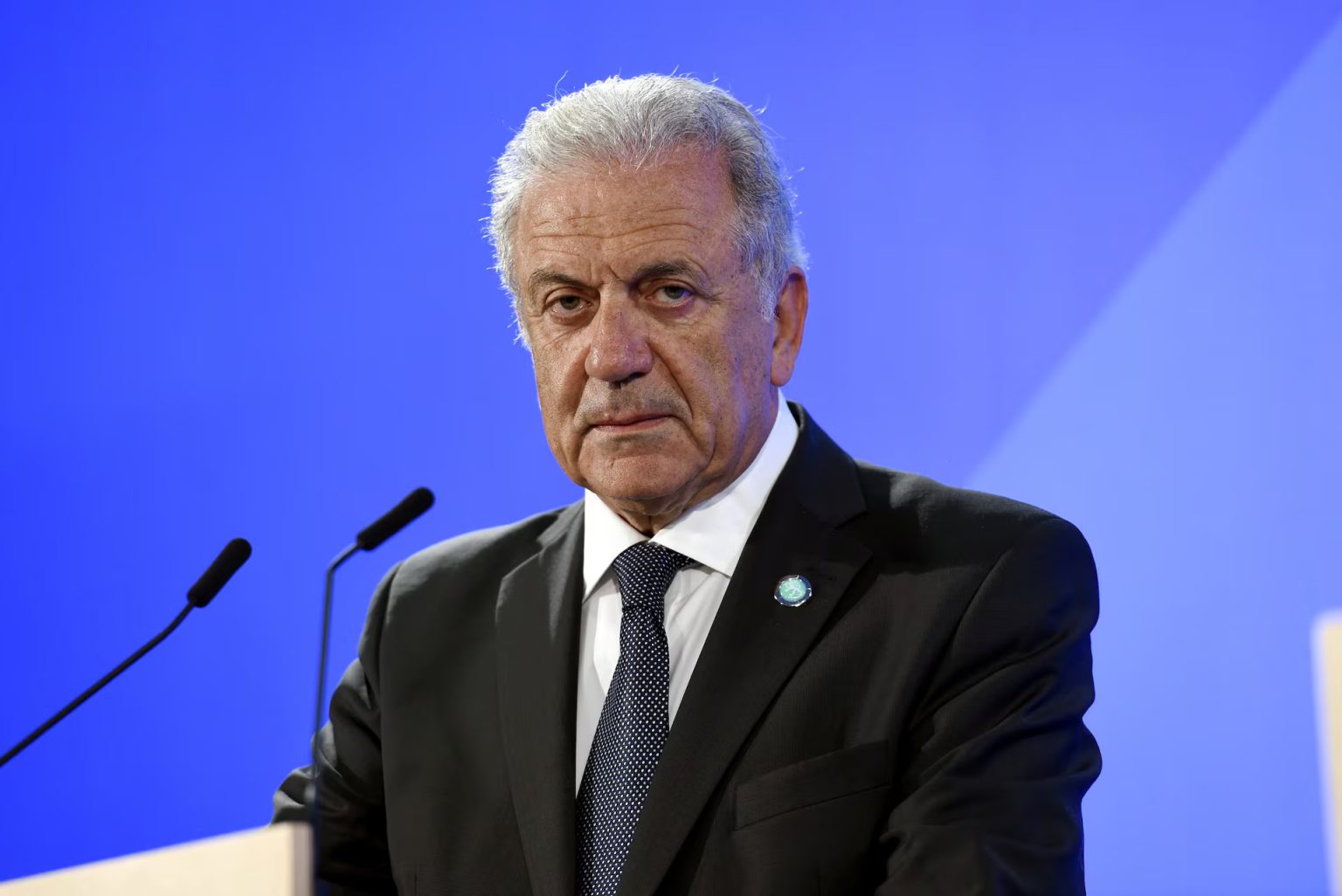
Belgium’s judiciary has intensified its investigation into the European Parliament corruption scandal known as “Qatargate” by issuing an arrest warrant for former European Commissioner Dimitris Avramopoulos.
The move marks another major development in a case that has shaken European institutions and triggered renewed debate over transparency, lobbying and foreign influence within the European Union.
Belgian investigators are reportedly seeking to question Avramopoulos regarding allegations linked to an alleged network accused of attempting to influence decision-making processes within the European Parliament through payments, gifts and political access.
Authorities have indicated that they will seek the necessary legal procedures to allow further questioning of the former commissioner.
What Is the Qatargate Scandal?
The Qatargate investigation emerged following allegations that foreign actors sought to influence European policymakers and lawmakers through financial incentives and other benefits.
Belgian prosecutors have spent several years examining claims that individuals connected to the European Parliament may have accepted payments in exchange for advancing political interests.
Both Qatar and Morocco, which have been linked to allegations during the investigation, have repeatedly denied any wrongdoing.
The case has become one of the most closely watched corruption investigations in the history of the European Union, prompting calls for stronger ethics rules and tighter oversight mechanisms.
Avramopoulos’ Role Under Scrutiny
Avramopoulos served as the European Union’s Commissioner for Migration, Home Affairs and Citizenship between 2014 and 2019 under the leadership of former European Commission President Jean-Claude Juncker.
Following his tenure in Brussels, he returned to Greek politics and currently serves as a member of Greece’s parliament representing the conservative New Democracy party.
Investigators are reportedly examining his past association with Fight Impunity, a non-governmental organisation founded by former Italian Member of the European Parliament Antonio Panzeri.
Panzeri has become a central figure in the wider Qatargate investigation and later entered into a cooperation agreement with Belgian prosecutors.
Payments from NGO at Centre of Questions
According to information released during the investigation, Avramopoulos received monthly payments while serving on the honorary committee of Fight Impunity.
The former commissioner has openly acknowledged receiving approximately €5,000 per month between February 2021 and February 2022.
However, he insists the payments were fully declared to Greek tax authorities and disclosed through official asset declaration processes.
Avramopoulos maintains that his involvement with the organisation was limited to an honorary role and that he held no executive, administrative or managerial responsibilities.
He has also stated that he obtained formal approval from the European Commission before accepting the position and that the Commission’s ethics processes were followed.
Former Commissioner Denies Wrongdoing
Avramopoulos has strongly denied any misconduct and insists he acted transparently throughout his association with the organisation.
In previous public statements, he said all financial compensation received from Fight Impunity was lawful, properly disclosed and taxed in accordance with Greek legislation.
He further stated that he requested the payments be discontinued in early 2022 after the organisation’s activities diminished.
Following revelations surrounding the broader corruption investigation, he resigned from the NGO and requested the removal of his name from its public materials.
Importantly, Avramopoulos has not been convicted of any crime, and no court has reached a final determination regarding the allegations being investigated.
Legal Process Now Moves to Greece
Because Avramopoulos currently serves as a member of the Greek parliament, a specific legal process must be followed before any further action can proceed.
Belgian authorities have formally informed Greek authorities of the warrant and investigative requests.
The matter is expected to move through Greece’s judicial and parliamentary structures, where lawmakers may ultimately be asked to consider questions relating to parliamentary immunity and judicial cooperation.
Legal experts note that such procedures are common when investigations involve serving members of parliament or former senior government officials.
Wider Impact on European Politics
The latest development is likely to increase pressure on European institutions already facing criticism over transparency and ethical oversight.
The Qatargate investigation has exposed vulnerabilities in how lobbying, advocacy organisations and external actors interact with political decision-makers across Europe.
Several reforms have already been proposed within European institutions, including stricter disclosure requirements, tighter monitoring of former officials and enhanced ethics enforcement mechanisms.
Analysts say the case continues to serve as a reminder of the importance of accountability and public trust in democratic institutions.
What Happens Next?
Belgian prosecutors are expected to continue pursuing cooperation from Greek authorities as they seek to advance their investigation.
Any future questioning or legal proceedings involving Avramopoulos will depend on the outcome of the required judicial and parliamentary processes.
For now, the former commissioner remains under investigation but has not been convicted of any offence.
As the Qatargate scandal continues to unfold, it remains one of the most consequential corruption investigations facing European institutions in recent decades, with potential implications for political accountability across the continent.