A visa fraud investigation spanning South Africa’s higher education sector has uncovered evidence of an organised network allegedly operating for more than a decade, with the Special Investigating Unit (SIU) identifying corrupt Home Affairs officials among those suspected of facilitating fraudulent permits.
- Investigation reaches all 26 public universities
- How the alleged visa fraud worked
- More than 2,000 fraudulent visas identified
- Home Affairs officials allegedly played a role
- SIU wants government systems to talk to each other
- Why tracking students across institutions matters
- SIU draws parallels with previous investigations
- Parliament now faces pressure for accountability
- A problem that may be bigger than the 2,000 cases
- What happens next?
The revelations have raised fresh concerns about weaknesses in South Africa’s immigration and university administration systems, particularly the ability of government departments to track foreign students and permit holders as they move between institutions.
The SIU’s findings were presented to Parliament’s Portfolio Committee on 26 August 2026, where investigators outlined the scale of the suspected fraud and the systemic gaps that allowed it to develop.
Investigation reaches all 26 public universities
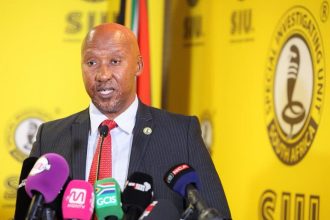
According to SIU spokesperson Selby Makgotho, the investigation formally covers the period from 2017 to 2025.
However, investigators have traced elements of the alleged syndicate’s activities back to 2013, suggesting that the problem may have been developing years before the official investigation period began.
The SIU’s parliamentary presentation considered all 26 public universities, as well as other institutions within the higher education environment.
Investigators used approximately 76 cases as a case study to identify patterns in how fraudulent visas and other permits were allegedly obtained.
The findings point to a system that was not confined to one campus or institution.
Instead, the evidence suggests that similar methods may have been replicated across different parts of the higher education sector.
How the alleged visa fraud worked
The investigation found cases in which officials allegedly approved study visas and other permits without carrying out the required verification.
According to the SIU, money allegedly changed hands through several channels, including cash payments, electronic wallets and bank accounts connected to spouses or intermediaries.
Such arrangements can make illicit payments more difficult to identify because the money does not necessarily move directly from an alleged beneficiary to the official suspected of facilitating the transaction.
The investigation is therefore examining not only individual visa applications, but also the financial relationships and networks surrounding the officials involved.
It is important to stress that the SIU’s findings concern alleged misconduct and suspected fraudulent activity. Individual cases remain subject to the relevant disciplinary, investigative and criminal processes.
More than 2,000 fraudulent visas identified
One of the most concerning figures emerging from the investigation is the identification of approximately 2,000 fraudulent visas.
The SIU has warned that this number may not represent the full extent of the problem.
Makgotho indicated that investigators have repeatedly discovered additional patterns once an existing form of misconduct is identified.
That creates the possibility that the 2,000 permits already identified could be only part of a significantly larger network.
For authorities, the challenge is therefore not simply determining how many fraudulent documents were issued.
It is establishing who facilitated them, who benefited financially, how applicants were recruited, which institutions were involved and how the system allowed questionable applications to pass through official controls.
Home Affairs officials allegedly played a role
The involvement of officials from the Department of Home Affairs is particularly significant because that department is responsible for administering South Africa’s immigration system.
The SIU says some officials were allegedly active participants in the fraudulent process.
If proven, the allegations would point to an abuse of the very administrative system intended to protect the integrity of South Africa’s borders and immigration framework.
The alleged use of intermediaries and accounts connected to officials’ spouses also raises questions about whether existing financial-monitoring and conflict-of-interest mechanisms are sufficiently effective.
For universities, meanwhile, the investigation highlights another vulnerability: institutions may accept students whose immigration documentation appears legitimate without having the tools to independently verify every permit in real time.
SIU wants government systems to talk to each other
The SIU’s response goes beyond identifying individual suspects.
The unit has recommended a system-wide solution involving the Department of Home Affairs, the Department of Higher Education and Training, and the Department of Employment and Labour.
The recommendation calls for integrated systems that can monitor an individual’s movement between educational institutions in real time.
This is an important distinction.
A fraudulent visa network can exploit gaps between departments when information is stored separately and agencies do not have immediate visibility over changes in a person’s status.
A connected system could potentially flag unusual patterns earlier.
For example, authorities could identify repeated movements between institutions, inconsistent academic records, questionable immigration status or other anomalies requiring verification.
Why tracking students across institutions matters
The issue is not simply about preventing fraudulent visas from being issued.
Once someone enters South Africa using allegedly fraudulent documentation, that person may potentially interact with several different public systems.
They could enrol at an institution, change campuses, apply for additional permits or interact with other government departments.
Without effective information-sharing, each institution may see only one part of the picture.
The SIU’s proposed integrated approach is therefore aimed at closing what investigators regard as a systemic vulnerability.
It would shift the focus from checking individual transactions towards monitoring patterns across the entire immigration and education ecosystem.
SIU draws parallels with previous investigations
Makgotho also linked the university visa investigation to patterns previously identified by the SIU in another investigation involving foreign nationals who allegedly entered South Africa through fraudulent means before establishing churches and attracting substantial followings.
He said investigators were seeing a similar pattern emerging in the higher education environment.
The comparison is significant because it suggests the SIU is looking beyond isolated acts of corruption and examining how fraudulent immigration processes can potentially become the foundation for longer-term activities inside South Africa.
The central concern is that once fraudulent documentation enables entry or legal status, the consequences can extend far beyond the original immigration transaction.
Parliament now faces pressure for accountability
The SIU’s presentation places additional pressure on government to respond with more than individual prosecutions.
The scale of the alleged network raises questions about institutional oversight, staff vetting, digital verification and communication between government departments and universities.
There is also the question of accountability.
If officials are found to have deliberately bypassed immigration controls in exchange for payments, authorities will need to establish whether those cases were isolated instances of corruption or evidence of deeper weaknesses within the system.
Universities will also face questions about their own verification procedures and how they respond when immigration documentation later turns out to be fraudulent.
A problem that may be bigger than the 2,000 cases
Perhaps the most important warning from the SIU is that the investigation is still evolving.
The discovery of one fraudulent method appears to be leading investigators towards others.
That means the headline figure of 2,000 fraudulent visas should not necessarily be viewed as the final tally.
The bigger issue is the infrastructure that allegedly made the fraud possible.
A functioning visa system depends on reliable verification, accountable officials and accurate information flowing between the agencies responsible for immigration, education and employment.
Where those systems operate in isolation, criminal networks can potentially exploit the gaps.
What happens next?
The SIU’s recommendations now place the focus on whether government can turn the findings into practical reforms.
A coordinated digital platform linking Home Affairs with higher education and employment authorities could make it considerably harder for fraudulent permits to remain undetected.
But technology alone will not solve the problem.
Authorities would also need effective internal controls, regular audits, meaningful consequences for officials who abuse their positions and mechanisms capable of identifying suspicious financial relationships.
The investigation has already demonstrated that visa fraud can have consequences well beyond immigration administration.
It can affect universities, public finances, institutional integrity and South Africa’s ability to maintain confidence in its immigration system.
With investigators tracing elements of the suspected network back to 2013, the issue is no longer simply about a handful of questionable applications.
It is about whether a decade-long vulnerability was allowed to develop inside systems that were supposed to protect the integrity of both South Africa’s borders and its higher education sector.
The SIU’s findings now give government a clearer picture of the problem. The next test will be whether authorities act decisively enough to prevent the same weaknesses from being exploited again.