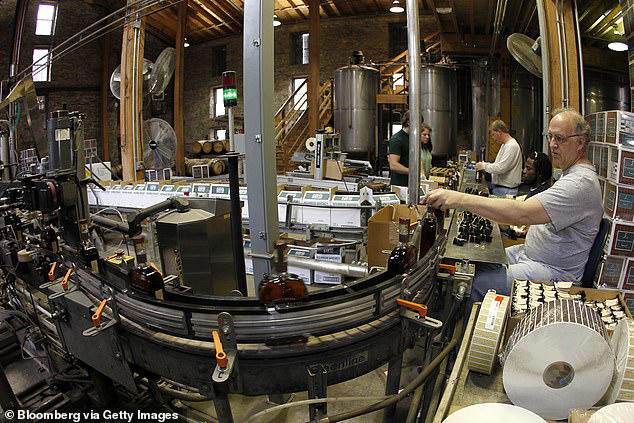

The family behind one of America’s most recognisable whiskey brands is facing an increasingly public succession and strategy battle, with two members of the Brown dynasty openly challenging how the company controlling Jack Daniel’s is being run.
- A family fortune built around Jack Daniel’s
- The two heirs challenging the family establishment
- Brown-Forman’s share price becomes a flashpoint
- Sazerac’s R285 billion takeover bid puts the board under pressure
- Why the brothers believe Sazerac deserves consideration
- Leadership and executive pay become another battleground
- Cost-cutting has already reached the workforce
- The failed Pernod Ricard deal adds to the uncertainty
- The CEO is leaving — but the bigger question remains
- Why this matters beyond one whiskey company
- A fight over the future of the Brown family legacy
WL Lyons Brown III and Stuart R Brown, members of the family that has controlled Brown-Forman for generations, have accused the company’s board of failing shareholders while presiding over falling sales, a sharply weaker share price and unsuccessful corporate deals.
Their intervention has added another layer of pressure to Brown-Forman at a critical moment. The company has rejected a takeover proposal from fellow Louisville-based spirits producer Sazerac worth about R285 billion, while its chief executive, Lawson Whiting, has announced plans to leave the position once a successor is appointed.
For the Brown family, the dispute is about considerably more than one takeover offer. It raises questions about whether one of America’s best-known family-controlled businesses can preserve its independence while convincing investors that its existing strategy can restore growth.
A family fortune built around Jack Daniel’s
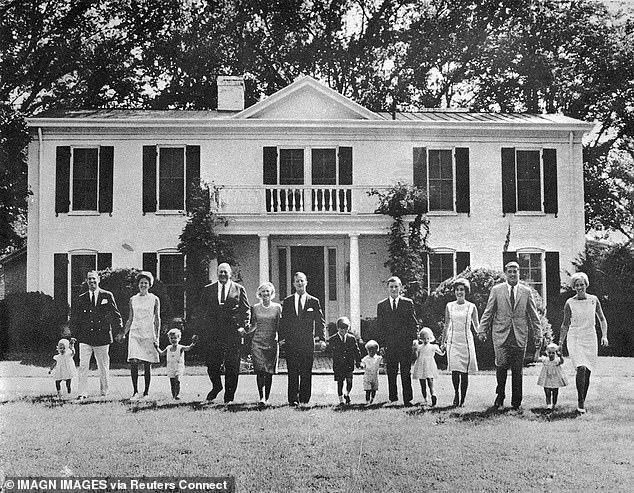
Brown-Forman traces its origins to 1870, when pharmaceutical salesman George Garvin Brown established the company in Louisville, Kentucky.
More than a century later, his descendants remain central to the business.
Brown-Forman acquired the Jack Daniel Distillery in 1956, transforming the company into one of the world’s most prominent producers of spirits. Jack Daniel’s Tennessee Whiskey subsequently became the group’s flagship global brand.
Today, the Brown family is estimated to have around 180 living descendants, including spouses.
Despite being publicly traded, Brown-Forman remains unusual because of the voting influence retained by the founding family. Brown descendants control more than 70% of the company’s voting Class A shares.
That structure gives the family considerable influence over the company’s direction — and makes internal disagreements potentially significant even when individual family members do not control enough votes to determine the outcome themselves.

The two heirs challenging the family establishment
Lyons Brown and Stuart Brown occupy an unusual position within the dynasty.
Both have previously been involved with Brown-Forman, but neither is currently part of the company’s operations. More importantly, they did not join Wolf Pen Branch, an investment vehicle established by the family in 2017 to coordinate voting among participating relatives.
Wolf Pen itself controls roughly 60% of Brown-Forman’s voting power.
That means the two brothers have limited influence over formal corporate decisions. They have, however, demonstrated that they are prepared to use their position as shareholders and family members to publicly challenge the company’s leadership.
Their latest intervention came in a letter circulated to relatives on 10 July.
The tone was unusually blunt.
The brothers accused the board of “rewarding failure” and argued that Brown-Forman’s recent performance had destroyed billions of dollars in shareholder and family wealth.
They have been raising concerns about the company’s direction since at least 2023.

Brown-Forman’s share price becomes a flashpoint
One of the strongest arguments advanced by the brothers concerns Brown-Forman’s market performance.
According to their letter, the company’s share price had fallen from the mid-$70s per share to the mid-$20s over roughly three years.
For a family whose wealth is closely tied to the company, such a decline is more than a disappointing stock-market statistic.
It represents a substantial reduction in the value of generations of accumulated ownership.
The brothers argued that the deterioration should force the board to reassess its strategy rather than simply continue with the existing approach.
Their criticism reflects a broader challenge facing major spirits companies: consumer tastes, premiumisation trends, changing drinking habits and an increasingly competitive global alcohol market have made growth harder to achieve.
For Brown-Forman, the challenge is particularly important because the company has historically benefited from the enormous international popularity of brands such as Jack Daniel’s.
Sazerac’s R285 billion takeover bid puts the board under pressure
At the centre of the family dispute is Sazerac.
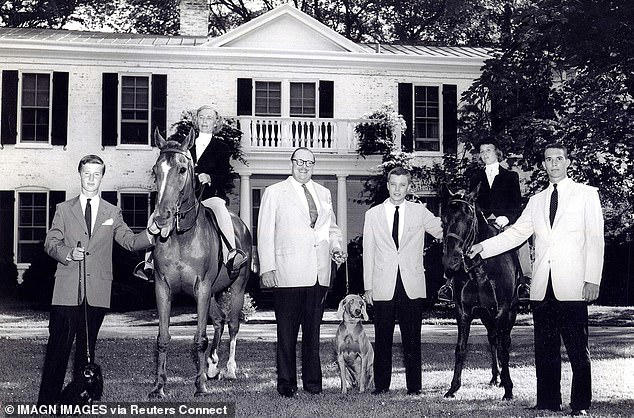
The privately held Kentucky spirits company made an unsolicited proposal to acquire Brown-Forman for approximately R285 billion.
Brown-Forman rejected the offer in May.
Sazerac subsequently renewed its proposal and appealed directly to members of the Brown family in an attempt to build support for the transaction.
But on 26 July, Brown-Forman announced that its board had rejected the renewed approach as well.
Chairman Marshall Farrer, a fifth-generation descendant of George Garvin Brown, said the proposal was not actionable.
The board maintained that Brown-Forman’s existing strategy offered a better route to creating sustainable value.
That position puts the disagreement with the two brothers into sharp focus.
Lyons and Stuart Brown believe a credible takeover offer deserves much more serious consideration, while the board and the wider family voting structure have concluded that selling the business does not fit their long-term vision.

Why the brothers believe Sazerac deserves consideration
The brothers’ argument is not simply that Brown-Forman should sell because its share price has fallen.
They contend that Sazerac could potentially provide Brown-Forman with greater scale and a stronger position in the American and international spirits markets.
There is also a geographical connection.
Both companies are based in Louisville, creating what the brothers described as a natural cultural and operational fit.
The proposal is therefore being framed by the dissenting heirs as a strategic opportunity rather than merely an exit from an underperforming investment.
They also questioned what Brown-Forman’s alternative plan would be if previous strategic initiatives had failed.
Their letter specifically referenced the company’s unsuccessful attempt to reach a transaction with French spirits giant Pernod Ricard.
The brothers’ central question was effectively this: if that transaction represented the company’s preferred strategic route, what is the credible alternative now that it has failed?

Leadership and executive pay become another battleground
The dispute has also moved beyond corporate strategy and into executive compensation.
The brothers criticised Lawson Whiting’s remuneration against the backdrop of Brown-Forman’s declining market value and operating challenges.
According to regulatory filings cited in reports, Whiting received a payout of approximately R51 million, while chief financial officer Jim Peters received about R62 million.
The figures have become politically and emotionally significant within the family because the brothers argue that executives should be held more directly accountable when company performance deteriorates.
They also questioned bonuses paid to executives involved in negotiations with Sazerac, arguing that the discussions did not ultimately create value for shareholders.
It is important to distinguish those criticisms from established findings of wrongdoing: the brothers’ statements represent their assessment of Brown-Forman’s management and compensation decisions, rather than a regulatory determination that the executives acted improperly.
Cost-cutting has already reached the workforce
Brown-Forman has not ignored the company’s performance challenges.
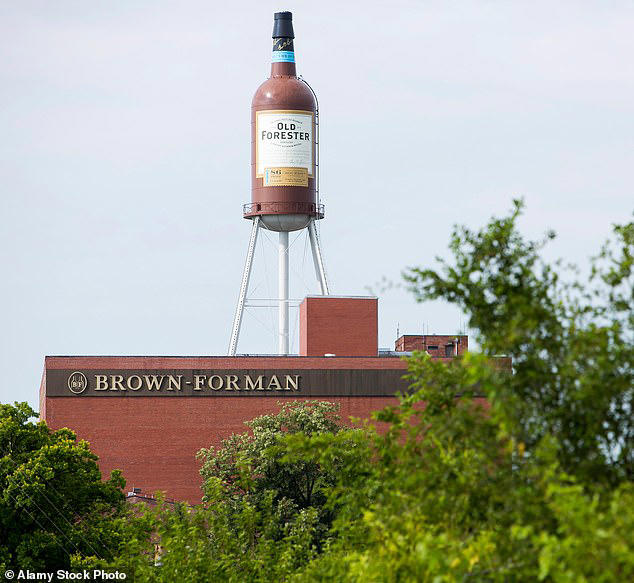
The business reportedly reduced its workforce by around 12% last year and sold its historic cooperage operation in Louisville.
Such measures are a reminder that the pressure facing the company is not confined to its share price.
Management has been attempting to reduce costs and reshape the business while looking for ways to revive sales.
One product strategy that attracted attention was the introduction of a blackberry-flavoured Jack Daniel’s Tennessee Whiskey.
The product failed to provide the hoped-for commercial turnaround, according to reporting cited in the dispute.
The episode illustrates the difficulty facing established spirits brands: a globally recognised name can provide enormous distribution and marketing advantages, but it does not guarantee that every new product will resonate with consumers.
The failed Pernod Ricard deal adds to the uncertainty
The disagreement comes after Brown-Forman’s attempted combination with Pernod Ricard failed to materialise.
Pernod Ricard is one of the world’s largest wine and spirits producers, and a transaction involving the two companies would have represented a major reshaping of the global alcohol industry.
For the Brown brothers, the failure of that effort is evidence that the company needs to reconsider its strategic direction.
For the board, however, rejecting Sazerac suggests that Brown-Forman still believes it can create greater value by remaining independent.
That difference in outlook is at the heart of the current family conflict.
The CEO is leaving — but the bigger question remains
Whiting’s impending departure adds another variable.
He informed the board that he intended to step down as chief executive once a successor was identified.
His departure came just days after the brothers circulated their critical letter, although there is no indication from the available information that the two events were causally connected.
The leadership transition nevertheless gives Brown-Forman an opportunity to reset.
A new chief executive will inherit a company dealing with pressure from investors, disagreements among family shareholders, questions about executive remuneration and an unsolicited takeover proposal from a major industry player.
The incoming leader will also have to convince investors that Brown-Forman’s independent strategy can produce stronger results.
Why this matters beyond one whiskey company
The Brown-Forman dispute offers a revealing look at the complicated relationship between family ownership and public markets.
Family control can provide stability and allow companies to pursue long-term strategies without being overly influenced by short-term investor pressure.
But the same structure can become controversial when public shareholders believe the controlling family is protecting independence at the expense of immediate value.

Brown-Forman sits directly in that tension.
The company has a globally recognised portfolio, a powerful family ownership structure and a long corporate history. Yet those strengths do not eliminate the need to demonstrate that its strategy is delivering results.
The Sazerac proposal has therefore become a test of more than the financial value of Brown-Forman.
It is also a test of how the Brown family defines stewardship.
A fight over the future of the Brown family legacy
Lyons and Stuart Brown have made it clear that they do not believe the current status quo is sustainable.
They have called for a clearer corporate strategy, greater accountability around executive pay and stronger communication with shareholders.
They have also argued that the board has a responsibility to properly evaluate credible offers rather than dismissing them outright.
Brown-Forman’s board and Wolf Pen Branch take a fundamentally different view, maintaining confidence in the company’s competitive position and its ability to generate long-term value as an independent business.
That leaves the family facing a difficult question with billions of rand at stake.
Should Brown-Forman protect its independence and attempt to rebuild the business under new leadership, or should shareholders give serious consideration to a takeover that could unlock substantial value?
For now, the answer remains with the company’s board and the family voting bloc.
But with a new chief executive on the horizon and the battle over Sazerac’s offer exposing deep differences among Brown descendants, the next chapter of the Jack Daniel’s fortune could be every bit as consequential as the generations that built it.