
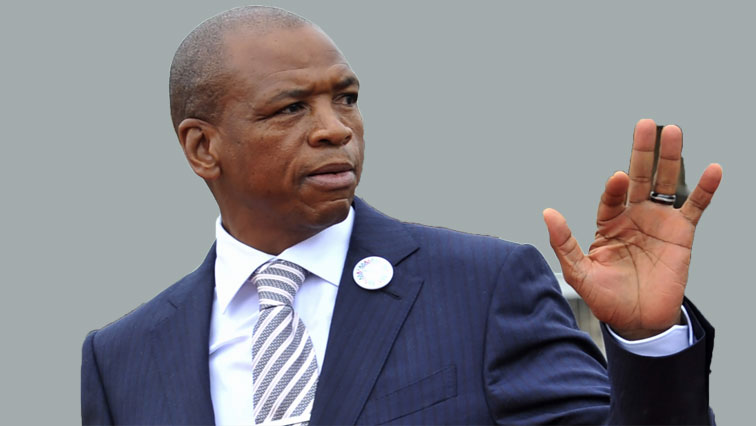
ANC Member of Parliament Supra Mahumapelo has disclosed an extensive property portfolio spanning North West and Gauteng in Parliament’s latest Register of Members’ Interests, including commercial land, residential properties, vacant plots and a business tourism lodge.
- Mahumapelo’s property portfolio stretches across North West and Gauteng
- Large rural properties form part of the declaration
- Rental income is also declared
- Why MPs have to disclose financial interests
- From North West premier to national Parliament
- Mahumapelo has interests beyond politics
- What the register does — and does not — tell the public
- Why disclosure matters for public trust
- A substantial portfolio, but not necessarily a controversy
The disclosure, recorded in the register dated 30 June 2026, lists 24 properties linked to Mahumapelo across South Africa.
Several of the residential properties generate rental income, adding an ongoing income stream to the former North West premier’s declared interests.
The disclosure does not, by itself, indicate wrongdoing. Members of Parliament are required to declare relevant financial interests as part of Parliament’s transparency and ethics framework.
Mahumapelo’s property portfolio stretches across North West and Gauteng
The former North West premier’s declared assets are concentrated in the province where he previously served as premier, with additional interests in Gauteng.
The portfolio includes 12 properties in Mahikeng, making the provincial capital the largest concentration of his declared real estate holdings.
His disclosures also include a 3,000-square-metre business stand on Vryburg Road, as well as a business tourism lodge situated in Tontonyane Village.
Additional properties are listed in several other North West locations.
Mahumapelo declared two properties in Potchefstroom, two in Rustenburg and two in Atamelang Township.
His interests also extend to Hartebeestpoortdam, where he declared a residential unit and vacant land.
Large rural properties form part of the declaration
The register also records sizeable landholdings associated with Mahumapelo.
Among them is an 89-hectare residential property in Delareyville.
Another 89-hectare vacant plot is listed along Botswana Road in Ramatlabama.
The inclusion of properties ranging from conventional residential units to large tracts of land and commercial sites illustrates the varied nature of the portfolio.
It also means that the value and potential economic significance of the holdings cannot be assessed simply by counting the number of properties.
A commercial stand, tourism facility, residential rental property and undeveloped agricultural or rural land can have vastly different market values and income-generating potential.
The register records the interests but does not, in the information provided, establish a combined market valuation for the entire portfolio.
Rental income is also declared
Mahumapelo’s disclosure goes beyond property ownership.
He also declared rental income from several residential properties.
That is relevant to Parliament’s broader disclosure regime because the purpose of the register is not simply to identify what assets an MP owns, but to provide visibility into financial interests that could potentially intersect with parliamentary responsibilities.
Rental income is a legitimate form of investment income. Its inclusion in the register provides the public with greater insight into the sources of income associated with a public representative.
There is no indication in the disclosure itself that the rental income is improper.
Why MPs have to disclose financial interests
The Register of Members’ Interests is an important component of parliamentary accountability.
Members of both the National Assembly and National Council of Provinces are required to disclose specified financial and other interests.
The system is designed to improve transparency and help identify potential conflicts between a member’s private financial interests and their public responsibilities.
The disclosures are overseen through Parliament’s ethics structures, including the Joint Committee on Ethics and Members’ Interests.
The principle is relatively straightforward: voters should be able to see significant interests that could potentially influence, or appear to influence, a public representative’s decisions.
That does not mean owning businesses, property or investments is inherently problematic.
Instead, disclosure provides a mechanism through which potential conflicts can be identified and managed.
From North West premier to national Parliament
Mahumapelo’s property disclosures come against the backdrop of a long political career in North West.
He served as Premier of North West from May 2014 until May 2018, before returning to national politics.
He has subsequently held parliamentary responsibilities, including chairing the Portfolio Committee on Tourism.
He currently chairs Parliament’s Portfolio Committee on International Relations and Cooperation.
His committee role gives him responsibility for overseeing a portfolio involving South Africa’s diplomatic and international relations machinery.
That makes the transparency of members’ financial interests particularly relevant, although the property disclosures themselves do not establish any conflict with his current parliamentary responsibilities.
Mahumapelo has interests beyond politics
Mahumapelo is also known for his involvement in gospel and cultural music.
His public profile therefore extends beyond his political career and includes interests in the arts and cultural space.
Combined with his property investments, parliamentary role and previous executive position in the North West provincial government, his career has crossed several areas of public and private activity.
The Register of Members’ Interests provides one mechanism for the public to understand some of the financial interests associated with that career.
What the register does — and does not — tell the public
The disclosure of 24 properties is significant because it provides a detailed picture of the breadth of Mahumapelo’s declared property interests.
However, the number of properties alone does not reveal his net wealth.
Without independent valuations, outstanding mortgages, ownership structures, acquisition costs and other liabilities, it would be misleading to calculate a personal fortune simply from the number of properties listed.
Similarly, the declaration of rental income does not establish how profitable those properties are after expenses such as maintenance, rates, taxes, insurance and financing costs.
The register is primarily a transparency mechanism, rather than a complete personal balance sheet.
Why disclosure matters for public trust
For politicians, financial transparency can be particularly important because public office creates situations in which private interests and public responsibilities may overlap.
A legislator involved in oversight, policymaking or committee work may encounter decisions affecting sectors in which they or their associates have financial interests.
The disclosure system does not automatically prevent such conflicts, but it makes it easier for Parliament and the public to identify potential areas of concern.
That is why the existence of the register matters beyond the individual interests of any one MP.
It creates a record against which future developments can be assessed.
A substantial portfolio, but not necessarily a controversy
Mahumapelo’s declaration of 24 properties is likely to attract attention because of the sheer number and variety of assets involved.
From properties in Mahikeng to commercial land, a tourism lodge and large rural holdings, the portfolio represents a significant collection of declared real estate interests.
But the disclosure should be viewed in its proper context.
Owning property and earning rental income are not, on their own, evidence of misconduct.
The central issue for Parliament’s ethics system is whether members properly declare their interests and appropriately manage any actual or perceived conflicts that may arise from them.
In Mahumapelo’s case, the latest register provides the public with a clearer view of his declared property interests and income sources.
The next question, as with all parliamentary disclosures, is whether those interests remain accurately reported as circumstances change and whether any potential conflicts are properly managed.
For voters, that transparency is ultimately the point of the register: not to prevent public representatives from building legitimate private wealth, but to ensure that the public can see the financial interests that accompany their service in public office.