
South Africa’s remote farming country has become an unexpected battleground in the international methamphetamine trade, with investigators uncovering what they believe is a sophisticated production network linked to Mexican organised crime.
- Mexican “tourists” raise suspicions
- Why South Africa is attractive to international drug networks
- The scale of the Swartruggens operation
- The Durban connection
- Investigators identify a Mexican signature
- Remote farms become strategic locations
- A network stretching beyond one farm
- How the alleged cartel model works
- Claims of being held hostage
- The problem extends beyond South Africa
- Why Australia and New Zealand matter
- Africa is becoming part of the production equation
- Meth use is rising in parts of the region
- South Africa faces a new organised-crime challenge
At the centre of the investigation is a game farm near Swartruggens in North West, where South African authorities say an industrial-scale methamphetamine laboratory was capable of producing as much as five tonnes of crystal meth a month.
Investigators believe the operation was connected to the Sinaloa cartel, one of Mexico’s most notorious organised-crime groups, and was designed primarily to supply overseas markets where methamphetamine can command vastly higher prices than in the United States.
According to the investigation reported by AFP, the potential wholesale value of the farm’s monthly production in Australia could have reached about R18 billion, based on the reported US-dollar estimate and prevailing exchange rates at the time.
The case has exposed a wider concern: South Africa may increasingly be functioning not only as a transit point for synthetic drugs, but as a manufacturing base for international criminal networks.
Mexican “tourists” raise suspicions
The investigation began to take on an international dimension when Mexican nationals arrived in South Africa claiming they were visiting to experience the country’s famous wildlife.
Authorities believe at least some of those visitors had a very different purpose.
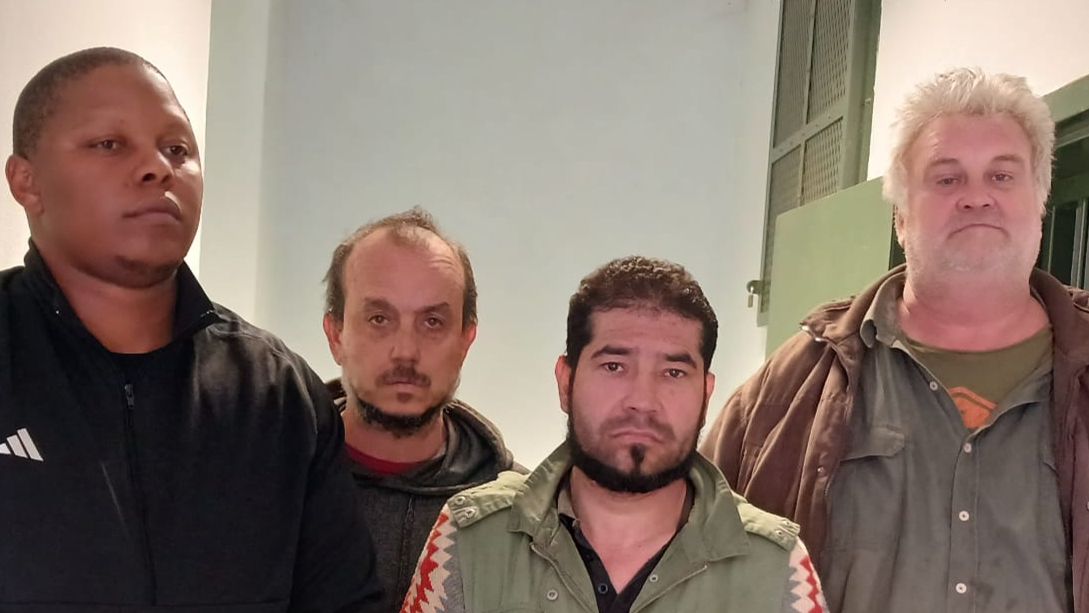
Five of the 13 people arrested during the Swartruggens raid were Mexican nationals, according to South African police. Investigators identified them as people with chemistry expertise who allegedly played a role in establishing or operating the laboratory.
Police believe the group arrived in South Africa on three-month tourist visas in March 2025 and began producing methamphetamine soon afterwards.
The operation was eventually dismantled in May.
Alongside the Mexican nationals, authorities arrested two Mozambican citizens, one Zimbabwean and four South Africans.
Three of the South Africans were members of the family that owned the game farm.
Why South Africa is attractive to international drug networks
South Africa offers several characteristics that investigators believe make it attractive to sophisticated drug manufacturers.
There are large areas of sparsely populated land where industrial laboratories can potentially be concealed, while the country also has established road networks, international airports and major commercial ports.
The country’s position in global trade is another factor.
Security sources cited in the investigation pointed to the movement of chemical products from Asian manufacturing centres, particularly China and India, where substances used in synthetic-drug production can be sourced.
The combination of international logistics and isolated rural locations creates opportunities for criminal networks seeking to manufacture drugs away from their traditional operating bases.
Corruption is also identified by investigators as a vulnerability.
The scale of the Swartruggens operation
The suspected Swartruggens laboratory was not a small clandestine operation.
South African authorities estimated that it had the capacity to manufacture approximately five tonnes of methamphetamine every month.
At the prices reportedly achievable in Australia, that volume could translate into an enormous criminal revenue stream.
Brigadier Devon Naicker, who heads the South African Narcotics Enforcement Bureau within the Hawks, told AFP that investigators were examining whether a methamphetamine shipment seized in Australia had originated at the Swartruggens laboratory.
The suspected connection was based partly on the route through the Port of Durban and the way the drug had reportedly been packaged.
Naicker said the investigation was continuing and that authorities could not disclose the investigative methods used to establish the possible link.
The Durban connection
The alleged Australian connection illustrates why South Africa’s transport infrastructure has become important to the investigation.
International criminal networks need more than a place to manufacture drugs. They also need reliable methods of moving chemicals into a country and finished products out of it.
South Africa’s major ports provide access to global shipping networks, while its road and air infrastructure connects remote production areas to commercial centres.
Authorities have also intercepted methamphetamine being moved by air.
In January, Australian authorities arrested a 32-year-old woman who had travelled from South Africa to Sydney carrying 39kg of powdered methamphetamine in her luggage.
Australian authorities have separately acknowledged an increased focus on Mexican organised-crime groups targeting Australia’s illicit drug market, although they declined to comment specifically on Mexican cartels operating in South Africa.
Investigators identify a Mexican signature
South African investigators say several recent laboratories display characteristics associated with Mexican drug-production operations.
One important development has been the use of the P2P manufacturing method, involving phenyl-2-propanone and a range of chemical inputs.
Investigators told AFP that this method had previously been uncommon in South Africa.
The physical infrastructure found inside some laboratories has also raised alarm.
At a suspected industrial laboratory at Klipvoor, north of Johannesburg, authorities reportedly found large reaction vessels capable of holding hundreds of litres.
Investigators described some of the equipment as industrial-grade but apparently custom-built.
That is significant because clandestine laboratories producing drugs on this scale require substantially more infrastructure than small-scale operations supplying a local market.
Remote farms become strategic locations
The Swartruggens investigation has highlighted a recurring pattern in South Africa.
Drug laboratories are often discovered on isolated properties that are nevertheless within reasonable distance of major roads.
The Swartruggens property was located near the N4 national route, giving the alleged operation both physical isolation and access to a major transport corridor.
Investigators say criminal networks require a steady flow of chemicals into the laboratory while also needing an efficient way to move finished product out.
That creates a balancing act: the facility must be remote enough to avoid attention but accessible enough to sustain an industrial supply chain.
The smell can give laboratories away
Large-scale methamphetamine production also creates another problem for criminals: chemical odours.
Naicker told AFP that the manufacture of precursors can produce powerful smells that may travel considerable distances under the right weather conditions.
That can make rural communities an unexpected early-warning system.
Authorities have also discovered large quantities of chemicals during raids.
At a laboratory near Musina, close to the Zimbabwean border, investigators reportedly seized around five tonnes of solvents, catalysts and reagents.
The operation involved assistance from US agencies including the Drug Enforcement Administration and the Department of Homeland Security.
A network stretching beyond one farm
The Swartruggens raid appears to form part of a much larger investigation.
South African authorities have arrested 16 Mexican nationals in raids on suspected laboratories since 2024, according to the reporting.
Investigators also previously discovered a suspected cartel-linked laboratory in Marble Hall in 2020.
In another investigation, authorities traced a suspicious container that entered South Africa through Durban in April 2023.
The container was subsequently linked to storage facilities in Midrand containing chemicals and equipment.
The emerging picture is therefore not simply one of isolated criminal laboratories.
Authorities are investigating whether a coordinated supply chain has developed involving chemical imports, storage facilities, manufacturing sites and international distribution routes.
How the alleged cartel model works
Investigators believe Mexican specialists do not necessarily remain in South Africa permanently.
Instead, some are allegedly brought in to establish production facilities, train local operators and then leave.
Naicker told AFP that experienced Mexican personnel can establish a laboratory before leaving other trained individuals behind to continue production.
This model potentially allows criminal organisations to expand manufacturing capacity without requiring senior personnel to remain at every facility.
It also makes the network harder to dismantle.
Closing one laboratory does not necessarily eliminate the expertise or infrastructure required to establish another.
Claims of being held hostage
The Mexican nationals arrested at Swartruggens reportedly told police that they had been blindfolded and taken to the property against their will.
An investigator disputed that account, arguing that the circumstances suggested the men had been accommodated rather than held as conventional hostages.
The competing accounts remain part of the investigation and should be treated as allegations rather than established facts.
The case nevertheless highlights a difficult question facing authorities: determining who within these international networks is directing operations and who may themselves have been coerced or exploited.
The problem extends beyond South Africa
South Africa is not the only African country where authorities have encountered suspected Mexican involvement in industrial-scale meth production.
Nigeria has also reported a series of raids involving Mexican nationals.
Authorities there have identified suspected links to both the Sinaloa cartel and the Jalisco New Generation cartel.
In May, Nigerian authorities raided what they described as the country’s largest methamphetamine laboratory, located in rural Ogun State.
Three Mexican nationals and seven Nigerians were arrested.
Another Mexican national was arrested during a separate operation in Oyo State in June.
Nigerian authorities believe the scale of some of these laboratories indicates that production was intended for international markets rather than domestic consumption.
Why Australia and New Zealand matter
The suspected expansion into Africa is closely linked to the economics of the global methamphetamine trade.
Australia and New Zealand are considered particularly lucrative destinations for organised drug networks because illicit drugs can command extremely high prices.
Australian authorities have previously identified links between local criminal groups and international suppliers, including Mexican organisations.
South African investigators therefore suspect that some laboratories are producing far more methamphetamine than would be required to satisfy domestic demand.
The economics provide a powerful incentive.
A laboratory hidden on an isolated African property can potentially manufacture enormous quantities before the drugs are moved through international trafficking routes.
Africa is becoming part of the production equation
The investigation also raises concerns beyond international trafficking.
Africa has historically been viewed in many drug investigations as a transit region, with substances moving through the continent towards European, Asian and other markets.
The emergence of industrial-scale synthetic-drug laboratories changes that picture.
Production creates its own local consequences, including chemical contamination, organised crime, corruption and the potential growth of domestic drug markets.
Antonio De Vivo of the United Nations Office on Drugs and Crime told AFP that intermediaries involved in trafficking can sometimes be paid partly in drugs rather than solely in cash.
That can result in some of the product entering local markets.
Meth use is rising in parts of the region
The concern is therefore no longer limited to where the drugs ultimately end up.
Authorities across southern Africa are also dealing with increasing methamphetamine consumption.
In Mozambique, for example, workers at treatment facilities have reported seeing more methamphetamine-related cases.
Former addict Paulo Ferrao, who now works at a detoxification centre near Maputo, told AFP that his facility was receiving increasing numbers of methamphetamine cases.
For governments already struggling with drug addiction and organised trafficking, industrial production creates an additional layer of complexity.
South Africa faces a new organised-crime challenge
The discoveries at Swartruggens, Musina, Klipvoor and elsewhere point to an evolving threat.
South Africa’s established transport infrastructure, extensive rural areas and connections to global trade make it attractive for legitimate commerce — but those same characteristics can also be exploited by international criminal organisations.
The alleged Sinaloa-linked operations demonstrate how the country’s role in global logistics can intersect with the international synthetic-drug trade.
For law enforcement, the challenge extends well beyond raiding individual laboratories.
It involves tracing chemical supply chains, identifying financial networks, disrupting international logistics, protecting vulnerable communities and determining how foreign organised-crime groups establish relationships with local partners.
The Swartruggens laboratory may have been dismantled, but investigators’ wider concern is that the factory was only one component of a much larger network.