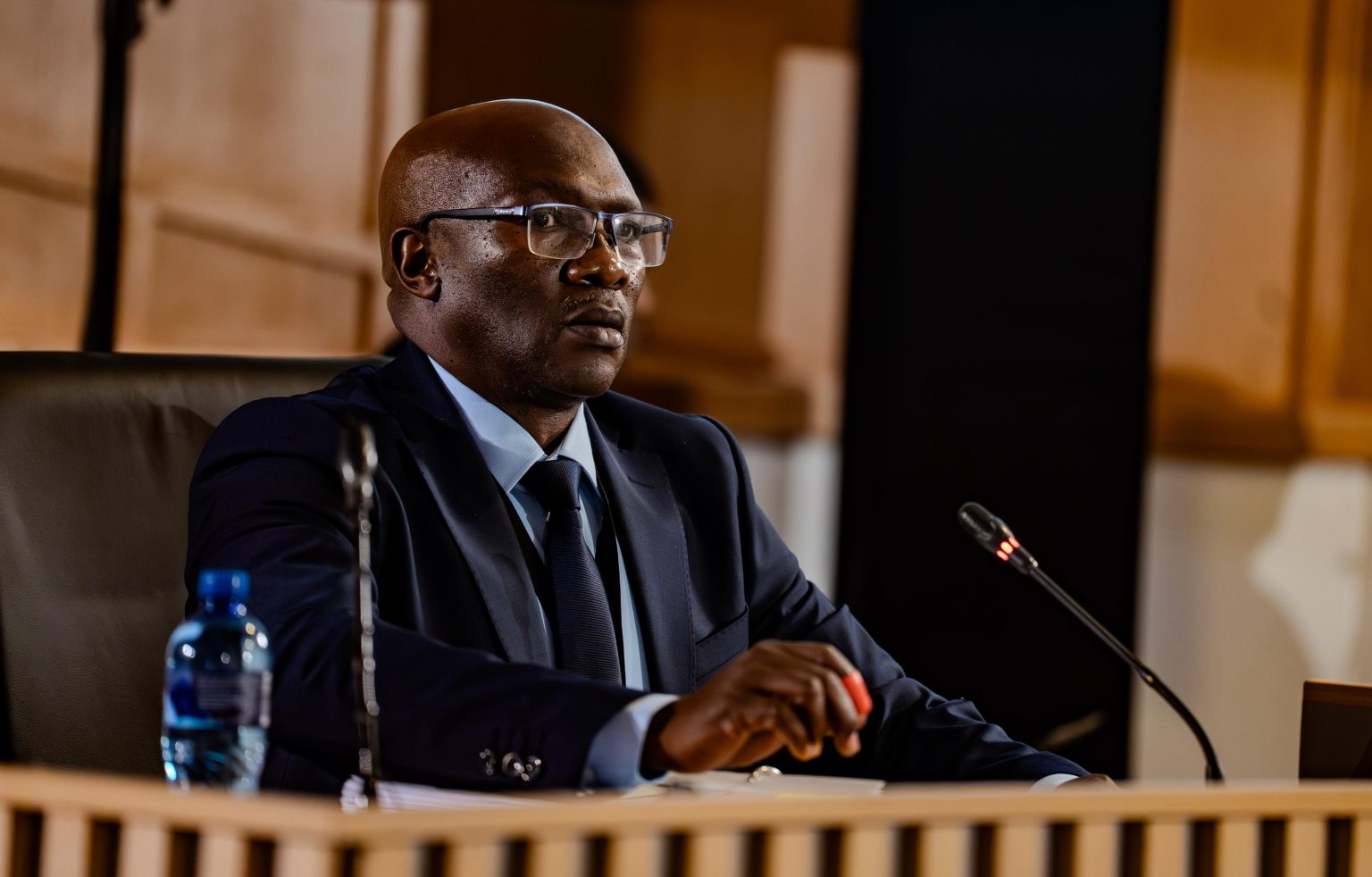
A major corruption case involving some of South Africa’s senior police officials has taken an unexpected turn after the National Director of Public Prosecutions (NDPP), Andy Mothibi, ordered the withdrawal of criminal charges against Crime Intelligence head Lieutenant-General Dumisani Khumalo and six co-accused.
While the decision removes the matter from the court roll for now, it does not amount to an acquittal. Prosecutors have made it clear that investigations remain ongoing, meaning the accused could still face prosecution should additional evidence emerge.
Charges Withdrawn, But Investigation Far From Over
The National Prosecuting Authority (NPA) confirmed that the withdrawal followed formal legal representations submitted by the accused together with a memorandum prepared by the Investigating Directorate Against Corruption (IDAC).
According to Mothibi, investigators have not yet completed their work, making it premature to continue with criminal proceedings at this stage.
Importantly, the NDPP directed that the matter may not be re-enrolled in court without his explicit written approval, placing direct oversight of any future prosecution at the highest level within the NPA.
Case Stemmed From Senior Police Appointment
The fraud and corruption charges centred on the appointment of Brigadier Dineo Mokwele within the South African Police Service’s Crime Intelligence division.
Prosecutors had alleged irregularities surrounding the appointment process, prompting criminal charges against Khumalo and the other accused.
However, developments during recent court proceedings significantly altered the strength of the State’s case.
Witness Testimony Raised Questions About the Prosecution
Last week, former head of the Investigating Directorate Against Corruption, Andrea Johnson, acknowledged during proceedings that Mokwele was in fact qualified for the position that formed the basis of the prosecution.
That concession was followed by evidence from another State witness who reportedly admitted that the criminal case appeared to rely on allegations linked to conduct that had not yet occurred, effectively describing the matter as one involving a “future crime”.
Those admissions raised serious legal questions regarding the viability of continuing the prosecution before the investigation had been fully concluded.
Withdrawal Is Not the End of the Matter
Legal experts frequently note that a withdrawal of charges differs significantly from a not-guilty verdict.
In South African criminal procedure, prosecutors may withdraw charges when investigations are incomplete, evidence requires further verification, or additional enquiries are necessary before determining whether there is a reasonable prospect of securing a conviction.
Because the case has not been finalised on its merits, the NPA retains the authority to reinstate charges should investigators uncover sufficient admissible evidence. The NDPP’s instruction that any future prosecution requires his personal written approval underscores the significance and sensitivity of the matter.
Crime Intelligence Remains Under Intense Public Scrutiny
The latest development comes amid continued public attention on governance, accountability and oversight within the South African Police Service’s Crime Intelligence division.
Recent commissions of inquiry and corruption investigations have highlighted concerns around procurement processes, appointments and institutional governance across several law enforcement structures. Against that backdrop, decisions involving senior officials inevitably attract close public and legal scrutiny.
For now, the withdrawal of charges provides temporary relief for Khumalo and his co-accused, but it does not bring the broader investigation to a close.
What Happens Next?
Investigators are expected to continue examining the circumstances surrounding the appointment at the centre of the case.
Once the investigation has been completed, prosecutors will determine whether sufficient evidence exists to justify reinstating criminal charges. Any decision to proceed must first receive written approval from NDPP Andy Mothibi.
Until then, the matter remains legally unresolved, with both investigators and prosecutors expected to continue assessing the available evidence before deciding on the next course of action.