The US investigation into the origins of COVID-19 has entered a new phase, with federal authorities under the Trump administration expanding their scrutiny of Anthony Fauci and other scientists involved in the US pandemic response.
- Dan Bongino pushed FBI to revisit stalled COVID investigation
- Investigators seek records involving Fauci and other scientists
- David Morens guilty plea adds pressure to the investigation
- Why Morens’ emails matter
- Fauci remains at the centre of the political storm
- Biden’s pardon complicates any potential prosecution
- The laboratory-leak theory remains unresolved
- What the new investigation could reveal
- A politically charged search for answers
New details reported by The New York Times indicate that FBI agents and Justice Department prosecutors have pursued records involving at least eight scientists as investigators examine whether government officials played a role in suppressing or downplaying evidence that the coronavirus may have emerged from a laboratory in Wuhan, China.
The investigation does not establish that Fauci or the other scientists caused the pandemic or participated in a cover-up. The precise origins of COVID-19 remain unresolved, and investigators have not publicly produced conclusive evidence proving that the virus escaped from the Wuhan Institute of Virology.
Instead, the renewed federal effort is examining whether officials concealed information, improperly handled government records or influenced the public debate over competing theories about how the pandemic began.
Dan Bongino pushed FBI to revisit stalled COVID investigation
According to the Times, then-FBI Deputy Director Dan Bongino summoned dozens of agents to the bureau’s Washington headquarters early in 2025 and questioned why an existing investigation into COVID-19’s origins had stalled.
Bongino reportedly pressed investigators over why government scientists had not been more aggressively scrutinised and challenged officials over the possibility that the laboratory-leak theory had been prematurely dismissed.
The meeting reportedly became heated, with Bongino confronting an official who questioned the theory that American researchers, including Fauci, had participated in a conspiracy to conceal a laboratory origin.
Bongino subsequently left the FBI in January 2026 to return to his media career, but the investigation he helped accelerate continued under the Justice Department and FBI.
Investigators seek records involving Fauci and other scientists
The investigation has reportedly expanded beyond the question of whether COVID-19 originated in a Chinese laboratory.
Federal agents and prosecutors have sought telephone, email and financial records connected to several scientists, including Fauci, as they examine interactions surrounding coronavirus research and the government’s handling of information about the pandemic’s origins.
The FBI and Justice Department have not publicly confirmed the details of the investigation.
The renewed scrutiny comes after years of political disagreement in Washington over the origins of COVID-19, with Republicans arguing that government agencies and scientists failed to properly investigate the possibility of a laboratory accident.
Scientists and other critics of the investigation, meanwhile, have argued that the federal effort risks turning unresolved scientific questions into a political prosecution.
David Morens guilty plea adds pressure to the investigation
One of the most significant developments came in August when Dr David Morens, a former senior adviser to Fauci at the National Institute of Allergy and Infectious Diseases, pleaded guilty to conspiring to defraud the US government.
Morens admitted to concealing federal records and using personal email communications in an effort to avoid public-records requirements during the pandemic.
Prosecutors said the conduct involved communications concerning COVID-19 research and efforts to protect or advance the interests of individuals connected to controversial coronavirus research.
Morens faces a maximum possible sentence of five years in prison and is scheduled to be sentenced on 12 November 2026.
Importantly, Morens’ guilty plea does not mean that Fauci has been found guilty of wrongdoing.
Fauci has not been charged in the Morens case, and prosecutors have not accused him of participating in Morens’ criminal conduct.
Why Morens’ emails matter
The Morens case has nevertheless become an important part of the wider political and legal battle over COVID-19 records.
Court documents indicate that Morens used a personal email account for government-related communications and sought to keep certain correspondence away from official systems that could be subject to Freedom of Information Act requests.
Some of the communications involved Peter Daszak, the former president of EcoHealth Alliance, an organisation that was involved in coronavirus research connected to the Wuhan Institute of Virology.
Daszak has not been charged with a crime in connection with the Morens case.
The FBI’s expanded inquiry is now examining whether records and communications from this period provide evidence relevant to the broader question of how US officials handled information about the virus’s origins.
Fauci remains at the centre of the political storm
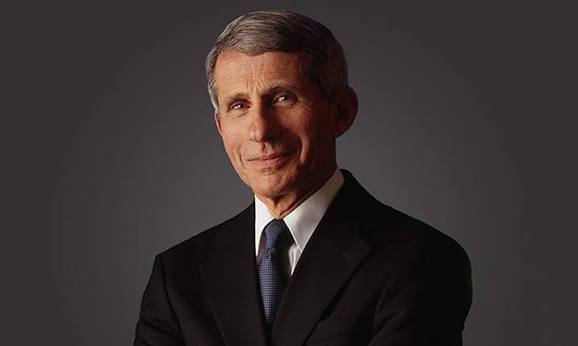
Fauci became one of the most recognisable figures of the COVID-19 pandemic after leading the National Institute of Allergy and Infectious Diseases for decades.
His public profile also made him a central target for critics of the US government’s pandemic response.
Republican Senator Rand Paul of Kentucky has repeatedly challenged Fauci over coronavirus research funding, the origins of COVID-19 and whether federal officials were sufficiently transparent.
The confrontation intensified in July 2026, when Fauci appeared before a Senate committee and repeatedly invoked his Fifth Amendment rights rather than answering questions about the pandemic’s origins.
Republican lawmakers subsequently voted to hold him in contempt of Congress.
Biden’s pardon complicates any potential prosecution
The legal position surrounding Fauci is also unusual because former President Joe Biden issued him a pre-emptive pardon in January 2025.
The pardon covers potential federal offences relating to Fauci’s work at NIAID and his service to the US government during the pandemic.
That does not necessarily end every possible legal avenue, but it creates significant complications for federal prosecutors seeking to bring any case against him.
Even Bongino has acknowledged that the pardon creates difficulties for any potential prosecution involving Fauci.
Fauci’s legal team has subsequently established a defence fund as investigations into his pandemic-era conduct have multiplied. Fauci has denied wrongdoing and his lawyers have argued that the investigations are politically motivated.
The laboratory-leak theory remains unresolved
At the heart of the investigation is one of the biggest unanswered questions of the pandemic: Where did SARS-CoV-2 come from?
Two broad explanations have dominated the debate.
One is that the virus emerged naturally and crossed from animals into humans. The other is that the virus was accidentally released from a laboratory conducting coronavirus research.
The laboratory-leak theory has received renewed attention from US intelligence and government officials, but the existence of the investigation should not be confused with proof of the theory.
There is still no publicly established evidence demonstrating that Fauci or another US scientist engineered the virus, deliberately released it or orchestrated a conspiracy to conceal such an event.
At the same time, the discovery of improperly handled government records has created legitimate questions about transparency and whether officials fully complied with federal record-keeping requirements.
Those are separate questions from the biological origin of the virus.
What the new investigation could reveal
The FBI and Justice Department investigation could ultimately focus less on proving exactly how the virus originated and more on whether individuals withheld information, manipulated government records or misled investigators and the public.
That distinction could prove crucial.
A finding that officials improperly concealed records would not, by itself, prove that COVID-19 originated in a laboratory.
Conversely, evidence establishing that scientists knew substantially more about a laboratory incident than they disclosed could dramatically reshape the historical and political debate surrounding the pandemic.
For now, investigators appear to be pursuing both possibilities.
A politically charged search for answers
More than six years after COVID-19 transformed the world, the question of its origins remains one of the most politically divisive scientific issues in the United States.
The latest FBI and DOJ investigation ensures that the controversy surrounding Fauci, coronavirus research and the Wuhan laboratory will remain in the spotlight.
But the distinction between investigating a theory and proving it remains critical.
The federal inquiry may uncover new records, communications or financial links that shed light on what happened during the crucial early months of the pandemic.
Until such evidence is established and independently assessed, however, claims that Fauci or other US scientists deliberately caused COVID-19 or covered up a confirmed laboratory leak remain allegations rather than established facts.