The United States has long carried the reputation of being the world’s most reliable borrower. That image has come under renewed scrutiny after President Donald Trump raised doubts about the accuracy of America’s national debt figures and openly suggested that parts of the debt might not be repaid.
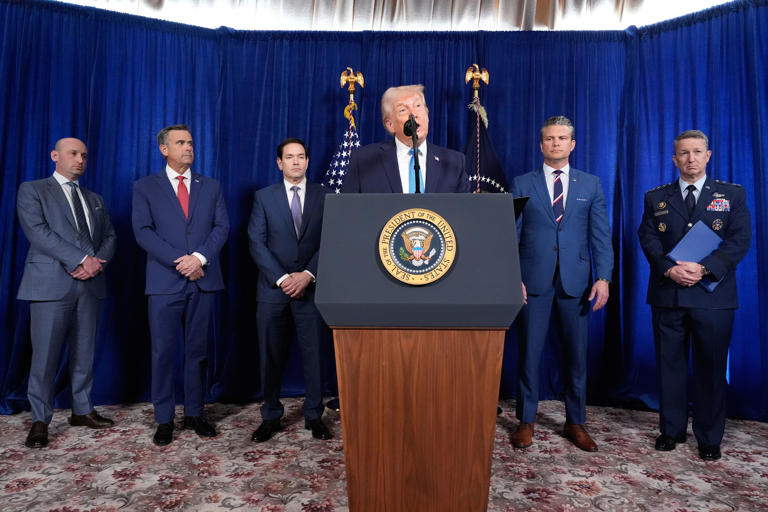
Speaking to reporters aboard Air Force One on 9 February 2025, Trump hinted that US Treasury bonds could become “an interesting problem”, comments that were widely reported and closely watched by financial markets. While a US default remains highly unlikely, even floating the idea has serious implications for countries that rely on American debt as a safe investment.
How Big Is the US Debt?
As of March 2025, America’s national debt stood at approximately R677 trillion, based on figures from the Peter G. Peterson Foundation. While the majority of this debt is owed domestically to US citizens and institutions, a significant portion is held by foreign governments and territories.
Foreign-owned US debt alone amounts to roughly R157 trillion, making global confidence in American repayments a cornerstone of the international financial system.
Trump’s Concerns and Controversial Claims
Trump has suggested that the true scale of US debt may be understated, pointing to alleged fraud and misreporting that could be inflating official figures. He has also hinted that countries holding US Treasury bonds may not automatically be repaid in full, a suggestion that sent ripples through diplomatic and financial circles.
Although no concrete policy has been announced, the rhetoric alone has unsettled allies and rivals alike. US Treasury bonds are widely treated as the safest asset in the world, and any threat to that assumption risks destabilising global markets.
Who Holds the Most US Debt?
Data compiled by Visual Capitalist shows that a wide range of countries and financial hubs hold substantial amounts of US debt. Converted into South African rand, the largest holders as of December 2024 include:
-
Japan: approximately R18.5 trillion
-
China: approximately R14.0 trillion
-
United Kingdom: approximately R13.4 trillion
-
Luxembourg: approximately R7.8 trillion
-
Cayman Islands: approximately R7.7 trillion
-
Canada: approximately R7.0 trillion
-
Belgium: approximately R6.9 trillion
-
Ireland: approximately R6.2 trillion
-
France: approximately R6.1 trillion
-
Switzerland: approximately R5.3 trillion
-
Taiwan: approximately R5.2 trillion
-
Hong Kong: approximately R4.7 trillion
-
Singapore: approximately R4.6 trillion
-
India: approximately R4.1 trillion
-
Brazil: approximately R3.7 trillion
-
Norway: approximately R2.9 trillion
-
Saudi Arabia: approximately R2.6 trillion
-
South Korea: approximately R2.3 trillion
-
Mexico: approximately R1.9 trillion
-
Germany: approximately R1.8 trillion
Beyond individual countries, the “rest of the world” category accounts for an estimated R29.6 trillion in US debt holdings.
Where Does South Africa Stand?
South Africa is also exposed, with holdings estimated at around R5.69 trillion in US debt instruments. While smaller than the largest global holders, this level of exposure still places South Africa firmly within the group of countries that would feel the shockwaves of any disruption to US repayments.
For emerging markets like South Africa, US Treasuries are often used to stabilise reserves and manage currency risk. Any loss of confidence in these instruments could put pressure on the rand and increase borrowing costs.
Would the US Really Refuse to Pay?
In practical terms, an outright refusal by the United States to repay its debt would be catastrophic, not only for global markets but for the US economy itself. Treasury bonds underpin everything from pension funds to international trade settlements.
Most analysts believe Trump’s comments are more likely a negotiating tactic or political messaging rather than a signal of real policy intent. Even so, the mere suggestion of selective repayment challenges decades of financial orthodoxy.
Why This Matters Now
With global debt levels already high and geopolitical tensions rising, trust is the most valuable currency in international finance. Questioning the reliability of US debt risks weakening that trust at a time when economic stability is already fragile.
For now, the bill has not arrived. But Trump’s remarks have reminded the world that America’s debt is not just a domestic issue. It is a global one, measured not only in trillions of rand, but in confidence — and confidence, once shaken, is notoriously difficult to restore.