
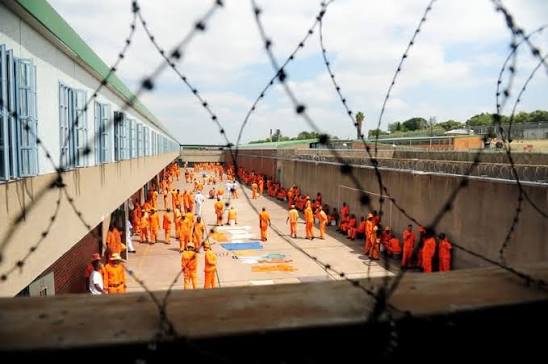
More than 4,000 Zimbabwean nationals are currently being held in South African correctional facilities, highlighting the stark imbalance in the number of foreign prisoners held on either side of the border.
- South Africa holds thousands of Zimbabwean prisoners
- MoU signed during bilateral commission
- South Africa’s overcrowded prisons under pressure
- Prisoners cost the state more than R460 a day
- Shona interpreters among the most frequently used
- What the prisoner-transfer agreement means
- Cooperation extends beyond prisoner transfers
- South Africans react to the agreement
- A significant shift in how foreign prisoners could be managed
The figure was disclosed by South Africa’s Correctional Services Minister Pieter Groenewald as South Africa and Zimbabwe signed a new Memorandum of Understanding (MoU) allowing eligible sentenced prisoners to be transferred between the two countries.
The agreement has already triggered debate among South Africans on social media, particularly over the potential impact on overcrowding, state expenditure and the administration of foreign prisoners.
South Africa holds thousands of Zimbabwean prisoners
Groenewald revealed that Zimbabwe currently has only 12 South African nationals in its prisons, while South Africa has more than 4,000 Zimbabwean nationals in its correctional facilities.
The disparity means that the prisoner-transfer arrangement could have a substantially greater impact on South Africa’s prison population than on Zimbabwe’s.
Under the agreement, eligible sentenced offenders can potentially be transferred to their countries of origin to complete the remainder of their sentences.
The arrangement is reciprocal, meaning South African nationals serving sentences in Zimbabwe could also be transferred back to South Africa.
MoU signed during bilateral commission
The agreement was signed by Groenewald and Zimbabwe’s Minister of Justice, Legal and Parliamentary Affairs Ziyambi Ziyambi during the Fourth South Africa-Zimbabwe Bi-National Commission.
The signing took place in Johannesburg and was witnessed by the presidents of both countries.
The prisoner-transfer agreement forms part of a broader package of bilateral cooperation between Pretoria and Harare.
It establishes a framework through which the two countries can cooperate on the movement of sentenced prisoners while also strengthening collaboration between their correctional authorities.
South Africa’s overcrowded prisons under pressure
The announcement comes against the backdrop of significant overcrowding within South Africa’s correctional system.
As of June 2026, the country’s 243 correctional centres were holding approximately 170,518 inmates, according to the figures supplied.
Of those prisoners, 27,906 were foreign nationals.
The number of Zimbabwean prisoners therefore represents a sizeable component of South Africa’s foreign-national prison population.
Groenewald described the new agreement as a potential breakthrough in addressing overcrowding, although the actual impact will depend on how many eligible prisoners ultimately qualify for transfer and how quickly the process can be implemented.
Prisoners cost the state more than R460 a day
The issue also has a financial dimension.
The Department of Correctional Services spends more than R460 per prisoner per day, according to the information provided.
With South Africa accommodating more than 170,000 inmates, the cost of maintaining the correctional system places considerable pressure on the public purse.
Reducing the number of foreign nationals serving sentences in South African facilities could therefore potentially lower some of the costs associated with incarceration.
However, prisoner transfers would not necessarily eliminate all costs, as the transfer process itself would require coordination between the two countries and compliance with the conditions of the agreement.
Shona interpreters among the most frequently used
The presence of large numbers of foreign prisoners also creates additional administrative requirements inside South African courts and correctional institutions.
During the 2024/25 financial year, approximately R76.1 million was spent on court interpreters and translators.
Shona interpreters accounted for around R8.7 million, or 11.5%, of that expenditure, making Shona the most frequently used language among the five provinces referenced in the supplied figures.
The data illustrates the additional logistical requirements created when large numbers of foreign nationals move through South Africa’s criminal-justice system.
What the prisoner-transfer agreement means
The new framework does not mean that every Zimbabwean prisoner in South Africa will automatically be sent to Zimbabwe.
Transfers would apply to eligible sentenced offenders, subject to the procedures and requirements established under the agreement.
For those who qualify, completing a sentence in their country of origin could bring practical benefits.
Prisoners could potentially be closer to their families, making visits and maintaining family relationships easier. Closer contact with relatives can also support rehabilitation and eventual reintegration into society.
The arrangement works both ways, allowing eligible South African prisoners in Zimbabwe to return home to complete their sentences.
Cooperation extends beyond prisoner transfers
The MoU also covers areas beyond the relocation of inmates.
South Africa and Zimbabwe intend to strengthen cooperation through:
- Information sharing
- Prison administration
- Technical support
- Information technology
- Agricultural production
- Other correctional expertise and support
Agricultural and other self-sustainability initiatives could provide prisoners with opportunities to develop practical skills while contributing to correctional-facility operations.
The broader objective is therefore not simply to move prisoners between countries but to strengthen cooperation between their correctional systems.
South Africans react to the agreement
The revelation that more than 4,000 Zimbabwean nationals are incarcerated in South Africa has added another dimension to the public discussion surrounding the agreement.
Some reactions have focused on the potential relief that prisoner transfers could provide to overcrowded correctional facilities.
Others have questioned the costs associated with housing foreign nationals in South African prisons and whether offenders should serve sentences closer to their countries of origin.
The disparity between the more than 4,000 Zimbabweans in South Africa and the 12 South Africans in Zimbabwe has particularly fuelled discussion about the practical impact of the agreement.
A significant shift in how foreign prisoners could be managed
For South Africa, the prisoner-transfer framework could offer another mechanism for managing its heavily burdened correctional system.
For Zimbabwean prisoners, it could mean serving the remainder of their sentences considerably closer to their families and communities.
For both governments, the agreement establishes a formal mechanism for cooperation that goes beyond individual cases.
Its ultimate impact will depend on implementation, eligibility requirements and the number of prisoners transferred.
But the numbers disclosed by Groenewald have already put the scale of Zimbabwean nationals in South African prisons firmly at the centre of the conversation.