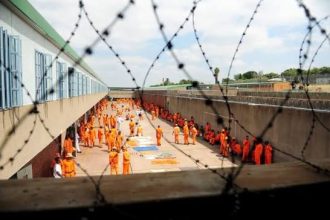
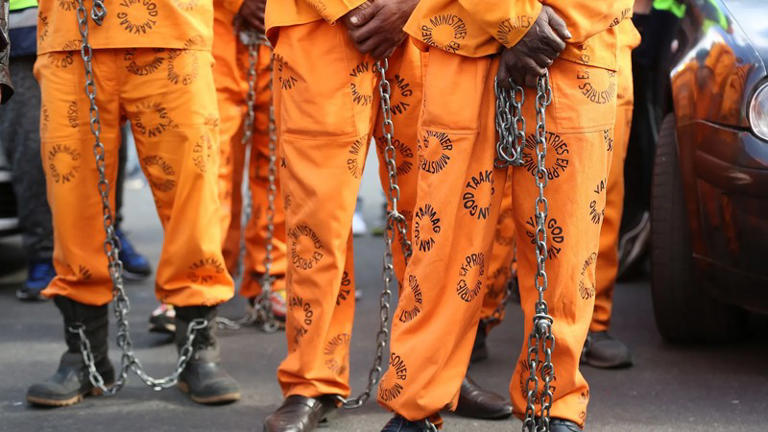
South Africa is spending an estimated R5.4 billion a year to incarcerate foreign nationals, according to the Department of Correctional Services, as overcrowding continues to place enormous pressure on the country’s prison system.
- More than 30,000 foreign nationals in SA prisons
- Only sentenced prisoners could be transferred
- Why Zimbabwean prisoners may not immediately return home
- More than 15,000 sentenced foreign offenders potentially eligible
- Foreign prisoners cost about R14 million every day
- Prisoner transfers could help ease overcrowding
- Transfer deal will not solve overcrowding
- The bigger criminal justice challenge
- What happens next?
More than 30,000 foreign nationals are currently behind bars in South Africa, including 4,731 Zimbabwean offenders, while government moves towards implementing prisoner-transfer arrangements with neighbouring countries.
The figures were outlined by Correctional Services spokesperson Singabakho Nxumalo, who explained that the recently concluded agreement between South Africa and Zimbabwe does not mean prisoners will immediately start being transferred across the border.
Instead, the agreement establishes the framework needed for such transfers to take place.
More than 30,000 foreign nationals in SA prisons
South Africa’s total prison population currently stands at 173,955 inmates, according to Nxumalo.
The country’s correctional facilities are operating at approximately 62% overcrowding.
Of the total prison population, 30,527 are foreign nationals.
However, not all of these prisoners are serving sentences.
Nxumalo said 15,284 foreign nationals are sentenced offenders, while the remainder are awaiting the outcome of their court proceedings.
Zimbabweans make up the largest group, with 4,731 offenders in South African correctional facilities.
Other significant groups include nationals from Mozambique, Malawi and Lesotho.
Only sentenced prisoners could be transferred
The proposed prisoner-transfer arrangements would primarily affect foreign nationals who have already been sentenced.
Nxumalo explained that sentenced foreign offenders could potentially serve their remaining prison terms in their countries of origin once South Africa concludes appropriate agreements with those countries.
But the process is not automatic.
South Africa and Zimbabwe still have to work through differences between their respective sentencing and parole systems.
“This is a framework,” Nxumalo explained, noting that parole regimes differ between countries.
That means authorities still have to determine which prisoners qualify, how sentences will be administered and how parole arrangements would work after a transfer.
Why Zimbabwean prisoners may not immediately return home
One of the biggest complications is that countries do not necessarily treat sentences in the same way.
Nxumalo used life imprisonment as an example.
In some countries, a person sentenced to life imprisonment may remain in prison for the entirety of the sentence.
South Africa, by contrast, has different parole provisions under which an offender serving a life sentence may become eligible for consideration after serving a prescribed minimum period, depending on the circumstances of the case and applicable law.
These differences mean that simply moving prisoners from one country’s correctional system to another is considerably more complicated than arranging transport across the border.
As a result, there is currently no confirmed number of Zimbabwean prisoners who will eventually be transferred.
More than 15,000 sentenced foreign offenders potentially eligible
The figures provided by Correctional Services suggest that 15,284 sentenced foreign nationals could potentially form part of future prisoner-transfer arrangements.
However, that does not mean all 15,284 prisoners will be transferred.
Each country would need an appropriate agreement with South Africa, while individual cases would still have to meet the relevant requirements.
The Department of Correctional Services is therefore prioritising agreements with neighbouring Southern African Development Community (SADC) countries, which account for a large proportion of foreign nationals incarcerated in South Africa.
Foreign prisoners cost about R14 million every day
The financial implications are substantial.
Correctional Services estimates that it costs approximately R483 per inmate per day to accommodate a prisoner.
With 30,527 foreign nationals in South African correctional facilities, the department estimates the daily cost of incarcerating this group at approximately R14 million.
Over a full year, that translates into roughly R5.4 billion.
The calculation puts the financial dimension of South Africa’s foreign-prisoner population into sharp perspective.
However, transferring prisoners would not automatically eliminate all expenditure associated with foreign offenders, nor would it resolve the broader causes of overcrowding.
Prisoner transfers could help ease overcrowding
The department believes international prisoner-transfer agreements could provide some relief to an already overcrowded correctional system.
Moving eligible sentenced foreign nationals to their countries of origin would reduce the number of inmates housed in South African facilities.
It could also allow prisoners to serve their sentences closer to their families.
According to research cited by Nxumalo, more than 80% of foreign nationals surveyed said they would prefer to serve their sentences in their home countries.
For prisoners with families across the border, that could make maintaining contact significantly easier and potentially support rehabilitation and eventual reintegration.
Transfer deal will not solve overcrowding
Despite the potential benefits, Correctional Services acknowledges that prisoner transfers alone will not solve South Africa’s overcrowding crisis.
Nxumalo said the fundamental issue remains the country’s high crime rate, while overcrowding is also linked to challenges elsewhere in the criminal justice system.
These include:
- Court backlogs
- Sentencing processes
- Violent crime
- Large numbers of people awaiting trial
- Limited alternatives to incarceration
This means the pressure on prisons cannot be addressed by Correctional Services in isolation.
The bigger criminal justice challenge
The foreign-prisoner debate therefore forms only one part of a much larger problem.
South Africa’s correctional facilities accommodate sentenced offenders as well as people awaiting the conclusion of their court cases.
Reducing the number of foreign sentenced prisoners could free up some capacity, but it would not address the underlying flow of people into the correctional system.
Court efficiency, crime prevention, sentencing policy and alternatives to imprisonment will all influence the size of the prison population.
As Nxumalo put it, prisoner transfers are part of the department’s response, but they will never be enough on their own.
What happens next?
South Africa and Zimbabwe now have a framework for closer cooperation between their correctional authorities.
The next step is working out the practical mechanisms required to identify eligible prisoners and transfer them safely and lawfully.
Similar agreements with other neighbouring countries could potentially follow, particularly given the large number of nationals from SADC states held in South African prisons.
For now, however, the headline figures remain striking: 30,527 foreign nationals in South African prisons, 15,284 of them sentenced, and an estimated R5.4 billion a year spent incarcerating the group.
The proposed transfer agreements could provide some relief — but South Africa’s overcrowding problem ultimately extends far beyond the nationality of the people behind its prison walls.