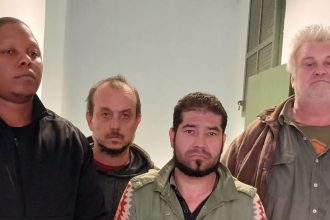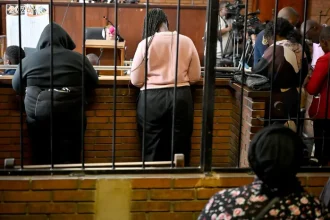

A decade-long legal battle has ended with five members of the Jantjies family being sentenced for their involvement in a fraudulent Unemployment Insurance Fund (UIF) claims scheme that cost the Department of Employment and Labour approximately R500,000.
The family members appeared before the Gqeberha Specialised Commercial Crime Court, where the matter was finalised on Thursday, 20 August 2026.
The convicted individuals are Dimitri Jantjies (48), Barbara Jantjies (77), Thomas Jantjies (77), Virsinese Jantjies (42) and Tania Jantjies (49).
According to the Directorate for Priority Crime Investigation, commonly known as the Hawks, the family members worked together with the late C’Bornai Jantjies (50), a former Department of Employment and Labour employee.
The alleged fraudulent activity took place between May 2009 and March 2011.
How the UIF fraud scheme allegedly worked
The Hawks said the group manipulated employer declaration forms, known as UI-19 forms, to facilitate fraudulent UIF applications.
These forms contain information used by the UIF to determine a person’s employment and contribution status.
According to investigators, the manipulated information enabled fraudulent claims to be processed and UIF payments to be directed into bank accounts controlled by the accused.
The investigation ultimately identified 18 fraudulent claims linked to the scheme.
The actual financial loss to the UIF was calculated at approximately R500,000, while investigators identified additional potential prejudice of more than R110,000.
Former department employee allegedly played a role
A significant element of the case was the alleged involvement of a former employee of the Department of Employment and Labour.
The Hawks said the five convicted family members acted in concert with C’Bornai Jantjies, who was employed by the department at the time of the fraudulent transactions.
His alleged access to the department’s systems and processes would have been relevant to the submission and processing of the claims.
The former employee has since died.
More than 10 years from alleged fraud to sentencing
The case highlights the lengthy nature of complex financial-crime investigations and prosecutions.
The fraudulent claims date back more than 15 years, while the legal proceedings themselves extended for more than a decade before the matter was finally concluded.
For investigators, the case involved tracing the transactions and establishing how the allegedly manipulated documentation was used to process the UIF claims.
The conclusion of the matter means five people have now been held criminally accountable for their role in the scheme.
UIF fraud remains a serious concern
Fraud involving public funds has consequences beyond the amount directly stolen.
The UIF exists to provide financial assistance to qualifying workers who lose employment or face other circumstances covered by the fund. Money diverted through fraudulent claims is therefore money that cannot be used for its intended social-protection purpose.
The Jantjies case also demonstrates why the integrity of administrative records and employment declarations is important in protecting public funds.
The manipulation of a document such as a UI-19 can potentially affect the wider claims-verification process if fraudulent information is accepted as genuine.
Hawks continue targeting commercial crime
The prosecution is another example of the Hawks’ focus on serious commercial and financial offences involving public institutions.
While the alleged fraud occurred between 2009 and 2011, the eventual conviction demonstrates that complex financial cases can remain active for many years.
The case also serves as a reminder that fraudulent claims involving government funds can result in criminal prosecution long after the transactions themselves have taken place.
For the Department of Employment and Labour, the recovery and protection of UIF funds remains important not only from a financial perspective but also because the fund provides support to millions of workers and beneficiaries.
A decade-long case finally reaches its conclusion
The sentencing of Dimitri, Barbara, Thomas, Virsinese and Tania Jantjies brings a lengthy legal process to an end.
The Hawks said the five acted together with the late C’Bornai Jantjies to submit fraudulent UIF applications, with 18 false claims ultimately processed.
The scheme resulted in approximately R500,000 in actual losses, with more than R110,000 in additional potential prejudice identified by investigators.
The case underscores a straightforward principle in the fight against public-sector fraud: manipulating government systems for personal financial gain can have consequences years after the money changes hands.