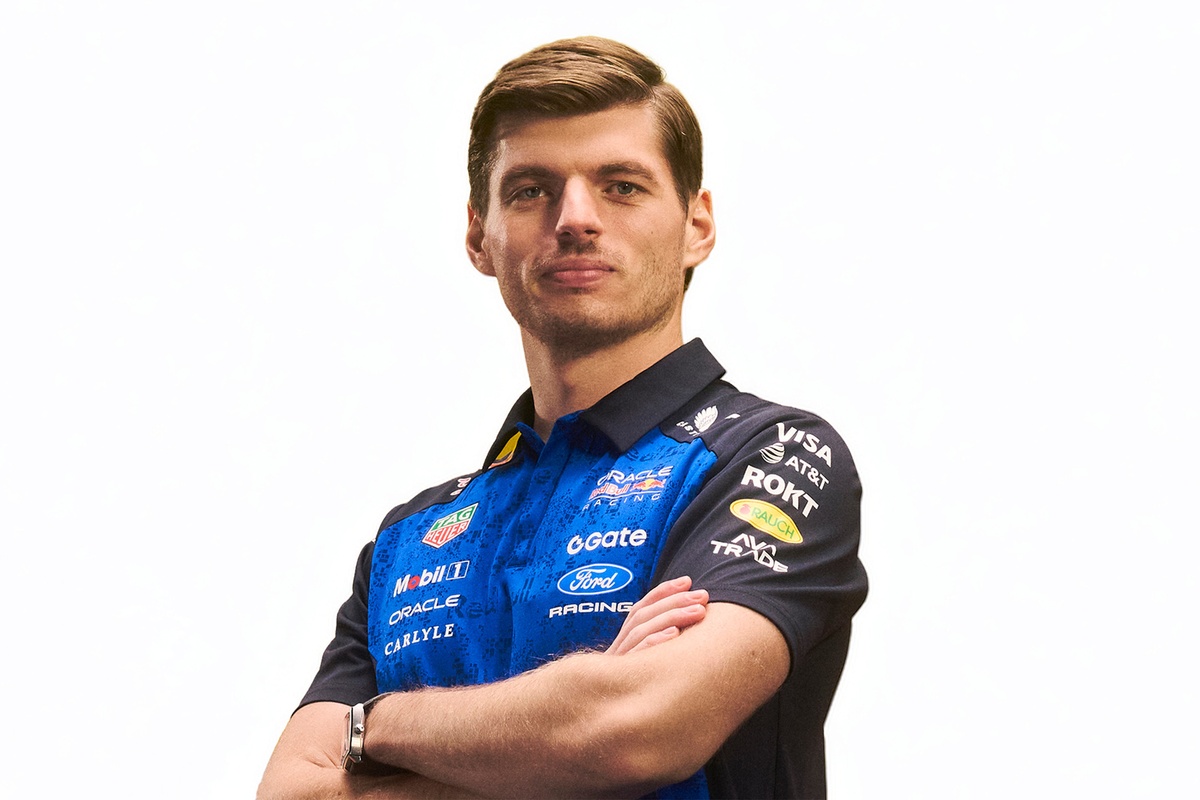
Max Verstappen’s future at Red Bull has suddenly become one of Formula 1’s biggest stories, with a performance clause in his contract reportedly now giving the four-time world champion an opportunity to leave the team before the 2027 season.
- Verstappen’s contract clause has reportedly been triggered
- Verstappen’s manager plays down departure talk
- Red Bull is no longer the team Verstappen joined
- Red Bull’s new Ford power unit adds another variable
- The championship standings tell their own story
- Where could Verstappen actually go?
- A theoretically open market could still be practically closed
- Red Bull still has one major advantage
- The decision could shape Formula 1’s next era
- The October deadline adds pressure
- Verstappen’s future is no longer entirely Red Bull’s decision
Verstappen entered the 2026 summer break sixth in the drivers’ championship, 110 points behind championship leader Kimi Antonelli.
That position is significant because his Red Bull contract reportedly contains a performance-related exit mechanism that becomes available if he is outside the top two at the mid-season break.
The clause has now been activated, creating a window in which Verstappen could potentially decide to pursue a move for 2027.
But there is a crucial distinction between having the option to leave and actually wanting to leave.
His manager, Raymond Vermeulen, has already indicated that the existence of the clause does not mean Verstappen intends to use it.
Verstappen’s contract clause has reportedly been triggered
Verstappen went into Formula 1’s summer shutdown on 109 points, compared with Antonelli’s 219.
That left him sixth in the championship, behind Antonelli, Lewis Hamilton, George Russell, Charles Leclerc and Lando Norris.
Under the reported terms of his Red Bull agreement, finishing outside the top two in the championship at the summer break activates a performance clause.
The timing is significant because the option gives Verstappen a potential route out of his current arrangement during a period when Red Bull’s competitive position has become increasingly uncertain.
The reported window runs until October, meaning the decision cannot simply be left indefinitely.
However, there is no indication that Verstappen has formally decided to exercise the clause.
Verstappen’s manager plays down departure talk
Raymond Vermeulen has attempted to cool speculation surrounding his driver’s future.
Speaking to Austrian publication OE24 in July, Vermeulen said Verstappen still wanted to fulfil his current Red Bull contract, which runs until the end of 2028.
He acknowledged that the clause exists but stressed that its presence should not automatically be interpreted as evidence that Verstappen intends to activate it.
That is an important point.
Contractual escape routes are often designed as safeguards rather than predetermined instructions to leave.
Verstappen’s camp has apparently had opportunities to use similar mechanisms in previous seasons but chose not to do so.
The difference in 2026 is that Red Bull’s competitive position and internal structure have changed dramatically.
Red Bull is no longer the team Verstappen joined
The biggest question surrounding Verstappen’s future may not actually be the clause itself.
It is the transformation of Red Bull.
The team that dominated Formula 1 with Verstappen has experienced a major reshuffle.
Christian Horner was removed as team principal during the previous season, with Laurent Mekies taking over at the start of 2026.
Meanwhile, several senior figures associated with Red Bull’s championship-winning era have departed.
Among them was legendary technical chief Adrian Newey, who moved to Aston Martin.
Motorsport adviser Helmut Marko, chief designer Rob Marshall and sporting director Jonathan Wheatley have also left.
Verstappen’s long-time race engineer Gianpiero Lambiase is reportedly set to join McLaren by 2028.
The accumulation of departures represents more than routine staff turnover.
It has altered the technical and organisational environment around the driver who has spent much of his career at the centre of Red Bull’s success.
Red Bull’s new Ford power unit adds another variable
Red Bull is also facing one of the biggest technical transitions in its history.
The 2026 season introduced a new generation of Formula 1 power-unit regulations, while Red Bull entered the era with its own in-house power-unit programme developed with Ford.
That represents a major undertaking for a team whose previous dominance was built around the highly successful Honda power unit.
Mekies did not attempt to disguise the challenge before the season began.
He acknowledged that Red Bull expected to trail some of its rivals during the opening rounds as the new power-unit project developed.
The concern for Verstappen is not necessarily whether Red Bull can recover from a difficult start.
It is whether the team can rebuild quickly enough to remain a realistic championship contender during the prime years of his career.
The championship standings tell their own story
The performance clause would not have become relevant had Verstappen remained near the front of the championship.
Instead, his position at the summer break paints a stark picture.
Antonelli leads the championship on 219 points.
Hamilton is second, 50 points behind his Mercedes team-mate, while Russell occupies third.
Leclerc is fourth and Norris fifth.
Verstappen is sixth on 109 points, leaving him 110 points behind Antonelli.
That is a remarkable position for a driver who has won four consecutive world championships and was widely regarded as the benchmark against which the rest of the grid was measured.
The first 11 races have also produced another unusual statistic: Verstappen has failed to win a grand prix during that opening stretch for the first time since his rookie season.
That makes the 2026 campaign fundamentally different from the dominant seasons that preceded it.
Where could Verstappen actually go?
The clause may give Verstappen freedom, but the driver market does not necessarily offer an obvious destination.
That is where the situation becomes particularly complicated.
Mercedes has already built its long-term driver line-up around Kimi Antonelli and George Russell.
Both drivers are central to the team’s future plans, making a straightforward Verstappen move difficult.
McLaren presents another theoretical possibility, given its competitive position, but the team already has Lando Norris and Oscar Piastri under contract.
Team principal Zak Brown has repeatedly indicated that neither driver is available.
Ferrari is similarly complicated.
The Italian team has Charles Leclerc under contract after extending his agreement earlier in 2026, while seven-time world champion Lewis Hamilton occupies the other seat.
In other words, the biggest teams capable of giving Verstappen a genuine championship-winning car are already heavily committed to their existing driver combinations.
A theoretically open market could still be practically closed
This is the paradox facing Verstappen.
His reported contract clause gives him an opportunity to explore a move.
But the teams most capable of challenging for championships may not have a vacant seat.
That creates a situation in which the value of the exit clause depends heavily on what happens behind the scenes.
A driver of Verstappen’s calibre could potentially force a team to reconsider its plans, particularly if a championship-winning opportunity became available.
But contracts, commercial commitments and team politics cannot simply be ignored.
The question is therefore not merely “Can Verstappen leave Red Bull?”
It is “If he leaves, where can he go that gives him a better chance of winning?”
Red Bull still has one major advantage
Despite the problems, Red Bull retains an asset that few teams possess: Verstappen himself.
The team has built its modern identity around him, and his continued presence gives the organisation a clear competitive focal point while it attempts to rebuild.
Abandoning the partnership could therefore carry significant risks for both sides.
For Verstappen, leaving would mean giving up a team that helped him become a four-time world champion.
For Red Bull, losing him would remove the driver who has delivered much of the team’s recent success at precisely the moment the organisation is undergoing a technical and leadership rebuild.
That makes negotiations particularly delicate.
The decision could shape Formula 1’s next era
The timing is also important.
Formula 1’s 2026 regulations have fundamentally changed the competitive landscape, meaning the teams that dominate the opening phase of the new rules could potentially establish an advantage for years.
Verstappen is therefore facing a career decision at a pivotal moment.
Staying could allow him to lead Red Bull through its rebuilding process and potentially become the driver who restores the team to the top under the new regulations.
Leaving could put him in a position to join a rival that has adapted more successfully to the new era.
The difficulty is identifying which option provides the better long-term opportunity.
The October deadline adds pressure
With the reported exit window running until October, Verstappen and his management team have limited time to assess the situation.
The championship standings could change considerably before then.
A stronger run of results from Red Bull could make staying more attractive.
Conversely, continued struggles could strengthen the argument for using the clause.
The performance of Red Bull’s Ford power unit, the team’s development programme and the trajectory of the championship will all be important factors.
So too will the availability — or lack thereof — at Mercedes, McLaren and Ferrari.
Verstappen’s future is no longer entirely Red Bull’s decision
For years, Verstappen’s future at Red Bull appeared relatively straightforward.
He had a long-term contract, a dominant car and a team built around his talents.
The 2026 season has changed that equation.
The reported activation of his performance clause means the decision is no longer entirely controlled by Red Bull.
Verstappen now has a contractual mechanism that could give him leverage at a moment when the team is rebuilding and rivals are increasingly competitive.
But his manager’s comments suggest that exercising the clause is far from inevitable.
The next few months could therefore become one of the most consequential periods of Verstappen’s Formula 1 career.
For the first time since his emergence as the sport’s dominant force, the question is not simply whether Red Bull can keep Verstappen.
It is whether Red Bull can give him a compelling reason to stay.