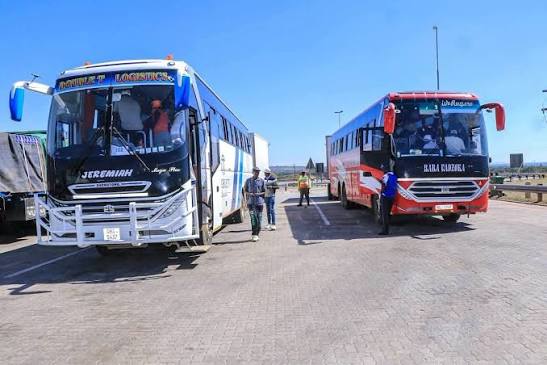
Two buses travelling from Zimbabwe have been intercepted on the N1 near Polokwane after authorities discovered serious overloading and found that 65 passengers did not have passports, including children.
The operation took place on Friday morning, according to the Limpopo Department of Transport and Community Safety. The two buses were carrying a combined 178 passengers, exceeding their permitted capacities and raising concerns about passenger safety and immigration compliance.
Department spokesperson Mashudu Mabata said both vehicles were escorted to the Polokwane weighbridge for further inspections, while immigration officials and K9 units conducted checks at the scene.
First Bus Overloaded by 13 Passengers
The first bus was designed to carry 75 passengers but was found transporting 88 people — 13 above its authorised capacity.
Authorities also discovered that 15 passengers did not have passports. The group consisted of six minors and nine adults.
Further inspections revealed that the bus exceeded the permitted weight on its first axle by 1,080kg. A spot fine was issued in connection with the overloading-related findings.
The incident highlights the potential safety risks associated with operating passenger vehicles beyond their approved capacity and weight limits.
Second Bus Carried 90 Passengers
The second bus was authorised to carry 74 passengers but was found transporting 90, exceeding its capacity by 16 people.
According to Mabata, 50 passengers on the bus did not have passports. This included 28 adults and 22 minors.
The second vehicle therefore accounted for the majority of passengers identified without passports during the operation.
Across both buses, the reported figures were:
-
178 passengers transported by the two vehicles.
-
65 passengers without passports.
-
28 minors among those without passports.
-
29 passengers above the combined authorised capacity of the buses.
Immigration Officials and K9 Units Conduct Checks
Immigration officials and K9 dogs were deployed to assist with the operation, verify passengers’ documentation and carry out additional checks.
The authorities were also expected to take action against the two drivers over the alleged immigration-related offences.
Mabata said the drivers would be charged and detained in terms of Section 42 of the Immigration Act 13 of 2002, which she described as covering the aiding and abetting of illegal foreigners.
The department’s statement did not establish the final immigration status of every passenger found without a passport. Further checks would be needed to determine the circumstances of each case.
Drivers Face Possible Legal Action
The case brings together two separate concerns for authorities: compliance with passenger transport safety requirements and the documentation of people entering or travelling through South Africa.
Overloading can compromise passenger safety and place additional strain on a vehicle, while missing travel documents can trigger immigration checks. However, the absence of a passport alone does not establish every detail of a person’s immigration status.
The next steps will depend on the investigations, the charges brought against the drivers and the outcome of the authorities’ documentation checks.