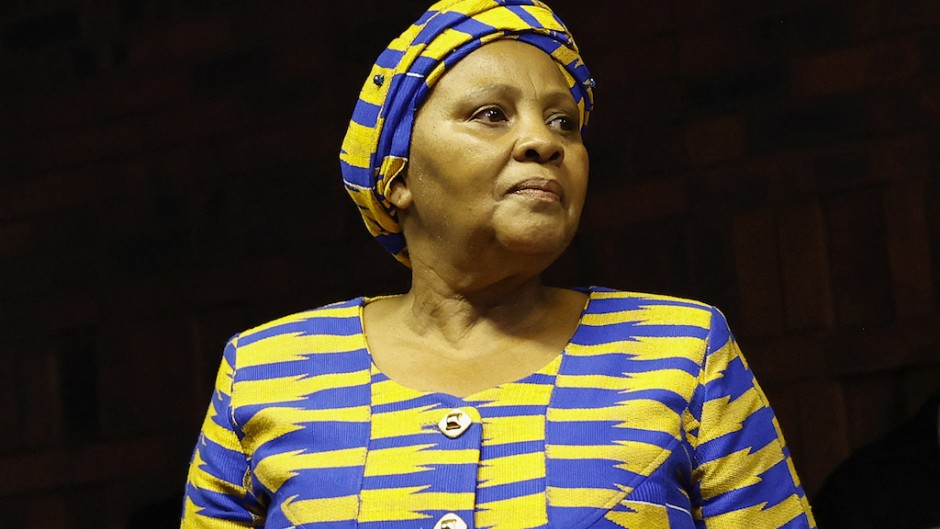
The corruption trial of former National Assembly Speaker Nosiviwe Mapisa-Nqakula has officially commenced in the Pretoria High Court, marking another significant chapter in South Africa’s ongoing efforts to prosecute alleged corruption involving senior public officials.
Mapisa-Nqakula is facing 12 counts of corruption and one count of money laundering linked to allegations that she accepted millions of rand in bribes while serving as South Africa’s Minister of Defence and Military Veterans.
She has consistently denied wrongdoing, and the charges remain allegations until determined by the court.
State alleges R4.5 million in bribes
According to the prosecution, Mapisa-Nqakula allegedly received approximately R4.5 million in bribes from a defence contractor during her tenure as Defence Minister.
The State contends that the payments were made in exchange for favourable treatment relating to defence procurement matters.
Prosecutors are expected to present documentary evidence and witness testimony as they seek to prove the charges before the High Court.
The specific allegations will be tested through the judicial process, where both the prosecution and defence will have the opportunity to present their respective cases.
Charges include corruption and money laundering
The former Speaker faces a total of 13 criminal charges, comprising:
- 12 counts of corruption
- One count of money laundering
The money laundering charge relates to allegations surrounding the handling of funds that investigators believe were proceeds of unlawful activity.
As with all criminal proceedings, the burden rests on the State to prove the charges beyond a reasonable doubt.
A case with major political significance
The trial is among the highest-profile corruption cases involving a former senior government official and parliamentary leader in recent years.
Mapisa-Nqakula served in several Cabinet portfolios before becoming Speaker of the National Assembly, one of the country’s highest constitutional offices.
The proceedings are therefore expected to attract close attention from political observers, legal experts and anti-corruption organisations, as they may have broader implications for public confidence in government accountability.
What happens next?
With the trial now underway, the court will hear evidence from the prosecution before the defence presents its case.
The proceedings could extend over several weeks or months, depending on the volume of evidence, the number of witnesses called and any legal applications that arise during the trial.
No verdict has been reached, and Mapisa-Nqakula continues to enjoy the constitutional presumption of innocence unless and until she is found guilty by the court.
Why the trial matters
South Africa has placed renewed emphasis on strengthening accountability for corruption involving public officials, particularly in cases relating to the management of public funds and government procurement.
The outcome of this trial will be closely watched as part of the country’s broader fight against corruption and efforts to reinforce public trust in state institutions.
Whatever the eventual judgment, the case represents another important test of South Africa’s judicial system and its ability to independently adjudicate complex corruption matters involving senior political figures.