
For many South Africans following developments around the Madlanga Commission and other major corruption investigations, one question keeps surfacing:
- SIU investigates corruption — but cannot arrest anyone
- The Hawks are the agency empowered to make arrests
- The NPA decides whether prosecutions move forward
- SARS plays a separate but powerful role
- Why the disbandment of the Scorpions still matters today
- Madlanga Commission revives concerns about political interference
- South Africa’s anti-corruption system works like an assembly line
- Phase 1: Discovery and forensic investigation
- Phase 2: Criminal investigation and arrests
- Phase 3: Court prosecution
- Public pressure growing for faster accountability
- Conclusion
“If the SIU exposes corruption involving millions or even billions of rand, why do we rarely see immediate arrests?”
The frustration has become increasingly visible across social media, radio call-in shows and public debate platforms, especially as more reports emerge detailing alleged abuse of state resources, political interference and organised corruption networks.
However, legal experts say the public outrage often stems from a misunderstanding of how South Africa’s anti-corruption architecture was intentionally designed.
Unlike in some countries where a single powerful agency investigates, arrests and prosecutes suspects, South Africa operates through a decentralised system where different institutions perform separate functions in the justice pipeline.
In simple terms: one agency uncovers the evidence, another carries out arrests, and a different institution prosecutes the case in court.
SIU investigates corruption — but cannot arrest anyone
At the centre of much public confusion is the Special Investigating Unit (SIU).
Established through legislation in the mid-1990s, the SIU was created to investigate corruption, maladministration and the misuse of public funds inside state institutions.
Its primary role is forensic investigation.
The SIU traces money flows, analyses contracts, audits procurement systems and identifies how public funds may have been diverted or stolen.
Importantly, the SIU focuses heavily on civil recovery — meaning it seeks to freeze assets and recover state money through the Special Tribunal or the courts.
But despite its high-profile investigations, the SIU does not have powers of arrest.
That responsibility belongs elsewhere.
The Hawks are the agency empowered to make arrests
When corruption investigations uncover evidence of criminal conduct, those findings are generally referred to the Directorate for Priority Crime Investigation, better known as the Hawks.
Created in 2009 following the disbandment of the Scorpions, the Hawks operate within the South African Police Service and focus on serious organised crime, commercial crime and systemic corruption.
Unlike the SIU, the Hawks have full criminal investigative powers.
This means they can open criminal dockets, obtain warrants, conduct raids and arrest suspects.
In many major corruption matters, the Hawks rely on forensic evidence already gathered by institutions such as the SIU, commissions of inquiry or SARS investigations.
Legal analysts often describe the SIU as the institution that “follows the money,” while the Hawks are the agency expected to physically enforce the law.
The NPA decides whether prosecutions move forward
Even after arrests are made, another institution enters the process.
The National Prosecuting Authority (NPA) carries the constitutional responsibility of prosecuting criminal cases in court.
The NPA evaluates evidence supplied by investigators and determines whether sufficient grounds exist to pursue criminal charges.
State prosecutors then attempt to secure convictions through the courts.
This final stage is often where many corruption cases become delayed, collapsed or prolonged due to legal complexity, insufficient evidence, procedural disputes or court backlogs.
SARS plays a separate but powerful role
Another major institution in South Africa’s anti-corruption ecosystem is the South African Revenue Service (SARS).
Although SARS is primarily known as the country’s tax authority, it also conducts sophisticated investigations into tax evasion, undeclared wealth, customs fraud and illicit financial flows.
SARS uses tools such as lifestyle audits to identify individuals whose spending patterns appear inconsistent with their declared income.
Financial crime investigators often view tax investigations as an effective way to expose wider corruption networks.
Globally, tax-related offences have historically become entry points for broader corruption prosecutions.
Why the disbandment of the Scorpions still matters today
To understand why public distrust remains so high, many observers point back to the dismantling of the Directorate of Special Operations — commonly known as the Scorpions.
The Scorpions operated within the NPA and combined investigators, prosecutors and intelligence specialists into one integrated anti-corruption structure.
The unit gained a reputation for aggressively pursuing organised crime and politically sensitive corruption cases involving senior public figures.
However, following intense political battles and criticism from within the ANC, the Scorpions were officially disbanded in 2009.
Critics argued that the unit had become politically dangerous because of its investigations into powerful individuals.
Supporters of the Scorpions maintain that its closure weakened South Africa’s ability to combat high-level corruption effectively.
The Hawks were later established to replace the unit, though debates continue over whether they possess the same independence and effectiveness.
Madlanga Commission revives concerns about political interference
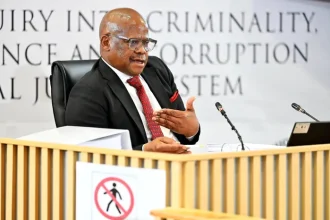
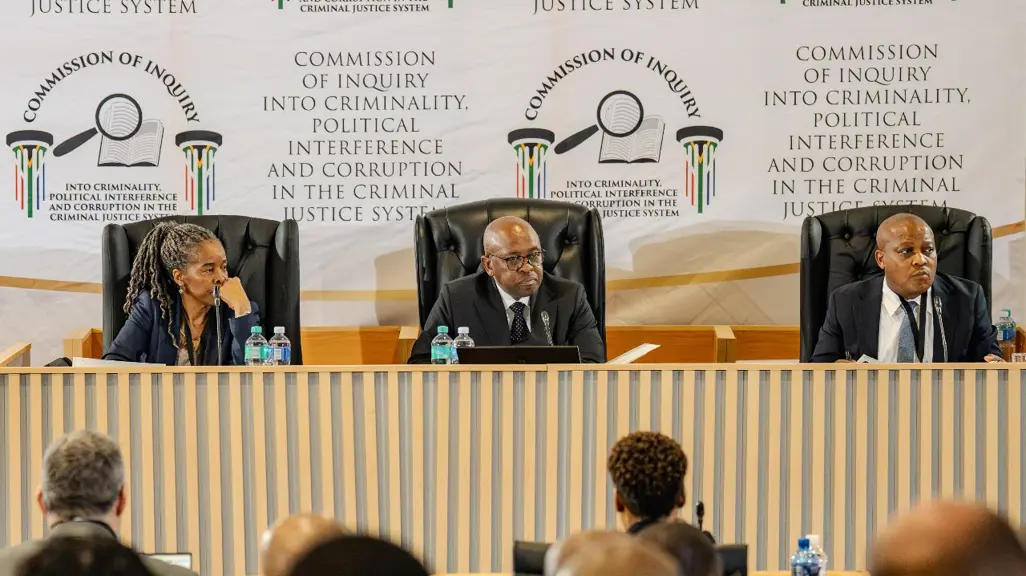
The ongoing Madlanga Commission has once again placed institutional interference under the spotlight.
The commission is examining allegations surrounding the controversial disbandment of the KwaZulu-Natal Political Killings Task Team, which had been investigating politically linked assassinations and organised hitman networks.
Critics have argued that dismantling specialised investigative units can disrupt sensitive investigations and protect influential networks from accountability.
These concerns have fuelled growing public scepticism about whether South Africa’s justice institutions have enough independence, resources and political backing to pursue major corruption cases successfully.
South Africa’s anti-corruption system works like an assembly line
Experts often describe the country’s anti-corruption framework as a relay race or assembly line.
The process generally unfolds in three major phases:
Phase 1: Discovery and forensic investigation
These bodies identify wrongdoing, trace financial movements and gather evidence.
Phase 2: Criminal investigation and arrests
The Hawks convert forensic findings into criminal cases and carry out arrests.
Phase 3: Court prosecution
The NPA prosecutes accused individuals in court and seeks convictions.
This structure means that public announcements by the SIU or commissions do not automatically lead to immediate arrests.
Investigations often involve years of financial tracing, evidence gathering and legal preparation before criminal action can proceed.
Public pressure growing for faster accountability
Despite understanding the institutional structure, many South Africans remain frustrated by the slow pace of prosecutions in major corruption cases.
Years after revelations emerging from state capture investigations, numerous politically connected figures implicated in reports have yet to face criminal trial outcomes.
Civil society organisations argue that delays erode public confidence in democratic institutions and weaken deterrence against corruption.
At the same time, legal experts caution that rushed prosecutions without properly prepared evidence risk collapsing in court.
Conclusion
South Africa’s anti-corruption system was designed to divide power across multiple specialised institutions rather than place all authority in a single agency. While the SIU uncovers corruption and tracks stolen money, it is the Hawks that make arrests and the NPA that prosecutes cases in court.

Understanding this distinction helps explain why corruption investigations often move slowly — even when explosive evidence becomes public. As pressure mounts through inquiries like the Madlanga Commission, public frustration is increasingly focused not only on exposing corruption, but on whether the entire justice pipeline can ultimately deliver accountability.