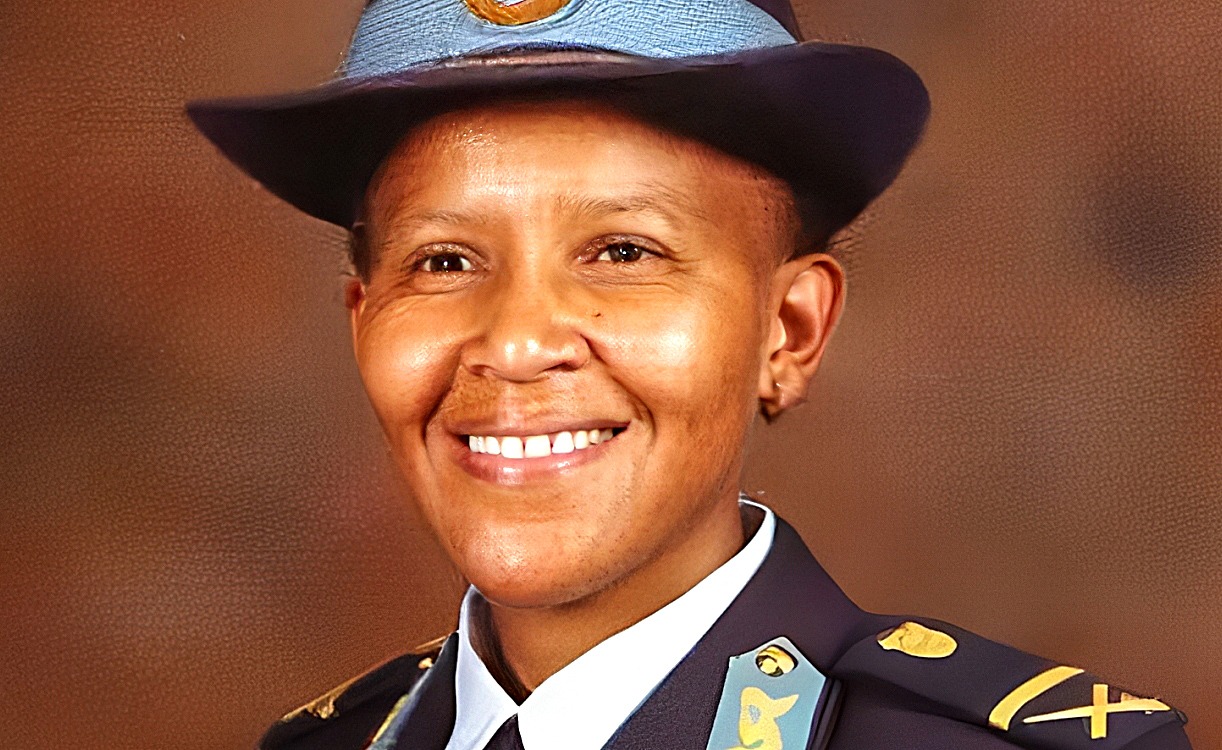
A former senior officer in the South African Air Force (SAAF) has been sentenced to six months in a United States federal prison after admitting to making false declarations while applying for a high-level security clearance.
Portia Anyamba, a former brigadier general, was sentenced by a US federal court after pleading guilty to offences related to national security and providing false information during the security vetting process.
The case has attracted widespread attention in both South Africa and the United States, with many South Africans reacting strongly on social media following news of the sentencing.
Court Hands Down Prison Sentence
According to US court proceedings, Anyamba was sentenced on 17 June 2026 by US District Judge Thomas A. Varlan.
In addition to serving six months in federal prison, the court ordered her to:
- Serve two years of supervised release after completing her prison sentence.
- Pay a fine of US$9,500.
The sentence follows her guilty plea to charges involving false statements made during a security clearance application and operating under the direction of South Africa’s State Security Agency (SSA).
Investigation Focused on Intelligence Links
Federal investigators alleged that Anyamba maintained contact with a South African intelligence official who had previously served as Deputy Chief of Station in Washington, DC.
According to investigators, law enforcement agencies monitored meetings between the pair in Knoxville, Tennessee, as part of an ongoing counterintelligence investigation.
Authorities later intercepted Anyamba on 7 November 2024, when they seized her laptop computer as part of the investigation.
The evidence formed part of the case presented before the federal court.
False Information on Security Clearance Application
Central to the prosecution was an SF-86 questionnaire, the document used by the United States government to assess applicants seeking security clearances.
Prosecutors alleged that Anyamba deliberately failed to disclose her contacts with foreign government representatives while completing the application.
The omission enabled her to obtain access to sensitive security clearance processes under false pretences.
United States authorities regarded the false declarations as a serious breach because security clearance applicants are required to fully disclose any foreign contacts that could create conflicts of interest or potential security risks.
US Authorities Emphasise National Security
Following the sentencing, United States Attorney Francis M. Hamilton III said protecting sensitive government facilities remains a top priority.
The investigation also involved the Federal Bureau of Investigation (FBI).
FBI Nashville Special Agent in Charge Terence G. Reilly said the former military officer knowingly compromised national security by providing false information during the vetting process.
The case forms part of ongoing US efforts to investigate alleged foreign influence and safeguard classified information.
South African Government Declines Comment
Following media enquiries after the sentencing, South Africa’s Deputy Government Spokesperson William Baloyi declined to comment on the outcome of the case.
No official statement has been issued by the South African government regarding the conviction or sentence.
Case Sparks Debate Among South Africans
The sentencing quickly became a topic of discussion after it was widely reported on South African news platforms and social media.
Many online users expressed surprise that a former senior military officer had become involved in a case relating to intelligence activities and security clearance fraud.
Others questioned the potential diplomatic implications of the conviction, while some called for greater accountability for public officials entrusted with national security responsibilities.
Although the criminal proceedings in the United States have concluded with sentencing, the case continues to generate debate about intelligence oversight, transparency and international security cooperation.