Venezuela has officially started the process of withdrawing from the International Criminal Court (ICC), marking a significant shift in its foreign policy while intensifying debate over the future of international justice.
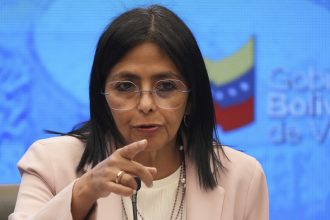
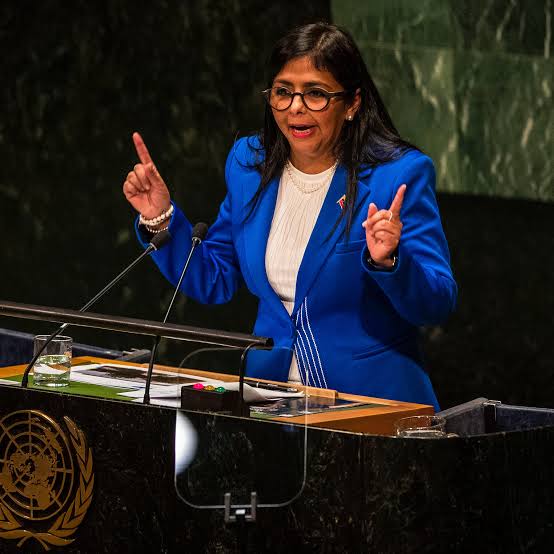
The move, announced by Foreign Minister Felix Plasencia on behalf of Interim President Delcy Rodríguez, comes despite an ongoing ICC investigation into alleged crimes against humanity linked to the country’s response to anti-government protests. Although the withdrawal carries major political symbolism, legal experts say it will not halt the court’s existing investigation.
Caracas Accuses ICC of Political Bias
In announcing the decision, Venezuela argued that the ICC has consistently applied international justice unevenly, disproportionately targeting nations in Africa and Latin America while failing to treat all countries equally.
Government officials described the withdrawal from the Rome Statute—the treaty establishing the ICC—as a permanent decision intended to reject what they consider selective prosecution.
For years, critics of the court have claimed that its investigations have focused heavily on developing countries, particularly in Africa, fuelling accusations of political bias.
Why Venezuela Decided to Leave
While the official explanation centres on alleged bias, analysts believe several factors contributed to the decision.
Among the most significant is the ICC’s long-running investigation into allegations that Venezuelan security forces and pro-government groups committed crimes against humanity during protests that erupted in 2017.
The court formally opened its investigation in 2021 after determining there were reasonable grounds to believe serious international crimes may have been committed.
Relations between Caracas and the ICC have steadily deteriorated since then, with Venezuelan authorities rejecting many of the court’s findings and questioning its legitimacy.
Observers also point to Venezuela’s evolving diplomatic strategy, which has seen the country strengthen ties with the United States under Interim President Delcy Rodríguez.
ICC Investigation Will Continue
Despite Venezuela’s withdrawal, international legal experts say the ICC retains jurisdiction over investigations already underway.
Under the Rome Statute, a country’s withdrawal only becomes effective one year after formal notification to the United Nations and does not invalidate cases already before the court.
That means prosecutors can continue investigating alleged crimes committed while Venezuela remained a member of the treaty.
However, the practical challenge lies in cooperation.
Without support from Venezuelan authorities, investigators may face greater difficulties obtaining evidence, interviewing witnesses and executing future legal processes.
Victims Fear Accountability Could Become Harder
For many Venezuelans who submitted evidence to the ICC, the withdrawal has created fresh uncertainty.
Thousands of alleged victims have reportedly provided testimony and documentation over several years, often at significant personal risk.
Human rights organisations warn that reduced cooperation between Venezuela and the court could slow an already lengthy investigation and make accountability more difficult to achieve.
Legal experts note that international criminal investigations frequently rely on cooperation from national governments to gather evidence and execute arrest warrants.
Washington Welcomes the Move
The United States swiftly endorsed Venezuela’s withdrawal.
American officials criticised the ICC for what they described as years of ineffective investigations and encouraged other member states to reconsider their participation in the court.
The endorsement reflects the Trump administration’s increasingly confrontational stance toward the ICC.
Washington has repeatedly questioned the court’s authority, particularly regarding investigations involving American personnel and allied nations.
Recent sanctions against ICC officials and growing diplomatic pressure have added further strain to the institution.
Growing Pressure on the International Criminal Court
Venezuela is not the only country reconsidering its relationship with the ICC.
Several African nations have recently announced plans to withdraw, arguing that the court has failed to deliver balanced justice.
These governments maintain that the ICC has historically concentrated too heavily on African conflicts while overlooking alleged crimes elsewhere.
However, legal scholars argue that the court’s focus has broadened considerably in recent years.
Current investigations now include alleged crimes involving Russia’s invasion of Ukraine, the Israel-Gaza conflict and several other regions outside Africa.
Many experts therefore believe the argument that the ICC exclusively targets developing nations has become less persuasive than it once was.
Leadership Crisis Adds to ICC Challenges
The court is also confronting internal challenges.
Its elected Chief Prosecutor, Karim Khan, recently left office following decisions by member states amid allegations that he has denied.
Combined with political pressure from major powers and withdrawals by member states, the leadership changes have intensified concerns about the institution’s future effectiveness.
International law specialists argue that the greatest threat to the ICC is not external criticism alone but declining political support from its own member countries.
What Happens Next?
Venezuela’s withdrawal represents another test for the international justice system at a time when geopolitical divisions continue to widen.
Although the ICC’s investigation into alleged crimes against humanity will proceed, the absence of Venezuelan cooperation may complicate future legal proceedings.
The decision also raises broader questions about the future of international accountability, particularly as more governments challenge the authority of multilateral institutions.
With global conflicts increasing and international justice under growing political pressure, the coming years may determine whether the ICC can retain both its legitimacy and its ability to hold powerful actors accountable.