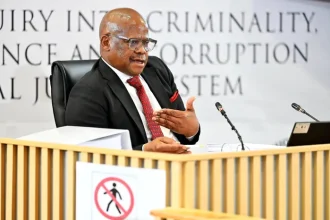

Concerns over how South Africa’s police service monitors the wealth of senior officials have intensified after an anti-corruption expert told the Madlanga Commission of Inquiry that SAPS has not carried out a single formal lifestyle audit in the past five years.
- Commission examines wealth disclosure concerns among senior police officers
- Financial disclosure system has major gaps, expert warns
- “Someone else’s car” example highlights enforcement challenges
- SAPS conducted assessments, but not formal lifestyle audits
- Expert warns current system may fail to uncover corruption
- Ramaphosa extends Madlanga Commission deadline
- Why the SAPS oversight debate matters
Dr Albertus Schoeman, an expert in governance and anti-corruption systems, told the commission that while SAPS has conducted lifestyle reviews and investigations, these processes fall short of full lifestyle audits designed to uncover unexplained wealth, hidden assets and possible conflicts of interest.
His testimony has placed renewed focus on whether existing financial disclosure systems are strong enough to detect corruption risks among senior officials within the criminal justice system.
Commission examines wealth disclosure concerns among senior police officers
Schoeman’s evidence came during hearings examining financial disclosure requirements applicable to senior officials in South Africa’s law enforcement environment.
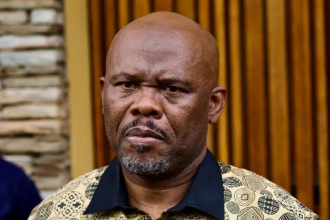
The commission has been investigating allegations involving senior Crime Intelligence officer Major-General Feroz Khan, whose financial affairs have been questioned following claims that his assets appeared inconsistent with his known income.
Financial disclosure records presented during proceedings indicated that Khan acquired 30 vehicles within a single year. The records also highlighted ownership interests in a vehicle parts business reportedly generating around R3 million annually, as well as a property portfolio estimated at approximately R39 million, including properties in George, Houghton and Umhlanga.
The commission stressed that the purpose of examining such information is not to determine guilt before due process, but to assess whether current oversight systems are capable of identifying potential risks.
Financial disclosure system has major gaps, expert warns
According to Schoeman, one of the biggest weaknesses in the current framework is that officials are not required to disclose certain categories of wealth that could potentially be used to hide financial interests.
He told the commission that the existing disclosure process does not adequately address beneficial ownership — meaning assets controlled or enjoyed by an individual but legally registered in another person’s name.
This creates a possible loophole where officials could benefit from expensive assets without those assets appearing directly on their declarations.
Schoeman said the disclosure framework also excludes several high-value assets, including:
- Artwork and collectibles
- Jewellery and precious stones
- Livestock
- Other valuable movable property
Digital assets are another area of concern, with cryptocurrencies and other digital tokens not adequately covered despite their ability to hold significant value and transfer wealth outside traditional financial systems.
He further pointed out that the system does not sufficiently capture certain monetary assets, including funds held in bank accounts, safe deposit facilities and other liquid investments.
“Someone else’s car” example highlights enforcement challenges
Advocate Sandile Khumalo, one of the commission’s co-commissioners, highlighted the practical difficulties investigators face when assets are not registered directly in an official’s name.
He used the example of a senior police officer driving a luxury vehicle worth millions of rand, while claiming the vehicle belongs to another person.
Khumalo argued that under the current framework, authorities may struggle to take action if the asset is officially registered to someone else, even if the official regularly uses it and stores it at their residence.
The example illustrated what investigators describe as the challenge of separating legal ownership from actual benefit and control.
SAPS conducted assessments, but not formal lifestyle audits
Schoeman explained that SAPS has not ignored financial monitoring completely. The organisation has conducted lifestyle reviews and lifestyle investigations, but these are different from a full lifestyle audit.
Under the Department of Public Service and Administration’s framework, there are three levels of assessment:
- Lifestyle reviews
- Lifestyle investigations
- Lifestyle audits
A lifestyle audit is the most comprehensive process, involving specialised auditing expertise to examine an individual’s financial position, assets, income and possible sources of unexplained wealth.
Schoeman said many government departments do not have the internal expertise required to conduct these audits, resulting in costly outsourcing arrangements or cooperation with institutions such as the Special Investigating Unit (SIU).
He told the commission that a lifestyle audit can cost between R30,000 and R50,000 per case.
According to his testimony, SAPS had not yet begun conducting lifestyle audits through a planned SIU secondment arrangement as of July 2026.
Expert warns current system may fail to uncover corruption
Schoeman said the gap between policy and implementation remains a significant concern.
While financial disclosure rules exist on paper, he argued that weaknesses in the system mean potential misconduct or unexplained wealth may remain undetected.
“The mechanism on paper and what is seen in the real world” appear to be disconnected, he told the commission.
He further warned that even where irregularities are identified, disciplinary consequences may not always provide a strong enough deterrent.
Possible sanctions against officials include verbal warnings, written warnings, suspension without pay or formal disciplinary action.
However, Schoeman noted that only one dismissal had reportedly been recorded in the public service over the previous two years in relation to these types of matters.
He argued that effective oversight requires not only stronger disclosure systems but also meaningful consequences when officials fail to comply.
Ramaphosa extends Madlanga Commission deadline
Meanwhile, President Cyril Ramaphosa has approved an extension for the Madlanga Commission’s final report.
The deadline has been moved from 31 August 2026 to 16 November 2026, allowing the commission additional time to complete outstanding evidence and investigations.
The Presidency said the new evidence deadline has been set for 2 October 2026, giving the inquiry time to conclude matters raised during hearings.
The commission is currently conducting some proceedings in camera, with public hearings scheduled to resume after applications from witnesses seeking partially private testimony are considered.
Why the SAPS oversight debate matters
The issue of lifestyle audits goes beyond individual cases and speaks to broader concerns about public confidence in South Africa’s institutions.
Police officers, particularly those in senior positions, are entrusted with significant authority and access to sensitive information. Strong financial accountability measures are therefore viewed as an important safeguard against corruption and abuse of power.
The commission’s findings could influence future reforms around asset disclosure, anti-corruption investigations and how South Africa monitors officials responsible for protecting the rule of law.
As the Madlanga Commission continues its work, the central question remains whether existing systems are strong enough to detect hidden wealth before it becomes evidence of a deeper institutional failure.