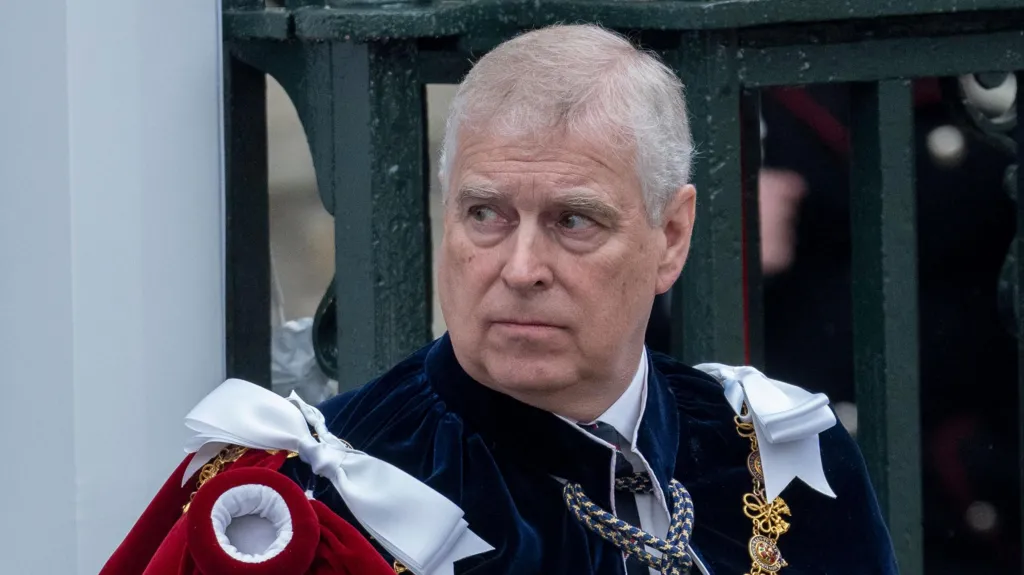
The UK government is considering introducing legislation to remove Andrew Mountbatten-Windsor from the royal line of succession, a move that would prevent him from ever becoming king.
Defence Minister Luke Pollard told BBC the proposal was the “right thing to do,” regardless of the outcome of the ongoing police investigation.
Still Eighth in Line
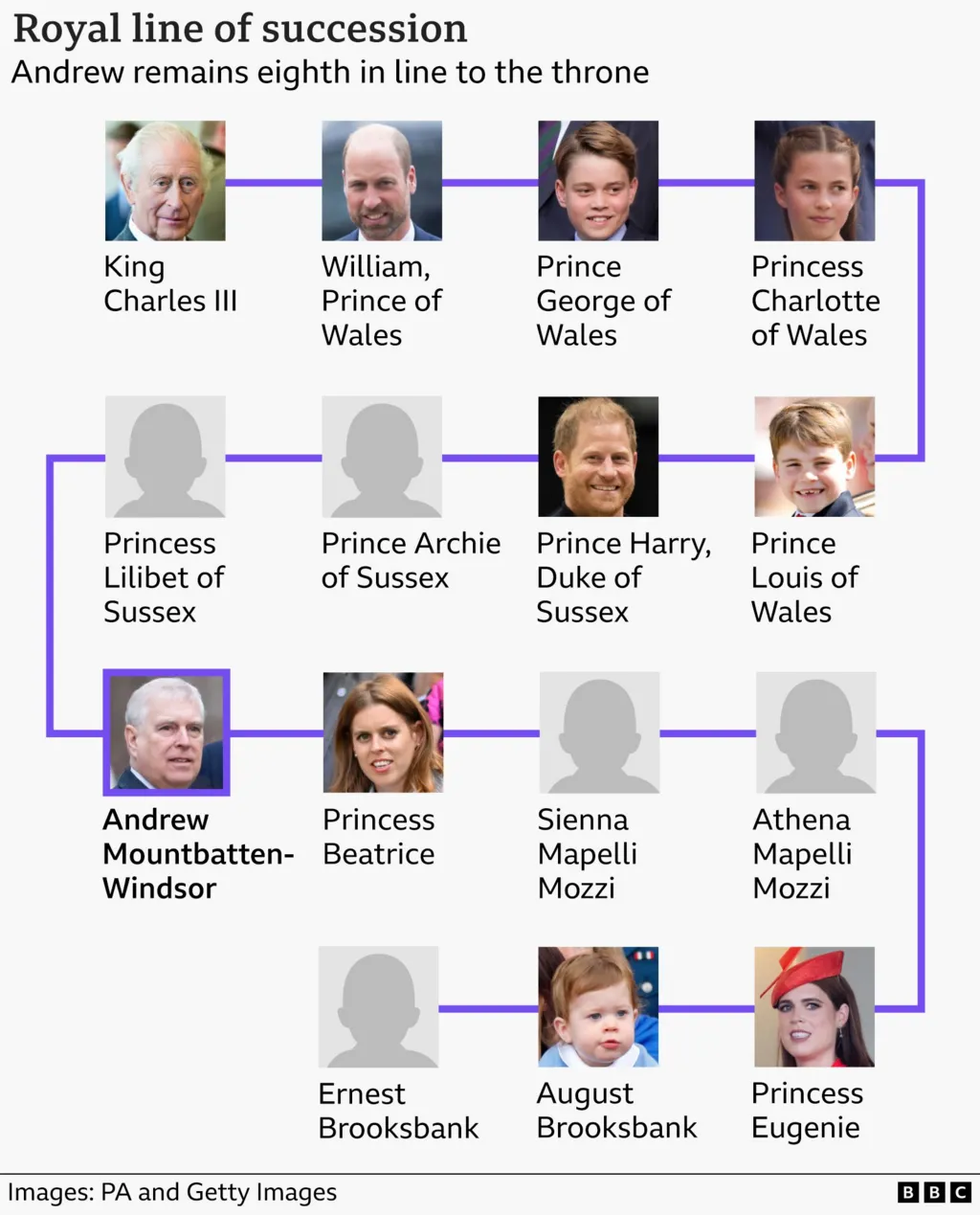
Andrew, the brother of King Charles III, currently remains eighth in line to the throne despite being stripped of his titles last year amid controversy over his ties to Jeffrey Epstein. He was recently released under investigation after being arrested on suspicion of misconduct in public office and has denied wrongdoing.
Pollard confirmed the government has been working closely with Buckingham Palace on plans to ensure Andrew is no longer “potentially a heartbeat away from the throne,” though he noted any legislative move should follow the conclusion of the police investigation.
Investigation Ongoing
Police activity has continued at Royal Lodge, Andrew’s long-time residence, with Thames Valley Police expected to continue searches as part of the investigation.
Officials have warned the situation could become complex as multiple forces consider whether to launch additional inquiries.
Political Support Emerging
Several political parties, including the Liberal Democrats and the Scottish National Party, have indicated they would support legislation if required. However, some lawmakers have questioned whether the move is necessary given how unlikely it is Andrew would ever ascend the throne.
Any change would require an Act of Parliament approved by MPs and peers, followed by royal assent. It would also need backing from Commonwealth realms where the British monarch is head of state.
Historical Context
The last major reform to the succession rules came with the 2013 Succession to the Crown Act, which ended male preference primogeniture for those born after October 2011.
Removing Andrew would mark one of the most significant modern interventions into the royal succession and reflects growing pressure to protect the institution from ongoing controversy.
Monarchies are fascinating evolutionary relics — political systems running ancient software on modern hardware — and moments like this show how even centuries-old institutions still adapt under the pressure of public legitimacy and democratic scrutiny.