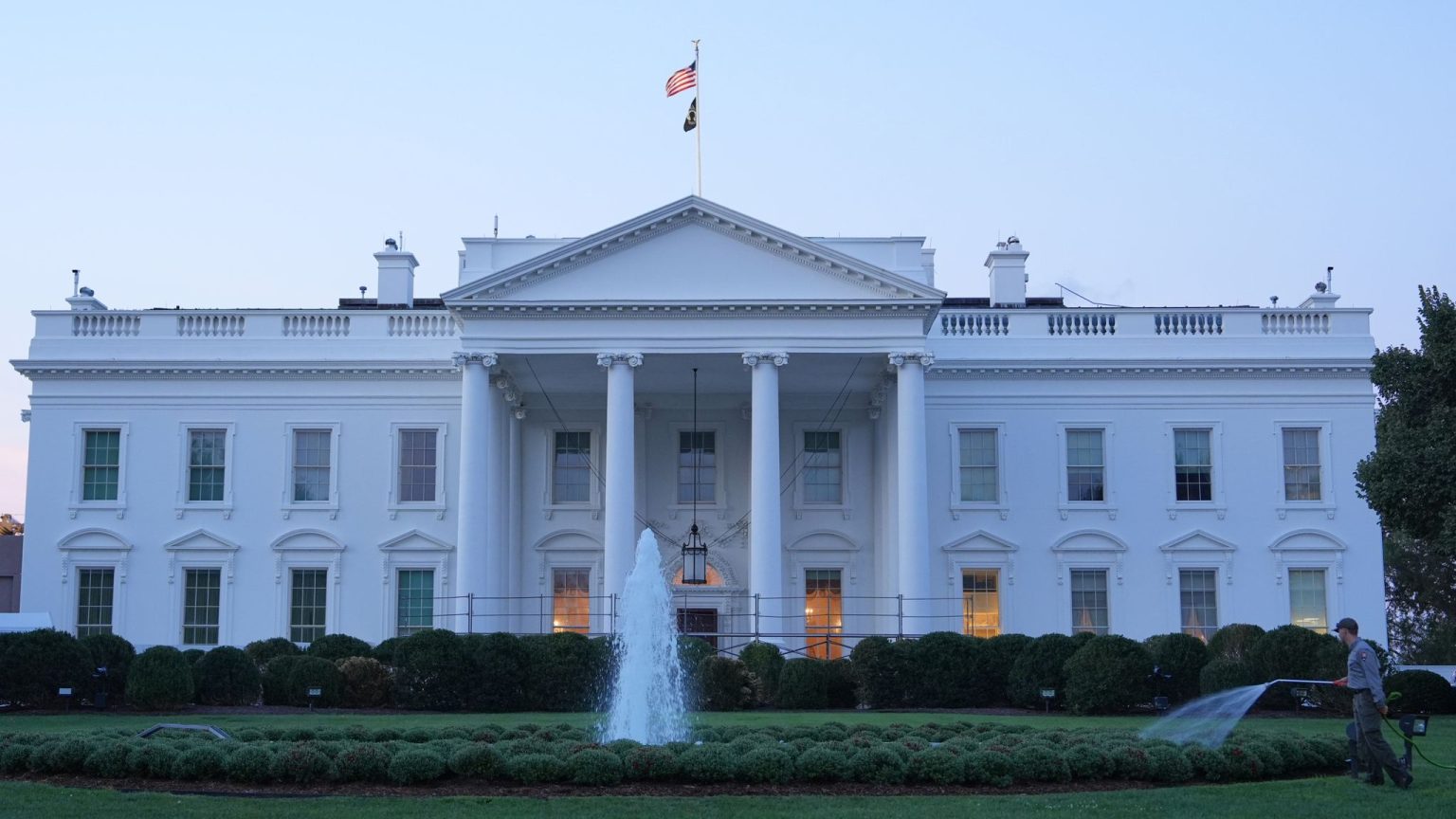
A growing confrontation between the White House and major US news organisations has moved from a battle over press credentials to federal court, after CNN, MS NOW and Politico challenged the administration’s decision to bar their journalists from the presidential complex.
The three outlets filed a lawsuit in federal court in Washington on Monday, arguing that the administration violated constitutional protections for freedom of speech and the press by withdrawing access in response to their reporting. The case seeks the restoration of their White House credentials, including through a request for emergency relief.
The dispute also disrupted the traditional White House television pool on Monday, when the major broadcasters declined to provide the shared footage normally used to cover the president as he travelled to New York for the United Nations General Assembly.
Major broadcasters suspend presidential pool coverage
The White House television pool operates on a rotating basis among the major US networks. The designated broadcaster provides footage of the president that is then made available to other television outlets and media organisations.
CNN had been scheduled to handle the pool on Monday.
But after the White House removed CNN’s access, ABC, CBS, Fox News, NBC and CNN said there would be no pool television coverage of Trump’s events during the trip.
The broadcasters said the public has an important interest in receiving accurate and independent information about the government and argued that news organisations should not be excluded because officials object to their reporting.
The decision has practical consequences beyond the five networks involved.
The pool system is designed to ensure that television cameras can accompany the president even when individual news organisations cannot send their own crews into restricted locations. Footage can then be distributed across the wider press corps.
With the pool suspended, there was no shared television camera from the five major networks accompanying Trump during his New York movements on Monday.
Reporters had their White House access revoked
The confrontation began on Friday when Trump announced that CNN, MS NOW and Politico would be barred from the White House.
The administration subsequently enforced the decision.
CNN correspondent Betsy Klein, MS NOW correspondent Akayla Gardner and Politico reporter Cheyenne Haslett were turned away when they arrived to work on Saturday. Their press credentials had been deactivated or confiscated.
The White House has defended the move by arguing that access to the presidential complex is a privilege rather than an unconditional right.
Trump has also repeatedly accused the affected organisations of publishing what he calls “fake news”.
In a social-media post following the legal action, Trump said the administration was not attacking the free press but was targeting what he described as “FAKE NEWS”. He characterised the media organisations as a threat to national security, without publicly providing evidence that their reporting constituted such a threat.
First Amendment fight moves to federal court
The lawsuit places the dispute squarely within the protections of the First Amendment to the US Constitution, which safeguards freedom of speech and freedom of the press.
CNN, MS NOW and Politico argue that the administration cannot selectively remove journalists from government premises because it objects to the content or viewpoint of their reporting.
The White House has taken the opposite position, maintaining that access to the White House is controlled by the administration.
The case was assigned to US District Judge Timothy Kelly, who has previously handled disputes involving the Trump administration and media access. The outlets are seeking emergency court intervention to restore their credentials.
The legal question is therefore broader than the three organisations themselves: it could help define the limits of presidential control over access to the White House and whether such access can be restricted on the basis of a news organisation’s coverage.
White House press access becomes a wider issue
The dispute has drawn concern from the White House Correspondents’ Association, whose president, Jacqui Heinrich, called for the three organisations’ access to be restored.
The association has argued that allowing a government to exclude an outlet because it dislikes its reporting could establish a precedent affecting other news organisations.
The issue follows several previous clashes between the Trump administration and major media organisations during the president’s second term, including disputes over access involving the Associated Press and individual journalists.
For news organisations, the immediate concern is not simply whether a particular reporter can enter the White House. The television pool dispute demonstrates how removing one organisation from a shared system can affect how presidential events are documented and distributed across the wider media industry.
What happens next?
The immediate focus will be on the federal court proceedings and whether the judge grants the outlets’ request for temporary relief.
At the same time, the White House faces a practical problem over presidential media coverage: the traditional television pool depends on cooperation between competing broadcasters.
The events in New York therefore represent more than a dispute between Trump and three news organisations. They have exposed the importance of the established arrangements through which the US media collectively records presidential activity and distributes that footage to the public.
As the legal battle develops, the central issue will be whether the administration’s control over physical access to the White House extends to excluding news organisations because of disagreements over their journalism.
For the affected outlets, the lawsuit is an attempt to establish that such exclusions cannot be used to influence what the press reports. For the administration, the dispute centres on its authority to determine access to the White House.
The courts will now have to consider where that boundary lies.