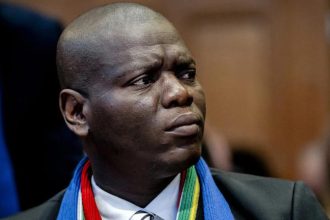
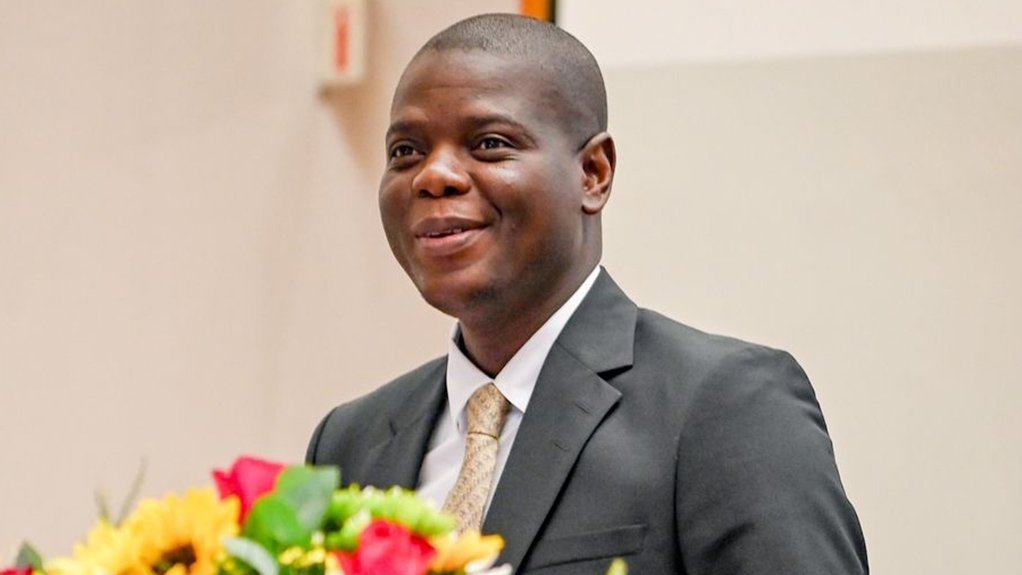
Taiwan has publicly criticized South Africa’s Minister of International Relations and Cooperation, Ronald Lamola, for claiming that the island does not maintain a representative office in Washington, DC.
The dispute erupted after Lamola told journalists on Wednesday, 27 August 2025, that Taiwan’s presence in South Africa should be downgraded because the country did not typically operate in capitals where diplomatic relations were absent.
At the briefing, Lamola insisted that Taiwan’s office in Pretoria should be moved to Johannesburg and renamed the “Taipei Commercial Office.” He argued this was not unusual, suggesting that Taiwan had similar arrangements elsewhere:
“The issue of the relocation of the Taiwan Liaison Office, from our side, we consider it done because we have gazetted its relocation to the city of Johannesburg as a commercial liaison office,” Lamola said.
He continued, “This is not just a South African phenomenon. In many capitals across the globe, Taiwan is in the commercial cities. Even in Washington, they are not there. So it’s not a South African phenomenon. It’s a global phenomenon in line with the UN protocols, the Vienna Convention.”
Taiwan calls foul
The Taiwanese Ministry of Foreign Affairs (MOFA) was quick to respond, calling Lamola’s statements “false” and “misleading.” In a strongly worded statement, MOFA accused Pretoria of misrepresenting international practice to justify downgrading Taiwan’s office.
“Taiwan’s representative offices around the globe are situated in capital cities in accordance with both international norms and bilateral agreements signed with host countries,” the ministry said.
“In the United States, for example, Taiwan operates a representative office in Washington, DC, and maintains 12 additional offices across the country to promote local exchanges. Minister Lamola’s claims not only contradict reality but also highlight South Africa’s grave lack of knowledge and misunderstanding of the international situation.”
Taiwan further accused South Africa of unilaterally abandoning a 1997 bilateral agreement, under which its office in Pretoria was formally recognised.
Pretoria’s position
South Africa does not recognise Taiwan diplomatically, in line with its support for the “One China” policy. Lamola’s argument has been that Taiwan’s presence in Pretoria is inconsistent with international norms and should therefore be limited to trade and business ties in Johannesburg.
However, international examples contradict his claim. Taiwan operates offices in capitals such as Moscow, New Delhi, Brasília, and Washington, DC—suggesting that Pretoria’s push is more about aligning with Beijing’s preferences than adhering to a global norm.
When asked for clarification on Lamola’s claim, his spokesperson told the Daily Maverick that the minister “meant it’s not an embassy.”
A tense balancing act
The row underscores the diplomatic tightrope South Africa continues to walk between maintaining close economic ties with China and managing its practical trade relationship with Taiwan. While Beijing demands exclusivity, Pretoria has to weigh the consequences of alienating Taiwan, one of its active commercial partners.
For now, Taiwan says its office in Pretoria remains fully operational, continuing to provide services for its citizens and businesspeople in South Africa.
Whether Lamola’s misstatement was a slip of the tongue or a deliberate framing, Taiwan has made it clear: its flag may not fly as a formal embassy in Washington, but its presence there is undeniable.